核心区别一览表
| 特性 | 接口静态方法 | 接口默认方法 | 接口抽象方法 | 类静态方法 |
|---|---|---|---|---|
| 定义 | public static |
public default |
public abstract (可省略 abstract) |
static |
| 实现方式 | 方法体完整实现 | 方法体完整实现 | 无方法体 (分号结尾) | 方法体完整实现 |
| 调用方式 | 通过接口名直接调用InterfaceName.staticMethod() |
通过实现类的对象调用instance.defaultMethod()或通过接口名调用 (Java 9+) |
通过实现类的对象调用instance.abstractMethod() |
通过类名直接调用ClassName.staticMethod() |
| 继承/实现 | 不能被实现类继承或重写 | 可以被实现类继承,也可以被重写 | 必须由实现类提供具体实现 | 不能被继承或重写 (子类可以同名,但隐藏父类方法) |
| 主要目的 | 为接口提供工具性或辅助性的功能,与接口本身紧密相关。 | 在不破坏现有实现代码的前提下,为接口扩展新功能。 | 定义接口的契约,强制实现类必须完成的行为。 | 为类提供工具性或辅助性的功能,与类本身紧密相关。 |
| 访问权限 | 隐式 public |
隐式 public |
隐式 public |
取决于声明 (通常是 public 或 private) |
详细解析
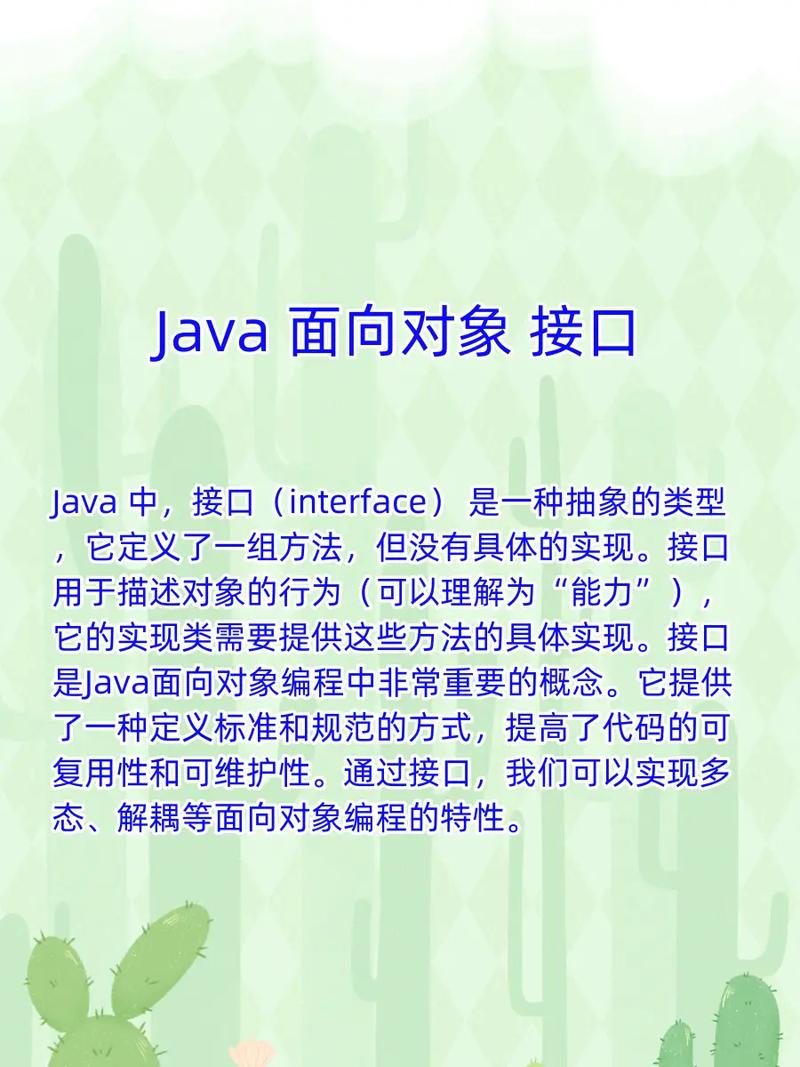
接口静态方法
这是 Java 8 引入的新特性。
(图片来源网络,侵删)
定义与特点:
- 使用
public static修饰。 - 必须提供方法体(有完整的实现)。
- 不能被实现类继承或重写,这是它与默认方法最核心的区别,它完全属于接口,是接口的“私有”工具方法。
调用方式:
- 只能通过接口名直接调用,就像调用类的静态方法一样。
- 不能通过实现类的对象来调用。
目的:
- 提供与接口相关的、不依赖于任何具体实现的工具方法。
List接口可以有一个静态方法of()来创建一个不可变的列表,这个功能不依赖于某个具体的List实现(如ArrayList或LinkedList),而是与List这个概念本身相关。
示例:
(图片来源网络,侵删)
public interface MyInterface {
    // 静态方法
    public static void staticUtilityMethod() {
        System.out.println("This is a static method in the interface.");
    }
}
class MyClass implements MyInterface {
    // 实现类不能继承或重写接口的静态方法
    // 下面这行代码是错误的,会导致编译错误
    // public static void staticUtilityMethod() { ... }
}
public class Main {
    public static void main(String[] args) {
        // 正确:通过接口名调用
        MyInterface.staticUtilityMethod(); // 输出: This is a static method in the interface.
        // 错误:不能通过实现类对象调用
        MyClass myClass = new MyClass();
        // myClass.staticUtilityMethod(); // 编译错误
        // 错误:不能通过实现类名调用
        // MyClass.staticUtilityMethod(); // 编译错误
    }
}
接口默认方法
这也是 Java 8 引入的,用于解决接口向后兼容性问题。
定义与特点:
- 使用
public default修饰。 - 必须提供方法体(有完整的实现)。
- 可以被实现类继承,如果一个类实现了该接口,它会自动获得默认方法的实现。
- 可以被实现类重写,实现类可以根据自己的需求提供新的实现,覆盖接口中的默认实现。
调用方式:
- 主要通过实现类的对象来调用,就像调用普通实例方法一样。
- 从 Java 9 开始,也允许通过接口名直接调用默认方法。
目的:
(图片来源网络,侵删)
- 扩展接口功能而无需修改所有已存在的实现类。
- Java 8 在
Collection接口中添加了stream()、forEach()等新方法,如果这些是抽象方法,那么所有实现了Collection的类(如ArrayList,HashSet等)都必须修改代码,通过使用默认方法,这些新功能被自动提供给了所有现有实现。
示例:
public interface MyInterface {
    // 默认方法
    public default void defaultMethod() {
        System.out.println("This is a default method in the interface.");
    }
}
class MyClass implements MyInterface {
    // MyClass 继承了 defaultMethod(),可以选择不重写
}
class MySubClass implements MyInterface {
    // MySubClass 可以选择重写 defaultMethod()
    @Override
    public void defaultMethod() {
        System.out.println("This is the overridden default method in MySubClass.");
    }
}
public class Main {
    public static void main(String[] args) {
        MyClass myClass = new MyClass();
        myClass.defaultMethod(); // 输出: This is a default method in the interface.
        MySubClass mySubClass = new MySubClass();
        mySubClass.defaultMethod(); // 输出: This is the overridden default method in MySubClass.
    }
}
接口抽象方法
这是 Java 8 之前接口中唯一存在的方法类型。
定义与特点:
- 默认是
public abstract的(public和abstract关键字可以省略)。 - 没有方法体,以分号
- 必须由实现类提供具体的实现,如果一个类实现了带有抽象方法的接口,那么该类必须为所有抽象方法提供实现,否则该类也必须被声明为
abstract。
调用方式:
- 通过实现类的对象来调用。
目的:
- 定义接口的“契约”或“规范”,强制所有实现类都必须具备某种行为。
示例:
public interface MyInterface {
    // 抽象方法 (public abstract 可以省略)
    void abstractMethod();
}
class MyClass implements MyInterface {
    // 必须实现 abstractMethod
    @Override
    public void abstractMethod() {
        System.out.println("This is the implementation of the abstract method.");
    }
}
public class Main {
    public static void main(String[] args) {
        MyClass myClass = new MyClass();
        myClass.abstractMethod(); // 输出: This is the implementation of the abstract method.
    }
}
类静态方法
这是 Java 中非常传统的特性,与接口静态方法类似,但作用域和目的不同。
定义与特点:
- 使用
static修饰。 - 必须提供方法体。
- 不能被继承或重写,子类可以声明一个同名的静态方法,但这会“隐藏”父类的静态方法,而不是重写它,它们之间没有多态关系。
调用方式:
- 通过类名直接调用。
目的:
- 提供与类相关的工具方法,通常不依赖于类的任何实例状态。
Math类中的所有方法都是静态的。
示例:
class MyClass {
    // 类的静态方法
    public static void staticMethod() {
        System.out.println("This is a static method in a class.");
    }
}
class MySubClass extends MyClass {
    // 这不是重写,而是隐藏
    public static void staticMethod() {
        System.out.println("This is a static method in the subclass, hiding the parent's.");
    }
}
public class Main {
    public static void main(String[] args) {
        // 通过类名调用
        MyClass.staticMethod(); // 输出: This is a static method in a class.
        MySubClass.staticMethod(); // 输出: This is a static method in the subclass, hiding the parent's.
        // 多态不适用于静态方法
        MyClass mySubClassInstance = new MySubClass();
        mySubClassInstance.staticMethod(); // 输出: This is a static method in a class. (调用的是父类的)
    }
}
总结与关键点
-
静态方法的归属:
- 接口静态方法:完全属于接口,是接口的工具方法,不能被继承或重写。
- 类静态方法:完全属于类,是类的工具方法,不能被重写(只能被隐藏)。
-
默认方法的核心价值:
- 默认方法是为了接口的向后兼容和扩展而设计的,它允许你在不破坏现有代码的情况下为接口添加新功能,这是它与接口静态方法在设计哲学上的最大不同。
-
调用方式是区分的关键:
- 看到一个方法是通过
InterfaceName.method()调用的,那它就是接口静态方法。 - 看到一个方法是通过
instance.method()调用的,那它可能是接口的默认方法或抽象方法(或类的实例方法)。
- 看到一个方法是通过
-
一个类可以同时实现多个接口,如果这些接口中有相同的默认方法怎么办?
- 这会导致编译错误,因为编译器不知道应该使用哪个。
- 解决方案:在实现类中重写这个有冲突的默认方法,提供自己的实现。
希望这个详细的解释能帮助你彻底理解 Java 中接口静态方法与其他方法的区别!