Of course! Let's break down unicodeescape in Python, which is a common source of confusion, especially for Windows users.

The Core Concept: What is unicodeescape?
unicodeescape is a text encoding, not a character set like UTF-8. Think of it as a set of rules for representing text (specifically, Unicode characters) as a sequence of bytes.
Its primary purpose is to represent any Unicode character using a special backslash (\) followed by a letter or a hexadecimal number. This is the same notation you see in Python string literals.
Key Rules of unicodeescape:
-
Standard Escapes: It handles the standard C-style escape sequences.
\n-> Line Feed (LF,\x0a)\t-> Tab (HT,\x09)\\-> Backslash (\)\'-> Single quote ()\"-> Double quote ()
-
Unicode Character Escapes: This is its most important feature. It allows you to represent any character by its Unicode code point.
 (图片来源网络,侵删)
\xhh-> A character with the 2-digit hexadecimal valuehh. (e.g.,\xe9for ).\uxxxx-> A character with the 4-digit hexadecimal valuexxxx. (e.g.,\u03a9for the Greek letter Omega, ).\Uxxxxxxxx-> A character with the 8-digit hexadecimal valuexxxxxxxx. (e.g.,\U0001f600for the grinning face emoji, ).
Where You'll Encounter unicodeescape
You will most commonly run into unicodeescape in two situations:
- The Default Path Separator on Windows: This is the #1 reason people search for this topic. When you use a raw string for a file path on Windows, Python's
open()function can interpret it as aunicodeescapesequence. - Explicitly Using the
codecsModule: You might use it to read or write files that are explicitly encoded in this format.
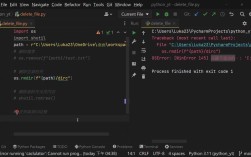
Common Problem 1: The Windows File Path Error
This is the classic scenario:
# Let's say you want to open a file in a directory called "C:\Users\John"
# You try using a raw string to avoid issues with the backslash
file_path = r"C:\Users\John\Documents\test.txt"
try:
    # Python sees this and tries to interpret it as a unicodeescape string!
    with open(file_path, 'r') as f:
        content = f.read()
        print(content)
except UnicodeDecodeError as e:
    print(f"An error occurred: {e}")
What Happens and Why?
- Python's
open()function, when given a string, first tries to interpret that string using theunicodeescapecodec. - It scans the string
r"C:\Users\John\Documents\test.txt"and finds\U,\s,\e,\r,\s,\D,\o,\c,\u,\m,\e,\n,\t,\s. - It tries to convert these into actual characters, but sequences like
\sand\eare not valid Unicode escape sequences. This leads to aUnicodeDecodeError.
The Solutions
Here are the best ways to fix this, from most recommended to least.
Solution 1: Use os.path.join (Best Practice)
This is the most robust and platform-independent way. It automatically uses the correct path separator for the operating system it's running on.

import os
# Let the os module handle the path construction
file_path = os.path.join("C:", "Users", "John", "Documents", "test.txt")
# On Windows, this will correctly create: C:\Users\John\Documents\test.txt
# On Linux/macOS, it would create: C:/Users/John/Documents/test.txt (though that's not a valid path there)
with open(file_path, 'r', encoding='utf-8') as f:
    content = f.read()
    print(content)
Solution 2: Use Forward Slashes
Python's open() function is smart enough to handle forward slashes () on Windows, even though the OS uses backslashes.
# Just use forward slashes
file_path = "C:/Users/John/Documents/test.txt"
with open(file_path, 'r', encoding='utf-8') as f:
    content = f.read()
    print(content)
Solution 3: Double the Backslashes
If you must use backslashes, you can escape them by doubling them. This tells Python you want a literal backslash character.
# Escape the backslashes
file_path = "C:\\Users\\John\\Documents\\test.txt"
with open(file_path, 'r', encoding='utf-8') as f:
    content = f.read()
    print(content)
Common Problem 2: Explicitly Using the codecs Module
Sometimes you might have a file that is actually encoded using unicodeescape. This is rare, but you might encounter it when dealing with certain generated files or data exports. In this case, you need to use the codecs module to read it correctly.
Example: Writing a unicodeescape encoded file
Let's create a file with some special characters encoded in this format.
import codecs
# The text we want to store
text_to_write = "Hello, World! \U0001f600" # Includes a smiley emoji
# Use codecs.open to write the file in unicodeescape format
# The 'unicode_escape' codec converts the string into its escaped byte representation
with codecs.open('unicode_escape_file.txt', 'w', encoding='unicode_escape') as f:
    f.write(text_to_write)
print("File 'unicode_escape_file.txt' created.")
If you open unicode_escape_file.txt, it will look like this:
Hello, World! \U0001f600
Example: Reading that file back
Now, let's read it back. We must specify the unicode_escape codec again.
import codecs
# Use codecs.open to read the file with the correct encoding
with codecs.open('unicode_escape_file.txt', 'r', encoding='unicode_escape') as f:
    content = f.read()
print(f"Read content: {content}")
print(f"Type of content: {type(content)}")
Output:
Read content: Hello, World! 😀
Type of content: <class 'str'>
Notice how Python correctly decoded the \U0001f600 sequence back into the actual emoji character.
Summary: unicodeescape vs. raw strings
| Feature | unicodeescape (Codec) |
Raw String (r"...") |
|---|---|---|
| Purpose | An encoding for converting strings to/from bytes. | A string literal syntax in Python source code. |
| What it does | Interprets \uXXXX and \UXXXXXXXX as characters. |
Disables the interpretation of all backslash escapes (\n, \t, \U, etc.). |
| Primary Use Case | Handling file paths on Windows (when misused) or reading/writing specially encoded files. | Defining Windows file paths, regular expressions, or any string with many backslashes. |
| Example | codecs.open('file.txt', 'r', 'unicode_escape') |
path = r"C:\Users\name" |
Key Takeaway: Use raw strings (r"...") for defining paths in your Python code to prevent the open() function from misinterpreting them. Use the os module for the most portable path handling. Only use the unicode_escape codec explicitly when you are dealing with a file that is genuinely encoded in that format.