Of course! "Head First Java" is a legendary book in the programming world, known for its unique and highly effective approach to teaching Java.
Here's a comprehensive breakdown of what it is, who it's for, its pros and cons, and how to use it effectively.
What is "Head First Java"?
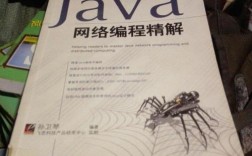
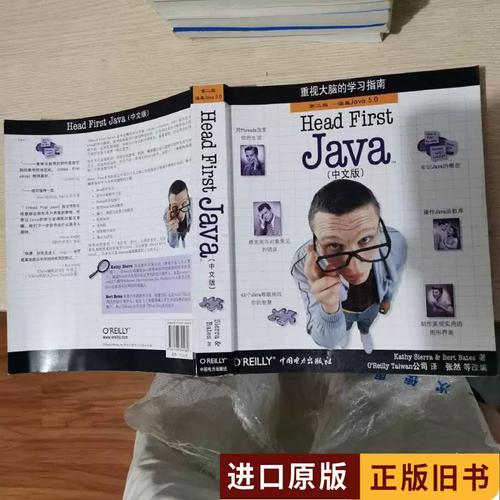
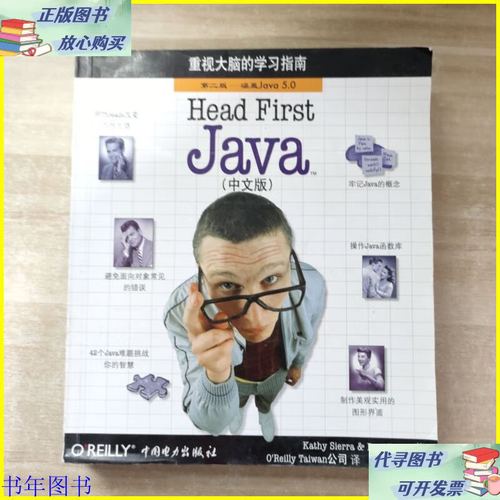
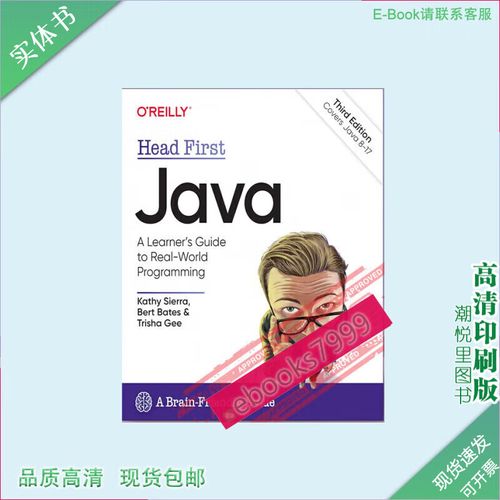
"Head First Java" is a introductory programming book written by Kathy Sierra and Bert Bates. It's published by O'Reilly Media and is part of the larger "Head First" series.
Its defining characteristic is its radically different teaching style compared to traditional, dense technical manuals. Instead of just presenting facts and syntax, it's designed to engage your brain in the way it's best at learning: through visuals, stories, puzzles, and conversational language.
The goal is to get you to think like a Java programmer, not just memorize code.
The "Head First" Philosophy: How It Teaches
The book is built on principles from cognitive science about how people learn best. This is why it feels so different:
- Visuals over Text: It uses tons of diagrams, pictures, handwritten notes, and "mind maps" to explain complex concepts. A concept like polymorphism isn't just a definition; it's a picture of a duck, a dog, and a bird all being told to "make a sound."
- Conversation, not Lecture: The book talks to you directly. It uses questions, informal language ("There are no dumb questions"), and even "interviews" with Java objects (like an
ArrayListobject talking about its life). - Active Learning, not Passive Reading: You'll find puzzles, fill-in-the-blanks, exercises, and "code katas" throughout. You're constantly being asked to do something, not just read.
- Focus on the "Big Picture": It often introduces concepts in a non-traditional order to build intuition. For example, it might talk about collections and data structures before diving deep into every single keyword. This helps you see why you're learning something before you learn the nitty-gritty of how.
- Retention-Focused: The book is designed to make information "stick." It uses repetition, reviews, and different contexts for the same concepts to reinforce your memory.
Who Is It For?
This book is not for everyone. It has a very specific target audience.
Perfect for:
- Absolute Beginners: If you have never programmed before, this is one of the best starting points for Java. It assumes zero prior knowledge.
- People who learn visually: If you get bored or lost by walls of text, this book is a game-changer.
- Students or self-learners who struggle with traditional textbooks: If you've tried reading a dry, academic book and given up, this approach will feel much more accessible and engaging.
- Those who want to understand the "why," not just the "how": It excels at explaining the core concepts of object-oriented programming (OOP) in an intuitive way.
Probably NOT for you if:
- You are an experienced programmer: If you already know C++, C#, or another object-oriented language, this book will be too slow and basic. You'd be better off with a more concise reference like "Java: The Complete Reference" or "Effective Java."
- You need a quick reference for syntax: This is not a reference manual. It's a learning guide. When you need to look up a specific method signature, you'll want a different book or the official Java documentation.
- You dislike a playful, informal style: If you prefer a formal, academic, and strictly professional tone, the "Head First" style might feel a bit "cutesy" or distracting.
Pros and Cons
| Pros ✅ | Cons ❌ |
|---|---|
| Engaging and Fun: Makes learning Java feel less like a chore. | Slow for Experienced Programmers: Can be too basic and wordy if you already have a programming background. |
| Excellent for Retention: The teaching style is scientifically designed to help you remember what you learn. | Not a Reference Manual: You can't quickly look up specific syntax or API details. |
| Builds Strong Intuition: Explains the "why" behind concepts like OOP, making you a better thinker, not just a coder. | Can be Distracting: The visuals and conversational style might annoy some readers who prefer a direct, linear approach. |
| Beginner-Friendly: Starts from absolute zero and guides you gently. | Examples can be Simplified: The examples are sometimes overly simple and may not reflect real-world code or best practices. |
| Covers Core Java Thoroughly: Despite its style, it covers all the fundamental topics needed to move on to more advanced topics. | The 2nd Edition is for Java 5/6: The latest edition is a bit dated. While core Java is mostly the same, it lacks modern features like lambdas, streams, etc. |
Note on the 2nd Edition: The book is currently in its 2nd edition, which covers Java 5 and 6. While the fundamentals of the language (OOP, collections, basic I/O, threading) are still 100% relevant, it does not cover more modern Java features introduced in Java 8 and later (like Lambdas, Streams, the
java.timepackage, etc.). For a modern beginner, you might need to supplement it with online resources for these newer topics.
How to Use "Head First Java" Effectively
Just buying the book isn't enough. To get the most out of it, you need to engage with it properly.
- Don't Just Read, Interact: When you see a "There are no dumb questions" section, read the questions. When you see a puzzle, try to solve it before looking at the answer. Fill in the blanks.
- Do ALL the Exercises: This is non-negotiable. The exercises are where the real learning happens. Type the code into your IDE, run it, change it, break it, and fix it.
- Read with a Computer Open: Have an IDE (like IntelliJ IDEA Community Edition, Eclipse, or VS Code with Java extensions) ready. Don't just read the code—write it, compile it, and run it yourself.
- Slow Down and Absorb: Don't rush through chapters. The conversational style is meant to be savored. If a concept is confusing, re-read the section, draw your own diagrams, or find a supplementary video on YouTube.
- Supplement for Modern Java: After you finish the book or when you get to topics like concurrency or I/O, supplement your learning with online resources to cover Java 8+ features. The official Oracle Java Tutorials are excellent for this.
- Build a Small Project: Once you've finished the book, solidify your knowledge by building a small project. A simple command-line game, a basic web scraper, or a personal organizer application are great ideas.
Alternatives to Consider
- "Java: A Beginner's Guide" by Herbert Schildt: A more traditional, step-by-step, and comprehensive introduction. Good if you prefer a straightforward, no-nonsense approach.
- "Core Java Volume I" by Cay S. Horstmann: A bit more advanced than "Head First" but considered a modern classic. It's more detailed and assumes some programming aptitude.
- "Effective Java" by Joshua Bloch: This is not a beginner book. It's the next book you should read after you're comfortable with the basics. It's the bible for writing high-quality, professional Java code.
Final Verdict
"Head First Java" is one of the best books for a true beginner to learn Java. Its unique, brain-friendly approach makes a notoriously complex subject accessible and even enjoyable. If you're willing to engage with its style and do the work, it will give you an incredibly strong foundation in Java and object-oriented programming.