
Of course. Using Eclipse for Java 1.7 (also known as Java 7) is a common requirement for maintaining legacy systems. Here’s a comprehensive guide covering how to set it up, the key features of Java 7, and the limitations you should be aware of.

⚠️ Important: Is Java 7 Still a Good Idea?
Before you begin, it's crucial to understand the context:
- End of Public Support: Oracle officially ended public updates for Java 7 in April 2025. This means there are no security patches, bug fixes, or performance improvements.
- Security Risk: Running Java 7 in a production environment or on a machine connected to the internet is a significant security risk. It is vulnerable to numerous known exploits.
- When to Use It: You should only use Java 7 for:
- Maintaining legacy applications that cannot be upgraded.
- Learning about historical Java features or specific older APIs.
- Running on an isolated, air-gapped network with zero external connectivity.
Recommendation: If you are starting a new project, you should absolutely use a modern, supported version of Java (e.g., Java 11, 17, or 21). This guide is provided for maintenance and legacy purposes only.
Part 1: Setting Up Eclipse for Java 7
There are two main ways to do this. The best method depends on whether you already have an Eclipse installation or need to start from scratch.
Method 1: The Recommended Approach (Install a Compatible Eclipse Version)
The easiest and most reliable way is to download a version of Eclipse that was designed to work with Java 7. This avoids compatibility issues.
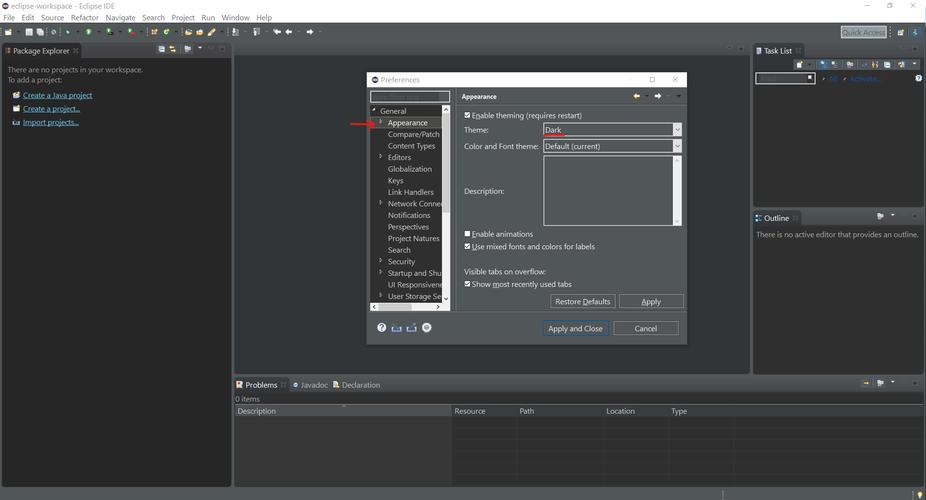
-
Find the Correct Eclipse Version:
- The last major version of the classic Eclipse IDE for Java Developers that officially supported Java 7 was Eclipse 4.7 (Oxygen).
- You can download it from the Eclipse Archive: https://www.eclipse.org/downloads/archive/
- Navigate to the "Oxygen" release (from 2025) and download the "Eclipse IDE for Java Developers" package for your operating system.
-
Install Java 7 JDK (Java Development Kit):
- Eclipse itself needs a JDK to run, and your projects need a JDK to compile.
- You will need to download a Java 7 JDK from an archive. Oracle no longer provides it for public download.
- A reliable source for old Oracle JDKs is the Java.net Archive or Adoptium (Eclipse Temurin).
- Java.net Archive: https://jdk.java.net/java-se-7-archive/ (Look for the JDK 7u80 or later update for your OS).
- Adoptium (Temurin): https://adoptium.net/temurin/releases/?version=7 (This is often easier as they provide installers).
-
Install and Configure:
- Install the Java 7 JDK you downloaded. Remember the installation path (e.g.,
C:\Program Files\Java\jdk1.7.0_80). - Unzip the downloaded Eclipse Oxygen file to a folder (e.g.,
C:\eclipse-oxygen). - Tell Eclipse where to find the Java 7 JDK:
- Run
eclipse.exe. - Go to
Window->Preferences. - Navigate to
Java->Installed JREs. - Click
Add.... - Select
Standard VMand clickNext. - Click
Directory...and browse to thejrefolder inside your Java 7 JDK installation path (e.g.,C:\Program Files\Java\jdk1.7.0_80\jre). - Give it a descriptive name like
JavaSE-1.7and clickFinish. - Make sure the checkbox next to your new Java 7 JRE is checked. You can select it from the dropdown.
- Click
Apply and Close.
- Run
- Install the Java 7 JDK you downloaded. Remember the installation path (e.g.,
You are now ready to create and run Java 7 projects.

Method 2: Using a Newer Eclipse Version (Not Recommended)
You can use a newer version of Eclipse (e.g., 2025-12 or later) and point it to a Java 7 JDK. This is possible but can lead to subtle issues.
- Install a Modern Eclipse: Download the latest "Eclipse IDE for Java Developers" from the main Eclipse website.
- Install Java 7 JDK: Follow step 2 from Method 1.
- Configure the JRE: Follow step 3 from Method 1 to add your Java 7 JDK as a "Installed JRE".
- Set Project Compliance: When you create a new Java project, you must explicitly tell it to use Java 7.
- In the "New Java Project" wizard, on the "Java Settings" page, go to the
Librariestab. - Select the
JRE System Libraryand clickEdit.... - Choose
Alternate JREand select your Java 7 JRE from the list. - You may also need to go to the
Java Compilertab and set the "Compiler compliance level" to7.
- In the "New Java Project" wizard, on the "Java Settings" page, go to the
Warning: Newer Eclipse versions may have features or UI elements that don't work correctly with the older Java 7 runtime. Method 1 is far more stable.
Part 2: Key Features of Java 7 (What You Can Use)
Java 7 introduced several helpful features that made coding more concise. Here are the most important ones you'll be using in Eclipse.
The Diamond Operator <>
This simplified generics by allowing the compiler to infer the type on the right-hand side.
- Before Java 7:
List<String> names = new ArrayList<String>();
Map<String, List<Integer>> map = new HashMap<String, List<Integer>>();
- In Java 7 (and later):
List<String> names = new ArrayList<>(); // Compiler infers ArrayList<String>
Map<String, List<Integer>> map = new HashMap<>(); // Compiler infers HashMap<String, List<Integer>>
try-with-resources (Automatic Resource Management)
This is a major improvement for handling resources like files or database connections, as it guarantees they are closed automatically, even if an exception occurs.
- Before Java 7 (Error-prone):
BufferedReader br = new BufferedReader(new FileReader("path/to/file.txt")); try { String line = br.readLine(); // ... do something with line } finally { if (br != null) { br.close(); // This must be done manually } } - In Java 7 (Clean and Safe):
// The resource declared in the try() block is automatically closed.
try (BufferedReader br = new BufferedReader(new FileReader("path/to/file.txt"))) {
    String line = br.readLine();
    // ... do something with line
} // br.close() is called here automatically
You can declare multiple resources:
try (Resource1 r1 = ...; Resource2 r2 = ...) { ... }
Strings in switch Statements
You can now use a String object as the expression in a switch statement.
public void printDay(String day) {
    switch (day) {
        case "MONDAY":
            System.out.println("The first day of the work week.");
            break;
        case "FRIDAY":
            System.out.println("TGIF!");
            break;
        case "SATURDAY":
        case "SUNDAY":
            System.out.println("The weekend!");
            break;
        default:
            System.out.println("A regular day.");
    }
}
Numeric Literals with Underscores (_)
To improve readability of large numbers, you can use underscores as separators.
long creditCardNumber = 1234_5678_9012_3456L;
long socialSecurityNumber = 999_99_9999L;
double pi = 3.14_15_92_65;
int hexBytes = 0xFF_EC_DE_5E;
Multi-Catch Exception Handling
You can catch multiple types of exceptions in a single catch block, reducing code duplication.
- Before Java 7:
try { // ... } catch (IOException e) { // handle IOException } catch (SQLException e) { // handle SQLException (almost the same way) } - In Java 7:
try {
    // ...
} catch (IOException | SQLException e) {
    // handle both IOException and SQLException with the same block
}
Part 3: Important Limitations in Eclipse for Java 7
- No Code Formatting for Newer Syntax: If you open a


