Of course! This is a fundamental concept in Java. Let's break down double and float in detail, comparing them and explaining when to use each.
The Core Idea: Floating-Point Numbers
Both double and float are used to represent numbers with a decimal point (e.g., 14, -0.001, 5). In programming, these are called floating-point numbers. The name comes from the fact that the decimal point can "float" to different positions within the number.
In Java, they are called "primitive" data types because they are the most basic building blocks for storing numerical data.
double vs. float: The Key Differences
The main difference between double and float is their precision (how many decimal digits they can accurately store) and memory size.
| Feature | double |
float |
|---|---|---|
| Full Name | Double-precision floating-point | Single-precision floating-point |
| Size in Memory | 64 bits (8 bytes) | 32 bits (4 bytes) |
| Precision | ~15-17 significant decimal digits | ~6-9 significant decimal digits |
| Default Type | Yes. If you write 14 in code, it's a double. |
No. You must explicitly add an f or F at the end (e.g., 14f). |
| Performance | Generally faster on modern CPUs (64-bit architectures). | Can be faster on older 32-bit systems or specific hardware, but this is less common today. |
Analogy: Measuring a Table
Imagine you need to measure the length of a table.

- A
floatis like using a standard ruler. You can measure to the nearest millimeter. For most purposes, this is good enough. - A
doubleis like using a high-precision laser measuring tool. You can measure to a fraction of a millimeter. It's more accurate and gives you more confidence in your measurement.
Declaration and Initialization
Here’s how you declare and use them in Java.
double (The Default)
Since double is the default, you can write numbers directly.
public class DoubleExample {
    public static void main(String[] args) {
        double pi = 3.14159265359;
        double price = 19.99;
        double scientificNotation = 1.23e10; // 1.23 * 10^10
        System.out.println("Pi is approximately: " + pi);
        System.out.println("Price: $" + price);
        System.out.println("Scientific Notation: " + scientificNotation);
    }
}
float (Requires the f or F Suffix)
If you want to use a float, you must tell the compiler by appending an f or F to the number. If you don't, Java will assume it's a double and you'll get a compilation error.
public class FloatExample {
    public static void main(String[] args) {
        // Correct way to initialize a float
        float floatPi = 3.14f; // Note the 'f'
        float floatPrice = 19.99F; // 'F' also works
        // This will cause a COMPILE ERROR!
        // float wrongPi = 3.14159; // Error: incompatible types: possible lossy conversion from double to float
        System.out.println("Float Pi is: " + floatPi);
        System.out.println("Float Price: $" + floatPrice);
    }
}
Precision in Action: A Critical Example
This is the most important takeaway: float has significantly less precision than double.
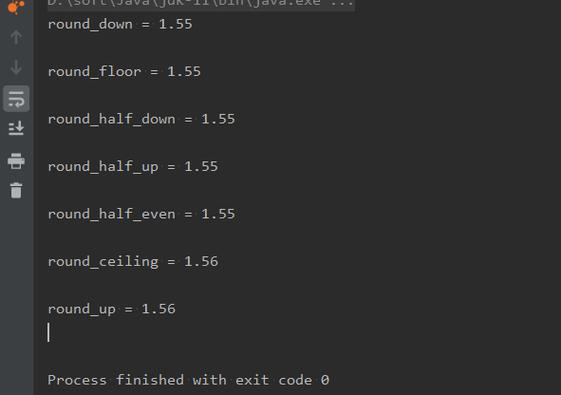
Let's see a practical example where this difference matters.
public class PrecisionDemo {
    public static void main(String[] args) {
        // Using double
        double doubleValue = 123.4567890123456789;
        System.out.println("Double value: " + doubleValue);
        // Output: Double value: 123.45678901234568
        // Using float
        float floatValue = 123.4567890123456789f; // Must use 'f'
        System.out.println("Float value:  " + floatValue);
        // Output: Float value:  123.45679
    }
}
Analysis:
- The
doublepreserved about 15-16 decimal digits. It's very close to the original number. - The
floatonly preserved about 7-8 significant digits. It lost precision and rounded the number.
This loss of precision can lead to significant errors in scientific calculations, financial software, or any application where accuracy is critical.
When to Use Which?
Use double when:
- It's the default and safest choice. Use it unless you have a specific reason not to.
- You need high precision for calculations (e.g., scientific, engineering, financial applications).
- You are reading numbers from files or databases that require high accuracy.
- Performance is not a critical bottleneck. On modern 64-bit systems,
doubleis often just as fast asfloat.
Use float when:
- You are working with very large datasets (e.g., 3D graphics, machine learning models) and memory usage is a major concern. A
floatuses half the memory of adouble. - You are targeting specific hardware (like some GPUs) that are optimized for single-precision (
float) arithmetic. - The application does not require high precision (e.g., a simple game score, a value that will be rounded for display anyway).
A Note on BigDecimal
For applications where precision is absolutely non-negotiable, like financial calculations, you should not use float or double at all. Both can introduce small rounding errors due to how they store numbers in binary.
Instead, use the java.math.BigDecimal class. It stores numbers as decimal strings, avoiding binary floating-point rounding issues.
import java.math.BigDecimal;
public class BigDecimalExample {
    public static void main(String[] args) {
        // Problem with double for money
        double price1 = 0.1 + 0.2;
        System.out.println("Double result: " + price1); // Output: 0.30000000000000004
        // Solution with BigDecimal
        BigDecimal bd1 = new BigDecimal("0.1");
        BigDecimal bd2 = new BigDecimal("0.2");
        BigDecimal price2 = bd1.add(bd2);
        System.out.println("BigDecimal result: " + price2); // Output: 0.3
    }
}
Summary
double |
float |
|
|---|---|---|
| Use Case | Default, general purpose, high precision. | Memory-critical applications, low precision requirements. |
| Rule of Thumb | Use double unless you have a specific reason to use float. |
Use float only when memory savings are crucial and precision loss is acceptable. |
| For Money | Do not use. Use BigDecimal instead. |
Do not use. Use BigDecimal instead. |