
Of course! The term "freelibrary" isn't a single, official Python library, but it's a great concept that can be interpreted in a few ways. I'll cover the most common interpretations:
- Libraries for Freelancers: Python libraries that help you run your freelance business (e.g., invoicing, time tracking, project management).
- Free and Open-Source Libraries (OSS): The most common meaning—popular, powerful Python libraries that are free to use, modify, and distribute.
- A Specific Library Named
freelibrary: A niche library I found on PyPI.
Let's break down each one.
Libraries for Freelancers (To Run Your Business)
If you're a freelancer, you can use Python to automate tasks, manage clients, and handle finances. Here are some libraries that can help you with that.
Invoicing & Accounting
-
pyinvoice: A simple library to create and manage invoices and quotes.- Use Case: Generate professional PDF invoices from your Python script, saving you time from creating them manually in Word or Excel.
- Example: Create an invoice, add items, hours, and rates, and then save it as a PDF file.
# pip install pyinvoice
from pyinvoice import Invoice
from pyinvoice.items import AbstractItem
inv = Invoice('your-company-logo.png')
inv.add_item(AbstractItem('Website Design', '1', '150.00'))
inv.add_item(AbstractItem('Hosting (3 months)', '1', '75.00'))
inv.add_item(AbstractItem('Domain Name (1 year)', '1', '15.00'))
inv.set_from('Your Name', 'Your Company')
inv.set_to('Client Name', 'Client Company')
inv.set_currency('USD')
inv.set_number('INV-2025-001')
inv.set_date('2025-10-27')
inv.add_meta('Due Date', '2025-11-27')
inv.add_meta('Notes', 'Thank you for your business!')
inv.save_invoice('invoice.pdf')
Time Tracking
-
timetracker: A lightweight library for tracking time spent on tasks. (图片来源网络,侵删)
- Use Case: Automatically log how much time you spend on different projects or for different clients. You can integrate this with your invoicing system.
- Example: Start a timer for a "Project A" task, stop it later, and get the total duration.
# pip install timetracker
from timetracker import Timer
timer = Timer()
timer.start("Writing Project Proposal")
# ... do some work for 5 minutes ...
timer.stop("Writing Project Proposal")
# Get the total time for that task
duration = timer.get_duration("Writing Project Proposal")
print(f"Time spent: {duration}")
Automation & Scripting
-
smtplib&email(Built-in): You don't need to install anything! These standard libraries are perfect for automating emails.- Use Case: Send automated invoice reminders, follow-up emails to clients, or project status updates.
- Example: A script that runs every week and sends an email to a list of clients.
import smtplib
from email.message import EmailMessage
msg = EmailMessage()
msg.set_content("This is a friendly reminder that your invoice is due soon.")
msg['Subject'] = 'Invoice Reminder'
msg['From'] = 'you@yourfreelancing.com'
msg['To'] = 'client@example.com'
# Use your email provider's SMTP server details
with smtplib.SMTP_SSL('smtp.gmail.com', 465) as s:
    s.login('you@yourfreelancing.com', 'your-app-password')
    s.send_message(msg)
Free and Open-Source (OSS) Python Libraries (The Most Common Meaning)
This is likely what you're looking for. These are the essential, free libraries that power almost everything in Python, from web development to data science. They are "free" as in freedom (you can use them for any purpose) and free of cost.
Data Science & Machine Learning
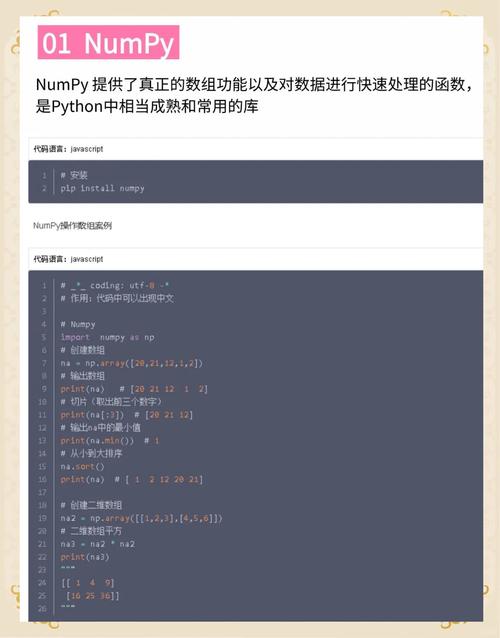
NumPy: The fundamental package for numerical computation in Python. It provides powerful N-dimensional array objects.Pandas: Built on NumPy, it provides easy-to-use data structures and data analysis tools for handling tabular data (like Excel or CSV files).Matplotlib&Seaborn: The go-to libraries for creating static, interactive, and publication-quality visualizations.Scikit-learn: The most popular library for classical machine learning. It includes tools for classification, regression, clustering, and more.TensorFlow&PyTorch: The two dominant libraries for building and training deep learning models (neural networks).
Web Development
Django: A high-level, "batteries-included" framework for building complex, database-driven web applications quickly.Flask: A lightweight, "micro-framework" that gives you the essentials to build a web application without forcing you into a specific project structure. Great for smaller projects or APIs.FastAPI: A modern, high-performance framework for building APIs with Python. It's extremely fast, easy to use, and has automatic interactive documentation.
Automation & Scripting
Requests: The de facto standard for making HTTP requests in Python. It simplifies interacting with web services and APIs.Beautiful Soup: A library for pulling data out of HTML and XML files. It's perfect for web scraping.Selenium: A powerful tool for automating web browsers. You can use it to interact with websites, fill out forms, and even test web applications.APScheduler: A library for scheduling jobs (like running a script every day at 3 AM). It's like a cron job but inside your Python application.
Image & Text Processing
Pillow (PIL): The friendly fork of the Python Imaging Library (PIL). It's the standard library for opening, manipulating, and saving many different image file formats.OpenCV: The massive, open-source library for computer vision, real-time video processing, and image manipulation.NLTK&spaCy: Leading libraries for natural language processing (NLP), used for tasks like text analysis, sentiment analysis, and named entity recognition.
A Specific Library Named freelibrary
On the Python Package Index (PyPI), there is a small, niche package named freelibrary.
-
What it is: It's a very simple library designed to manage a collection of books. It allows you to add books, search for them by title or author, and display your library.
 (图片来源网络,侵删)
 -
Use Case: This seems to be more of a learning or toy project than a serious business tool. It could be useful for understanding basic class and object concepts in Python.
-
How to use it:
- Installation:
pip install freelibrary - Basic Usage:
# pip install freelibrary from freelibrary import FreeLibrary # Create a new library instance my_library = FreeLibrary("My Personal Library") # Add some books my_library.add_book("The Hobbit", "J.R.R. Tolkien") my_library.add_book("1984", "George Orwell") my_library.add_book("Python Crash Course", "Eric Matthes") # Search for a book found_book = my_library.search_by_title("1984") if found_book: print(f"Found: {found_book.title} by {found_book.author}") # Display all books print("\n--- My Library ---") my_library.display_books() - Installation:
Summary
| Interpretation | Key Libraries | Best For |
|---|---|---|
| For Freelancers | pyinvoice, timetracker, smtplib |
Automating business tasks like invoicing, time tracking, and client communication. |
| Free & OSS (Common) | NumPy, Pandas, Django, Flask, Requests |
Almost everything! From data science and web development to automation and machine learning. |
Specific freelibrary |
freelibrary (from PyPI) |
A simple, educational example for managing a book collection. |
To get started with the powerful, free libraries, I highly recommend exploring the Python Packaging Authority (PyPA) or checking out lists of "best Python libraries" on sites like Real Python or Towards Data Science.


