Of course. The term "QQ2012 for Java" can be interpreted in a few different ways, ranging from a specific historical project to a general concept. I'll break it down for you from the most likely meaning to the broader context.
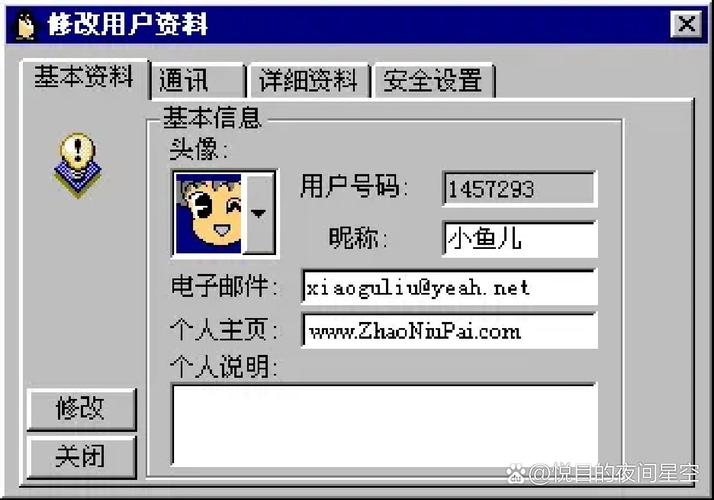
The Most Likely Meaning: The Tencent QQ 2012 Java Client (Unofficial)
This is the most direct interpretation. In the early 2010s, there was a popular, unofficial Java-based desktop client for Tencent QQ, often referred to by users as "QQ2012 for Java."
What Was It?
- A Third-Party Client: It was not developed or endorsed by Tencent. It was created by independent developers or small teams.
- Java-Based: The entire application was written in Java, which meant it was cross-platform. It could run on Windows, macOS, and Linux as long as the Java Runtime Environment (JRE) was installed.
- Nostalgic & Lightweight: For many users, it was a way to access QQ on operating systems where the official client wasn't available or on older computers. It had a simpler, more "classic" interface compared to the feature-heavy and resource-intensive official clients of the time.
Key Features of These Unofficial Java Clients:
- Core Functionality: Sending/receiving messages, viewing online/offline status, and managing contact lists.
- Cross-Platform: The biggest advantage. You could use the same application on any OS.
- Lightweight: Generally used fewer system resources than the official QQ client.
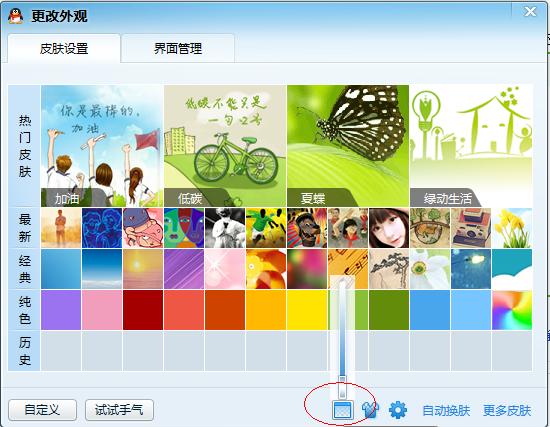
- Customization: Some versions offered more themes or visual customization options than the official client.
Why Did It Disappear?
- Tencent's Crackdown: Tencent actively worked to shut down unofficial clients. They used technical measures like requiring periodic login tokens that were hard for third parties to replicate, making these clients unreliable and prone to being banned.
- Shift to Official Clients: Tencent focused all its development on the official native clients (Windows, macOS, mobile) and later on the web version (Web QQ), which rendered these unofficial Java clients obsolete.
- Evolving Protocols: The underlying protocol for QQ communication is complex and constantly changes. Maintaining a third-party client required constant reverse-engineering effort, which was unsustainable for volunteer developers.
You will not be able to find or use this specific "QQ2012 for Java" client today. It is a piece of internet history.
The Modern Interpretation: Integrating Tencent's Services into a Java Application
Today, when someone asks about "QQ for Java," they are usually not looking for the old desktop client. Instead, they want to know how to use Tencent's services (like QQ, WeChat, etc.) within a modern Java application.
This is done through official APIs provided by Tencent.
A. Official Login API (QQ Login)
This is the most common use case. You can allow users to log into your Java web application or service using their QQ account, eliminating the need for you to create a separate user authentication system.
How it works:
- You register your application as a "QQ Connect" application on the Tencent Open Platform.
- You get an
App IDand anApp Key. - In your Java application (e.g., a Spring Boot app), you add a "Login with QQ" button.
- When a user clicks it, you redirect them to Tencent's authorization server.
- After the user approves, Tencent redirects them back to your application with a temporary
code. - Your Java server exchanges this
code(along with yourApp Key) for anaccess_tokenfrom Tencent. - Using the
access_token, you can then get the user's basic profile information (nickname, avatar, etc.).
Java Libraries/Frameworks to help:
- Spring Security OAuth2 Client: If you are using the Spring Boot framework, this makes integrating QQ Login very straightforward. You just need to configure the client ID, client secret, and redirect URI.
- ScribeJava: A more general-purpose OAuth library for Java that you can use to build the OAuth 2.0 flow manually.
Example (Conceptual Spring Boot Configuration):
// In your application.properties
spring.security.oauth2.client.registration.qq.client-id=YOUR_APP_ID
spring.security.oauth2.client.registration.qq.client-secret=YOUR_APP_KEY
spring.security.oauth2.client.registration.qq.scope=get_user_info
spring.security.oauth2.client.registration.qq.redirect-uri-template={baseUrl}/login/oauth2/code/qq
spring.security.oauth2.client.provider.qq.authorization-uri=https://graph.qq.com/oauth2.0/authorize
spring.security.oauth2.client.provider.qq.token-uri=https://graph.qq.com/oauth2.0/token
spring.security.oauth2.client.provider.qq.user-info-uri=https://graph.qq.com/user/get_user_info
spring.security.oauth2.client.provider.qq.user-info-user-name-attribute=nickname
B. Official Chat API (The Modern "QQ for Java")
Tencent does not provide a public API to send/receive arbitrary QQ messages from a third-party application. This is a deliberate security and privacy measure. An open chat API would be abused for spam and data harvesting.
The official chat APIs are for specific, controlled use cases:
- TIM (Tencent Enterprise IM) API: For enterprise internal communication. This is a B2B service and requires formal approval and integration.
- WeChat Work API: Similar to TIM, this is for enterprise communication within WeChat Work.
- Customer Service APIs: For businesses to integrate chatbots or customer service tools into their platforms. This is highly regulated and not for general-purpose messaging.
Learning Project: Building Your Own "QQ-like" Chat in Java
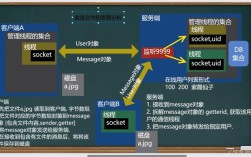
If your goal is to learn how to build a chat application in Java, you can create your own "QQ" from scratch. This is an excellent project for learning networking and concurrency.
Core Technologies You Would Use:
-
Backend (Server):
- Java Sockets (
java.net.Socket): The fundamental way for clients and servers to communicate over a network. - Threading (
java.lang.Thread): To handle multiple clients simultaneously. Each client connection would typically run on its own thread. - Advanced Frameworks (Optional): For a more robust and scalable solution, you could use frameworks like Netty (asynchronous event-driven network application framework) or Spring Boot to build the server.
- Java Sockets (
-
Frontend (Client):
- Java Swing: For building the graphical user interface (GUI) on the desktop. It's built into Java and great for learning.
- JavaFX: The modern successor to Swing, offering more advanced UI controls and styling.
- Web-based Frontend: You could build a server with Java (e.g., using Spring Boot) and a web-based frontend using HTML, CSS, and JavaScript, communicating via WebSockets.
Summary
| Interpretation | Description | Feasibility Today |
|---|---|---|
| Unofficial QQ2012 Java Client | A historical, third-party desktop client from the early 2010s. It is no longer available or usable due to Tencent's crackdown. | Not Available. |
| Integrating Tencent Services into Java | Using official APIs like "QQ Login" to allow users to authenticate with their QQ account within your Java application (e.g., a website). | Yes, this is the modern and correct approach. |
| Building Your Own Chat App in Java | A learning project where you create a client-server chat application from scratch using Java Sockets, Threading, Swing/JavaFX, etc. | Yes, an excellent way to learn. |