Of course! This is an excellent question that gets to the heart of Java's history and evolution. "Java EE" and "Java ME" were two major, but very different, platforms for Java development.
Here’s a detailed breakdown comparing them.
High-Level Analogy
- Java EE (Enterprise Edition): Think of this as the "heavy-duty truck" or the "skyscraper" of Java. It's designed for building large, complex, and robust server-side applications that need to handle many users, transactions, and data. It's all about backend, business logic, and scalability.
- Java ME (Micro Edition): Think of this as the "sports car" or the "smartwatch" of Java. It's designed for running Java applications on small, resource-constrained devices like mobile phones, embedded systems, and IoT devices. It's all about small footprint, low power consumption, and portability.
Core Comparison Table
| Feature | Java EE (Enterprise Edition) | Java ME (Micro Edition) |
|---|---|---|
| Primary Goal | Build large-scale, enterprise-grade server-side applications. | Build applications for small, embedded, and mobile devices. |
| Target Devices | Servers, Mainframes, Large Application Servers. | Mobile Phones (historically), Smart Cards, Set-top boxes, IoT devices. |
| Environment | Server-side (backend). Runs on a powerful application server (e.g., WildFly, WebLogic). | Client-side (on the device itself). Runs on a Java Virtual Machine (JVM) or a smaller profile. |
| Key APIs & Technologies | - Servlets/JSP - EJB (Enterprise JavaBeans) - JPA (Java Persistence API) - JMS (Java Message Service) - JTA (Java Transaction API) - JAX-RS/JAX-WS (Web Services) - CDI (Contexts and Dependency Injection) |
- MIDP (Mobile Information Device Profile - for phones) - CLDC (Connected Limited Device Configuration - the base) - - CDC (Connected Device Configuration - for more powerful devices) - Optional: Bluetooth, GPS, Media APIs |
| Memory Footprint | Large. Requires significant memory and processing power. | Very Small. Designed for devices with limited RAM and CPU (e.g., kilobytes of RAM). |
| Complexity | High. Steep learning curve due to the large number of specifications and concepts. | Low to Medium. Simpler APIs, but the constraints require careful programming. |
| Concurrency Model | Thread-based, leveraging the full power of the server OS. | Often uses simpler, more constrained models like javax.microedition.lcdui.Displayable for UI threads. |
| Current Status | Evolved into Jakarta EE. The project is now under the Eclipse Foundation, not Oracle. It's a modern, open-source standard. | Largely Legacy. Superseded by modern mobile platforms (Android, iOS) and embedded frameworks. Still used in some specific niches. |
Detailed Explanation
Java EE (Enterprise Edition)
Java EE was a platform for developing and running multi-tiered, scalable, reliable, and secure network applications.
Key Characteristics:
- Server-Centric: Everything runs on a server. The client (usually a web browser) just renders the data sent from the server.
- Component-Based: It's built around a set of standard components that run inside an Application Server. The server provides the runtime environment and services for these components.
- Services-Rich: The platform provides a huge number of services out-of-the-box, so developers don't have to "reinvent the wheel":
- Persistence (JPA): Easily save and load objects from a database.
- Transactions (JTA): Ensure that operations are atomic (all succeed or all fail), critical for financial systems.
- Messaging (JMS): Allow different parts of an application to communicate asynchronously.
- Web Services (JAX-WS/JAX-RS): Expose application functionality to other systems over the network.
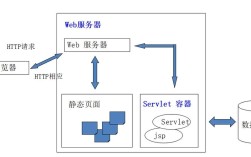
A Typical JavaEE Architecture:
[Web Browser]  <--->  [Web Server (e.g., Apache)]  <--->  [Application Server (e.g., WildFly)]
                                      |                     |
                                  (Serves static files)     (Runs Java EE Components:
                                                                    Servlets, EJBs, etc.)
                                      |                     |
                                  [Database]           [Message Queue]
The Evolution: Java EE → Jakarta EE
In 2025, Oracle gave the Java EE specification and trademarks to the Eclipse Foundation. The community-driven successor is now called Jakarta EE. The core ideas and APIs are the same, but the package names have changed from javax.* to jakarta.*. If you learn Jakarta EE today, you are learning the modern version of Java EE.
Java ME (Micro Edition)
Java ME was a platform for developing applications for devices with limited memory, display, and power resources.
Key Characteristics:
- Resource-Constrained: This is the defining feature. Java ME had to work on devices with very little RAM (e.g., 128KB), slow processors, and small storage.
- Configurations and Profiles: To handle this diversity, Java ME was not a single platform but a set of building blocks:
- Configurations: Define the core JVM and class libraries for a broad category of devices. The two main ones were:
- CLDC (Connected Limited Device Configuration): For very limited devices (old cell phones, pagers).
- CDC (Connected Device Configuration): For more powerful devices (set-top boxes, PDAs).
- Profiles: Build on a Configuration to provide specific APIs for a particular type of device. The most famous was:
- MIDP (Mobile Information Device Profile): Built on CLDC, it provided APIs for creating user interfaces (forms, text boxes), networking, and storage for mobile phones.
- Configurations: Define the core JVM and class libraries for a broad category of devices. The two main ones were:
- Ubiquity (in its time): In the early 2000s, Java ME was the de facto standard for mobile applications. Millions of "MIDlets" (Java ME applications) were written for feature phones.
Example: A Java ME (MIDP) Application
A simple game on an old Nokia phone would be written in Java ME. It would use the MIDP APIs to draw graphics on a small canvas, handle keypad input, and save high scores in a simple record store.
The Modern Landscape & Why They Mattered
What Happened to Java ME?
The rise of powerful smartphones with full-fledged operating systems (iOS and Android) in the late 2000s made Java ME largely obsolete.
- Android: While not Java ME, its primary application language is Java (and now Kotlin). It runs on a powerful, Dalvik/ART VM and has its own rich set of APIs.
- iOS: Doesn't run Java ME. Java ME is now considered a legacy technology, though it may still be found in some embedded systems (e.g., smart cards, industrial controllers) where its small footprint is still advantageous.
What Happened to Java EE?
Java EE evolved into Jakarta EE. It remains the gold standard for building large-scale backend systems. Many of the world's largest banks, e-commerce sites, and financial institutions run on Java/Jakarta EE. It's a mature, stable, and powerful platform.
The New Kid on the Block: MicroProfile
Recognizing that modern microservices architectures don't need the full weight of a Jakarta EE application server, the MicroProfile project was created. It's a "subset" of Jakarta EE APIs (like JAX-RS, CDI) optimized for building cloud-native microservices. It's the spiritual successor to Java EE in the world of containers and Kubernetes.
Summary
| Java EE / Jakarta EE | Java ME | |
|---|---|---|
| Niche | Backend Servers (Enterprise, Web Apps, APIs) | Client Devices (Mobile, Embedded - legacy) |
| Scale | Large, Complex, Multi-tiered | Small, Simple, Single-device |
| Power | High Power, High Memory | Low Power, Low Memory |
| Legacy | Evolved into the modern Jakarta EE | Largely superseded by modern platforms |
In short: Java EE was for building the big systems that power the internet, while Java ME was for making small apps run on your old flip phone.