Of course! This is a fundamental and excellent question for anyone learning Java. Let's break down the difference between Java SE and Java EE in a clear, structured way.
The Core Analogy: Building a House
Think of it like building a house:
- Java SE (Standard Edition) is the foundation, the frame, the walls, the roof, and the basic plumbing and electrical wiring. It's the essential toolkit and core materials you need to build any standalone structure.
- Java EE (Enterprise Edition) is the pre-packaged, high-end systems you add to the house: the smart home automation system, the central vacuum, the security alarm, the whole-house audio system, and the infrastructure for managing all of it. It's built on top of the foundation and provides specialized, ready-to-use components for larger, more complex buildings.
Detailed Breakdown
Here is a table summarizing the key differences:
| Feature | Java SE (Standard Edition) | Java EE (Enterprise Edition) |
|---|---|---|
| Purpose / Focus | Building general-purpose, standalone desktop and server applications. | Building large-scale, distributed, multi-tier, and robust network applications (like web portals, e-commerce sites, banking systems). |
| Core Components | - The Java Language (syntax, OOP) - Core APIs ( java.lang, java.util, java.io, java.net) - JVM (Java Virtual Machine) - Basic GUI tools (Swing, JavaFX) |
- All of Java SE - Web Services & APIs (Servlets, JSP, JAX-RS) - Database Connectivity (JDBC, JPA, JTA) - Transaction Management - Messaging (JMS) - Security (JAAS) - Dependency Injection (CDI) - Batch Processing (Batch) |
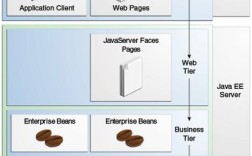
| Execution Environment | Runs on a standard JVM. Can be a simple command-line app or a desktop app. | Runs inside an Application Server (e.g., WildFly, TomEE, Payara, WebLogic). The server manages the complex lifecycle, security, and resources for you. |
| Typical Use Cases | - Desktop applications (e.g., a text editor, a media player) - Small command-line tools (e.g., a data processing script) - Libraries used by other applications - Android App Development (uses a modified SE) |
- Web Applications (e.g., an online shopping website) - Enterprise Service Buses (ESBs) - Microservices (using a subset like Jakarta EE or Spring Boot) - Large-scale backend systems (e.g., banking, insurance) |
| Key APIs / Technologies | String, List, Map, File, Socket, Thread, Swing, JavaFX |
@WebServlet, @Entity, EntityManager, @Inject, JAX-RS, JMS, EJB (Enterprise JavaBeans) |
| Evolution / Modern Status | The foundation. It is continuously updated with new features (e.g., records, pattern matching, virtual threads). It is the base for everything Java. | Evolved into Jakarta EE. Under Oracle's stewardship, the Java EE specification was donated to the Eclipse Foundation and is now developed as Jakarta EE. The move to Jakarta EE also involved migrating from the javax.* package namespace to jakarta.*. |
Key Concepts Explained
Relationship: Java EE is a Superset of Java SE
This is the most important point. To build a Java EE application, you must have Java SE. You cannot write a servlet (a core Java EE component) without using fundamental Java SE concepts like classes, objects, and exception handling.
The Role of the Application Server
This is the biggest differentiator in how you develop and run applications.
- Java SE: You write code, compile it, and run it directly on your machine using the
javacommand. The JVM starts, runs yourmainmethod, and then shuts down when your program finishes. - Java EE: You don't run your application directly. You deploy it (as a
.waror.earfile) into an Application Server.- The server provides a runtime environment that manages complex things for you:
- Lifecycle: It manages the creation and destruction of your application components.
- Concurrency: It handles multiple user requests at the same time in separate threads.
- Pooling: It maintains pools of database connections and threads for efficiency.
- Security: It enforces security policies and authenticates users.
- Services: It provides ready-to-use services like database connectivity and messaging.
- The server provides a runtime environment that manages complex things for you:
You, the developer, just need to write your business logic and let the server handle the "heavy lifting."
Evolution: From Java EE to Jakarta EE
For many years, Java EE was the standard for enterprise development. However, due to licensing and governance concerns, the Java EE specification and its reference implementation were donated to the Eclipse Foundation.
- Jakarta EE is the new name for the platform.
- The biggest visible change is the package namespace. All APIs that were previously in
javax.*(e.g.,javax.servlet.HttpServlet) are now injakarta.*(e.g.,jakarta.servlet.HttpServlet). - This means a modern Java EE application is almost always referred to as a Jakarta EE application.
Which One Should I Learn?
This depends entirely on your goals.
Learn Java SE First, Always.
No matter what you want to do with Java, you must start with Java SE. It is the absolute foundation. If you don't understand OOP, collections, exception handling, and basic I/O from SE, you will be lost in EE.
You should learn Java SE if you want to:
- Build desktop applications with JavaFX.
- Create small command-line tools or scripts.
- Learn programming fundamentals in a robust, object-oriented language.
- Get a solid foundation before moving to any other Java ecosystem.
Learn Java EE (Jakarta EE) if you want to:
- Build backend web services and APIs.
- Create complex, multi-tier web applications.
- Work for large companies that rely on enterprise systems (banks, insurance, large e-commerce).
- Understand how large-scale, distributed systems are built.
A Modern Note: The Rise of Spring Framework
While Java EE/Jakarta EE is a powerful and standardized platform, the Spring Framework (and its project Spring Boot) has become incredibly dominant in the industry for new projects.
- Spring is not a replacement for Java SE; it's a framework that runs on top of Java SE.
- It simplifies many of the complex tasks that Java EE provides, often with a more modern, flexible, and "convention-over-configuration" approach.
- Spring Boot makes it incredibly easy to create stand-alone, production-grade Spring-based applications that you can run with a simple
java -jarcommand, without needing a heavy Application Server.
Many developers today learn Java SE, then move directly to the Spring ecosystem, as it's often faster to develop with and is in extremely high demand. However, understanding the concepts of Java EE (like MVC, dependency injection, transactions) is still very valuable, as many older systems and Spring's own architecture are built on these principles.