Of course! The term "Python API Exchange" can mean a few different things. I'll cover the most common interpretations, starting with the most likely one: using a Python library to interact with a cryptocurrency exchange's API.
I'll also cover:
- Cryptocurrency Exchange APIs (The most common meaning)
- Currency Exchange APIs (for converting money)
- API Aggregators / Market Data Platforms (like Twelve Data or Polygon.io)
- Creating Your Own API with a Python Framework (like Flask or FastAPI)
Cryptocurrency Exchange APIs (Most Common)
This involves using Python to programmatically trade, get market data, or manage your account on an exchange like Binance, Coinbase Pro, Kraken, etc.
Key Concepts:
- API Keys: You'll need to generate an API key and secret from the exchange's website. The secret is never sent over the network; it's used to sign your requests.
- REST APIs: Most exchanges use REST APIs. You send HTTP requests (GET, POST, DELETE, etc.) to specific endpoints (URLs) to perform actions.
- WebSockets: For real-time data like price ticks, order book updates, or trade executions, WebSockets are much more efficient than repeatedly polling a REST endpoint.
- Libraries: You almost never want to implement the HTTP request signing and parsing yourself. Use a well-maintained library.
Popular Python Libraries for Crypto Exchanges:
| Exchange | Popular Python Library | GitHub Link | Notes |
|---|---|---|---|
| Binance | python-binance |
github.com/sammchardy/python-binance | Excellent, feature-rich, very popular. |
| Coinbase | coinbase-commerce (for Commerce API) coinbase-pro-python (for Pro API) |
github.com/coinbase/coinbase-commerce-python github.com/coinbase/coinbase-pro-python |
Official libraries from Coinbase. |
| Kraken | krakenex |
github.com/veox/python3-krakenex | A solid, community-driven library. |
| FTX | ftx-python |
github.com/ftexchange/ftx-python | Official library for the now-defunct FTX, but a good example structure. |
| ccxt | ccxt |
github.com/ccxt/ccxt | The Gold Standard. A massive, unified library for 100+ exchanges. Write one script, trade on many. |
Example: Using ccxt (The Recommended Approach)
ccxt is the most powerful library for this. It abstracts away the differences between exchanges, allowing you to write code that works on multiple platforms with minimal changes.
First, install it:
pip install ccxt
Example 1: Fetching the current price of Bitcoin (BTC/USDT) on Binance
import ccxt
# Initialize the exchange
# You can use any exchange supported by ccxt
exchange = ccxt.binance({
    'apiKey': 'YOUR_BINANCE_API_KEY',
    'secret': 'YOUR_BINANCE_SECRET',
    # 'enableRateLimit': True, # Recommended to avoid getting banned
})
# Note: For public data like ticker prices, you don't always need API keys
try:
    # Fetch the ticker for BTC/USDT
    ticker = exchange.fetch_ticker('BTC/USDT')
    print(f"Exchange: {exchange.name}")
    print(f"Symbol: {ticker['symbol']}")
    print(f"Last Price: {ticker['last']}")
    print(f"Bid Price: {ticker['bid']}")
    print(f"Ask Price: {ticker['ask']}")
    print(f"24h Volume: {ticker['baseVolume']}")
except ccxt.NetworkError as e:
    print(f"Network error: {e}")
except ccxt.ExchangeError as e:
    print(f"Exchange error: {e}")
except Exception as e:
    print(f"An error occurred: {e}")
Example 2: Placing a limit buy order on Kraken
import ccxt
# Initialize Kraken exchange
exchange = ccxt.kraken({
    'apiKey': 'YOUR_KRAKEN_API_KEY',
    'secret': 'YOUR_KRAKEN_SECRET',
    'enableRateLimit': True,
})
# Define the order parameters
symbol = 'BTC/USD'
order_type = 'limit'
side = 'buy'
amount = 0.001  # Buy 0.001 BTC
price = 30000   # Limit price of $30,000
try:
    print(f"Placing a {side} order for {amount} {symbol.split('/')[0]} at ${price} on {exchange.name}...")
    # Place the order
    order = exchange.create_order(symbol, order_type, side, amount, price)
    print("Order placed successfully!")
    print(f"Order ID: {order['id']}")
    print(f"Status: {order['status']}")
    print(f"Filled: {order['filled']}/{order['amount']}")
except ccxt.NetworkError as e:
    print(f"Network error: {e}")
except ccxt.ExchangeError as e:
    print(f"Exchange error: {e}")
except Exception as e:
    print(f"An error occurred: {e}")
Currency Exchange APIs (Forex / FX)
This is for converting between traditional fiat currencies (e.g., USD to EUR). These are typically simpler REST APIs.
Popular Services:
- ExchangeRate-API: Simple and generous free tier.
- Fixer.io: Reliable, requires API key for free tier.
- Open Exchange Rates: Popular, good free tier.
- European Central Bank (ECB): Free, public data, no API key needed.
Example: Using requests with ExchangeRate-API
First, install requests:
pip install requests
import requests
import os
# It's best practice to use environment variables for API keys
API_KEY = os.environ.get('EXCHANGERATE_API_KEY') # Get your key from https://www.exchangerate-api.com
BASE_URL = 'https://v6.exchangerate-api.com/v6/'
def get_exchange_rate(from_currency, to_currency):
    """Fetches the exchange rate between two currencies."""
    if not API_KEY:
        return "API key not found. Please set the EXCHANGERATE_API_KEY environment variable."
    url = f"{BASE_URL}{API_KEY}/pair/{from_currency}/{to_currency}"
    try:
        response = requests.get(url)
        response.raise_for_status()  # Raises an HTTPError for bad responses (4xx or 5xx)
        data = response.json()
        if data['result'] == 'success':
            return data['conversion_rate']
        else:
            return f"API Error: {data['error-type']}"
    except requests.exceptions.RequestException as e:
        return f"Request failed: {e}"
# --- Usage ---
usd_to_eur_rate = get_exchange_rate('USD', 'EUR')
gbp_to_jpy_rate = get_exchange_rate('GBP', 'JPY')
print(f"1 USD is equal to {usd_to_eur_rate} EUR")
print(f"1 GBP is equal to {gbp_to_jpy_rate} JPY")
API Aggregators / Market Data Platforms
These services provide a single, unified API to access market data from dozens or hundreds of sources (stocks, crypto, forex, etc.). This is often easier than integrating with each exchange individually.
- Twelve Data: Excellent for stocks, forex, and crypto.
- Polygon.io: A top-tier choice for US stock market data.
- Alpha Vantage: Very popular for free stock data.
Example: Using requests with Twelve Data
import requests
import os
API_KEY = os.environ.get('TWELVEDATA_API_KEY') # Get your key from https://twelvedata.com
BASE_URL = 'https://api.twelvedata.com/'
def get_stock_price(symbol):
    """Fetches the current price of a stock."""
    if not API_KEY:
        return "API key not found. Please set the TWELVEDATA_API_KEY environment variable."
    params = {
        'symbol': symbol,
        'interval': '1min',
        'apikey': API_KEY,
        'outputsize': '1' # We only need the latest data point
    }
    endpoint = f"{BASE_URL}/time_series"
    try:
        response = requests.get(endpoint, params=params)
        response.raise_for_status()
        data = response.json()
        if 'values' in data and len(data['values']) > 0:
            latest = data['values'][0]
            return f"{symbol}: ${latest['close']} (as of {latest['datetime']})"
        else:
            return f"No data found for {symbol}."
    except requests.exceptions.RequestException as e:
        return f"Request failed: {e}"
# --- Usage ---
print(get_stock_price('AAPL')) # Apple Inc.
print(get_stock_price('MSFT')) # Microsoft Corporation
Creating Your Own API with Python
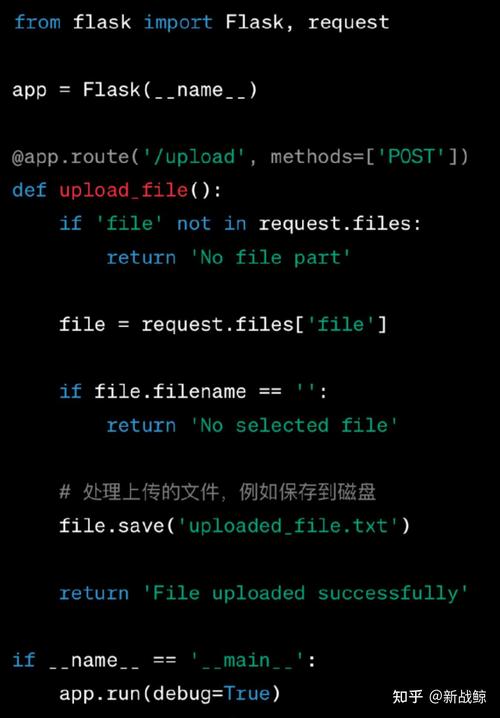
If you meant "how to create an API in Python", you should use a web framework. FastAPI is the modern, high-performance choice.
First, install FastAPI and Uvicorn:
pip install "fastapi[all]"
Example: A simple "currency exchange" API
# main.py
from fastapi import FastAPI
from pydantic import BaseModel
app = FastAPI()
# Define the data model for the request body
class ConversionRequest(BaseModel):
    from_currency: str
    to_currency: str
    amount: float
# Mock exchange rates
RATES = {
    "USD": 1.0,
    "EUR": 0.93,
    "GBP": 0.79,
    "JPY": 157.32,
}
@app.get("/")
def read_root():
    return {"message": "Welcome to the Currency Exchange API!"}
@app.post("/convert")
def convert_currency(request: ConversionRequest):
    """Converts an amount from one currency to another."""
    if request.from_currency not in RATES or request.to_currency not in RATES:
        return {"error": "Invalid currency code provided."}
    rate_from_usd = RATES[request.from_currency]
    rate_to_usd = RATES[request.to_currency]
    # Convert amount to USD first, then to target currency
    amount_in_usd = request.amount / rate_from_usd
    converted_amount = amount_in_usd * rate_to_usd
    return {
        "from_currency": request.from_currency,
        "to_currency": request.to_currency,
        "original_amount": request.amount,
        "converted_amount": round(converted_amount, 2),
        "exchange_rate_used": round(rate_to_usd / rate_from_usd, 6)
    }
# To run this API:
# 1. Save the code as main.py
# 2. Run the command: uvicorn main:app --reload
# 3. Open your browser to http://127.0.0.1:8000/docs to see the interactive API docs.
Summary
| Use Case | Tool / Library | Key Purpose |
|---|---|---|
| Crypto Trading | ccxt |
The best choice. Unified access to 100+ crypto exchanges. |
| Crypto (Single) | python-binance, krakenex |
Good if you only need one specific exchange. |
| Currency Conversion | requests |
Simple REST calls to services like ExchangeRate-API. |
| Market Data | requests |
Pull data from aggregators like Twelve Data or Polygon. |
| Create API | FastAPI | The best choice. Build modern, high-performance APIs. |