Of course! This is a classic and powerful technology stack. Let's break down each component, how they work together, and why this combination is so popular.

The Big Picture: The Three Roles
Think of this stack as a well-organized team:
-
MySQL (The Librarian / The Database of Record):
- Role: The single source of truth. It's responsible for persistent, reliable, and structured data storage. It's the "librarian" that keeps all the books (your data) in perfect order, ensuring they are there forever and can be found accurately.
- Strengths: ACID compliance (Atomicity, Consistency, Isolation, Durability), relational integrity (enforcing rules with foreign keys), powerful querying with SQL, and excellent for complex transactions.
- Weaknesses (in this context): Can be slow for read-heavy workloads. Every read requires a disk I/O, which is much slower than reading from memory. It can become a bottleneck if thousands of users try to read the same popular data at once.
-
Redis (The Cache / The Concierge):
- Role: The high-speed memory layer. It sits in front of MySQL to store frequently accessed data. It's the "concierge" who keeps a small notebook of the most common requests (like "What's the weather today?") so they can be answered instantly without having to go to the library every time.
- Strengths: Blazing fast (in-memory data store), simple key-value data structures (and more!), great for caching, sessions, leaderboards, and real-time analytics.
- Weaknesses: Data is volatile. If the server restarts, the data in Redis is gone (unless configured for persistence). It's not designed to be the primary database for all your application data.
-
Java (The Architect / The Brain):
 (图片来源网络,侵删)
- Role: The programming language that builds the application. It's the "architect" who designs the system, decides which data goes to the librarian (MySQL) and which data should be kept by the concierge (Redis), and implements the logic to move data between them.
- Strengths: Robust, object-oriented, platform-independent (JVM), massive ecosystem with countless libraries (like Spring Boot, Hibernate, Jedis/Lettuce), and excellent for building large, scalable, and maintainable enterprise applications.
How They Work Together: A Typical Workflow
Let's walk through the most common use case: Caching.
Scenario: A popular blog post is being read by thousands of users simultaneously.
The Problem Without Redis:
Every user requests the blog post. The Java application has to query the MySQL database for each request. MySQL gets hammered, its disk I/O maxes out, and the application becomes slow for everyone. This is called the "Thundering Herd" problem.
The Solution With Redis:
Here is the step-by-step process:
User Request Arrives
- A user's browser requests a blog post at
https://example.com/posts/123.
Java Application Logic
- The Java application (e.g., a Spring Boot controller) receives the request. It needs to get the content for post
123. - Before hitting the slow database, it first checks the fast cache: "Do I have post
123in Redis?"
The Cache Hit (The Happy Path)
- The Java application sends a command to Redis:
GET post:123. - Redis finds the data in its memory and instantly returns the blog post content.
- The Java application receives the data from Redis and sends it directly back to the user.
- Result: The response is extremely fast (milliseconds). MySQL is completely untouched.
The Cache Miss (The Fallback Path)
- A new user requests the same post. The Java application asks Redis:
GET post:123. - Redis doesn't have this data (it's a "cache miss").
- The Java application now proceeds to the "database of record," MySQL. It executes a query:
SELECT title, content FROM posts WHERE id = 123; - MySQL finds the data on disk and returns it to the Java application.
- This is the crucial step: The Java application, now having the data from MySQL, writes it to Redis so the next request will be a cache hit. It sends a command like
SET post:123 "{...the JSON data...}". - Finally, the Java application sends the data to the user.
Cache Invalidation (Keeping Data Fresh)
- What if the blog post is updated? The data in Redis is now stale (out of date).
- When an admin updates the post through the application, the Java application does two things:
- It updates the data in MySQL (the source of truth).
- It deletes the old data from Redis using the command
DEL post:123.
- This ensures that the next time a user requests the post, the application will get the fresh data from MySQL and then re-cache it.
Key Java Libraries for Integration
| Task | Java Library | Description |
|---|---|---|
| MySQL | JDBC (Java Database Connectivity) | The standard API for connecting Java applications to relational databases like MySQL. You'll use a driver like mysql-connector-java. |
| JPA (Java Persistence API) / Hibernate | A higher-level abstraction. You work with Java objects and annotations, and Hibernate automatically generates the SQL queries and manages the connection for you. This is the most common approach in modern frameworks like Spring Boot. | |
| Redis | Jedis | A simple, lightweight, and widely used Redis client for Java. It's straightforward and has a small footprint. |
| Lettuce | A modern, advanced Redis client. It is fully asynchronous and non-blocking, making it a great choice for reactive applications and high-concurrency environments. It's often the preferred choice in Spring Boot 2.x+. | |
| Framework | Spring Boot | While not a library itself, Spring Boot makes integrating both MySQL and Redis incredibly easy with its spring-boot-starter-data-jpa and spring-boot-starter-data-redis starters. It provides auto-configuration, so you can get a working connection with just a few lines in your application.properties file. |
Code Example (Simplified Spring Boot)
Here’s a glimpse of how the code might look.
Dependencies (pom.xml)
<dependencies>
    <!-- For Redis -->
    <dependency>
        <groupId>org.springframework.boot</groupId>
        <artifactId>spring-boot-starter-data-redis</artifactId>
    </dependency>
    <!-- For MySQL with JPA -->
    <dependency>
        <groupId>org.springframework.boot</groupId>
        <artifactId>spring-boot-starter-data-jpa</artifactId>
    </dependency>
    <dependency>
        <groupId>mysql</groupId>
        <artifactId>mysql-connector-java</artifactId>
        <scope>runtime</scope>
    </dependency>
</dependencies>
Configuration (application.properties)
# Redis Configuration
spring.redis.host=localhost
spring.redis.port=6379
# MySQL Configuration
spring.datasource.url=jdbc:mysql://localhost:3306/mydb
spring.datasource.username=root
spring.datasource.password=password
spring.jpa.hibernate.ddl-auto=update
Java Service Class (The Logic)
import org.springframework.beans.factory.annotation.Autowired;
import org.springframework.data.redis.core.RedisTemplate;
import org.springframework.stereotype.Service;
@Service
public class PostService {
    @Autowired
    private PostRepository postRepository; // Talks to MySQL
    @Autowired
    private RedisTemplate<String, Object> redisTemplate; // Talks to Redis
    private static final String POST_CACHE_KEY_PREFIX = "post:";
    public Post getPostById(Long id) {
        // 1. Try to get from Redis (Cache)
        String redisKey = POST_CACHE_KEY_PREFIX + id;
        Post cachedPost = (Post) redisTemplate.opsForValue().get(redisKey);
        if (cachedPost != null) {
            System.out.println("Cache HIT for post: " + id);
            return cachedPost; // Return data from cache
        }
        System.out.println("Cache MISS for post: " + id);
        // 2. If not in cache, get from MySQL (Database)
        Post postFromDb = postRepository.findById(id).orElse(null);
        if (postFromDb != null) {
            // 3. Cache the data for future requests
            redisTemplate.opsForValue().set(redisKey, postFromDb);
        }
        return postFromDb;
    }
    public void updatePost(Post post) {
        // 1. Update the database (source of truth)
        postRepository.save(post);
        // 2. Invalidate the cache
        String redisKey = POST_CACHE_KEY_PREFIX + post.getId();
        redisTemplate.delete(redisKey);
        System.out.println("Cache invalidated for post: " + post.getId());
    }
}
When to Use This Stack
- High-Traffic Web Applications: Any website or API that needs to serve many users quickly.
- E-commerce: For product catalogs (cache), user sessions (Redis), and order history (MySQL).
- Social Media: For user profiles, feeds (caching), and storing posts/comments (MySQL).
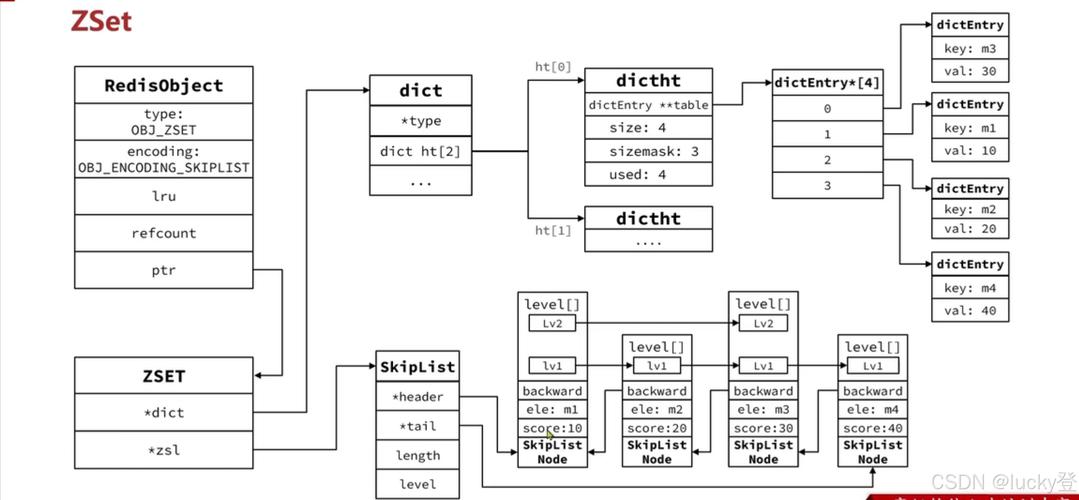
- Gaming: For leaderboards (Redis sorted sets), user sessions, and game state (MySQL).
In summary, the MySQL + Redis + Java stack provides a robust, scalable, and high-performance solution by combining the reliability of a traditional database with the speed of an in-memory cache, all orchestrated by the power and maturity of the Java ecosystem.