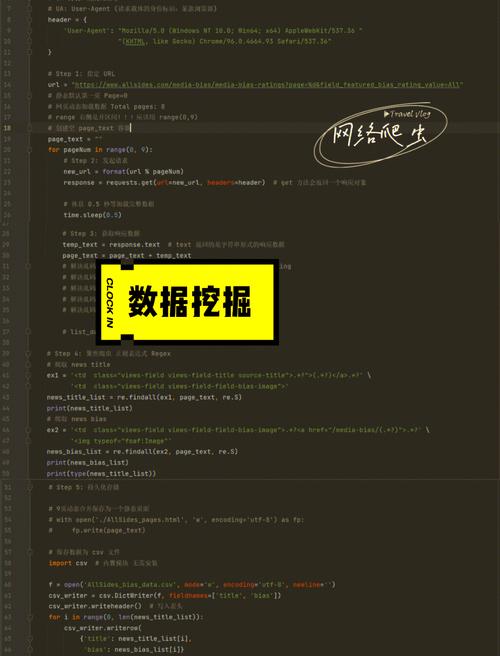
Of course. When people say "Python header first," they are usually referring to one of two things, both of which are best practices for writing clean, readable, and maintainable Python code.
Let's break them down.
The "File Header" or "Module Docstring"
This is the most common meaning. It refers to the block of comments and documentation at the very top of a Python file (.py). Its purpose is to explain what the file does, who wrote it, and how to use it.
A good file header typically includes:
- A one-line summary of the module's purpose.
- A more detailed description, if necessary.
- The author's name.
- The date of creation or last modification.
- The license for the code.
- Examples of how to use the module.
Why is it important?
- Readability: It's the first thing other developers (and your future self) will see. It provides immediate context.
- Maintainability: It saves time by explaining the "why" behind the code.
- Discoverability: Tools like IDEs and documentation generators (like Sphinx) can parse this information to help developers understand your code.
Example of a File Header:
# -*- coding: utf-8 -*-
"""
This module provides a set of utility functions for handling file operations.
It includes functions for reading, writing, and validating CSV and JSON files.
All file paths are expected to be absolute paths.
Example:
    >>> from my_project import file_utils
    >>> data = file_utils.read_json_config('/path/to/config.json')
    >>> print(data)
    {'key': 'value'}
"""
__author__ = "Jane Doe"
__copyright__ = "Copyright 2025, My Awesome Project"
__license__ = "MIT"
__version__ = "1.1.0"
__maintainer__ = "Jane Doe"
__email__ = "jane.doe@example.com"
__status__ = "Production" # Or "Development"
# --- Standard Library Imports ---
import os
import json
from typing import Dict, Any
# --- Third-Party Imports ---
import pandas as pd
# --- Local Application Imports ---
from . import custom_exceptions
# --- Constants ---
DEFAULT_CONFIG_PATH = "/etc/my_app/config.json"
Breakdown of the example:
# -*- coding: utf-8 -*-: An older but still valid way to declare the file's encoding. It's not strictly necessary in Python 3, as UTF-8 is the default, but it's good practice for compatibility."""Docstring""": This is the main module docstring. It's the most important part.__author__,__version__, etc.: These are "dunder" (double underscore) variables that provide metadata about the module. They are part of a convention described in PEP 8.- Import Sections: Grouping imports (Standard Library, Third-Party, Local) is a widely-followed convention that improves readability and helps manage dependencies.
The "Function/Class Header" (The Docstring)
This refers to the documentation string that comes immediately after the definition of a function or a class. It explains the purpose of that specific piece of code.
Why is it important?
- API Documentation: It's the primary way to document what a function does, what parameters it accepts, and what it returns.
- Tooling Integration: Tools like Sphinx, Pydoc, and IDEs (like VS Code or PyCharm) use these docstrings to provide:
- Hover tooltips that show the function signature and description.
- Automatically generated documentation websites.
- Autocomplete suggestions with descriptions.
Example of a Function Header (Docstring):
There are several popular docstring formats. The most common are Google Style and reStructuredText (reST), which is used by Sphinx.
Google Style Docstring (Recommended for new projects)
def calculate_average(numbers: list[float]) -> float:
    """Calculates the average of a list of numbers.
    This function handles empty lists by returning 0.0 to avoid
    a ZeroDivisionError.
    Args:
        numbers: A list of numerical values (integers or floats).
    Returns:
        The average of the numbers in the list. Returns 0.0 if the
        list is empty.
    Raises:
        TypeError: If the input is not a list.
    Example:
        >>> calculate_average([1, 2, 3, 4])
        2.5
        >>> calculate_average([])
        0.0
    """
    if not isinstance(numbers, list):
        raise TypeError("Input must be a list.")
    if not numbers:
        return 0.0
    return sum(numbers) / len(numbers)
reStructuredText (Sphinx) Docstring
def calculate_average(numbers: list[float]) -> float:
    """Calculates the average of a list of numbers.
    This function handles empty lists by returning 0.0 to avoid
    a ZeroDivisionError.
    :param numbers: A list of numerical values (integers or floats).
    :type numbers: list[float]
    :raises TypeError: If the input is not a list.
    :return: The average of the numbers in the list. Returns 0.0 if the
             list is empty.
    :rtype: float
    Example:
        >>> calculate_average([1, 2, 3, 4])
        2.5
    """
    if not isinstance(numbers, list):
        raise TypeError("Input must be a list.")
    if not numbers:
        return 0.0
    return sum(numbers) / len(numbers)
Summary: "Header First" Philosophy
In short, "header first" is a philosophy of prioritizing clarity and communication.
- Start with the "why": Before writing any code, write the header (docstring). Describe what the function or module is supposed to do. This forces you to think about its purpose and interface first.
- Document as you go: Don't treat documentation as an afterthought. Write the header first, then write the code that fulfills the promises made in the header.
- Make it easy for others (and yourself): A well-documented header is a gift to anyone who has to read or use your code, including you six months from now.
By following this "header first" approach, you create code that is not only functional but also professional, easy to understand, and a pleasure to work with.