That's a great question that gets to the heart of how Java works. The statement "Java is integer" is not accurate.
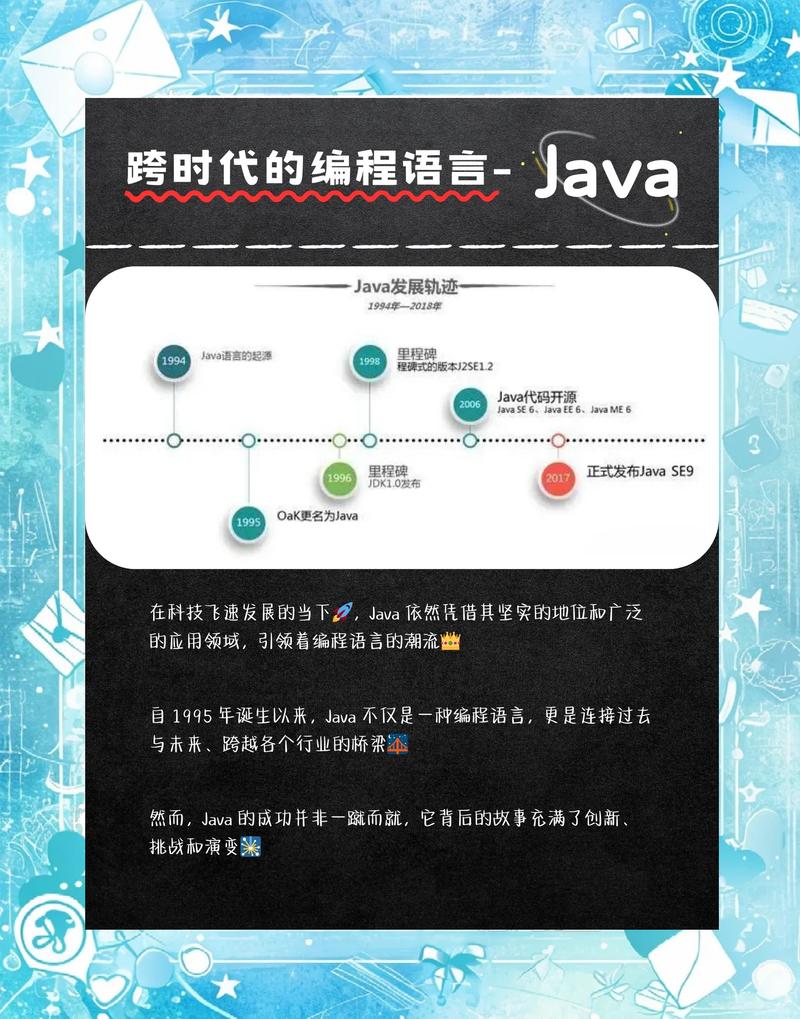
Java is a programming language, not a data type. However, integers are a fundamental and very important part of Java.
Let's break down the relationship between Java and integers.
What is Java?
Java is a high-level, class-based, object-oriented programming language. It's designed to have as few implementation dependencies as possible. It's a general-purpose language, meaning you can use it to build almost any kind of software, including:
- Web Applications (using frameworks like Spring)
- Mobile Apps (for Android)
- Desktop Applications (using JavaFX or Swing)
- Enterprise Software
- Big Data Technologies (like Hadoop and Spark)
So, saying "Java is integer" is like saying "English is the letter 'a'". English is a language, and 'a' is a character used within that language.
The Role of Integers in Java
Integers are a primitive data type in Java. They are used to store whole numbers (numbers without a decimal point).
The int Data Type
The most common integer type in Java is int. It's a workhorse for counting, indexing arrays, and general whole-number arithmetic.
- Size: It uses 32 bits of memory.
- Range: It can store values from -2,147,483,648 to 2,147,483,647.
Here is a simple example of how to declare and use an int in Java:
public class IntegerExample {
    public static void main(String[] args) {
        // Declare an integer variable named 'age' and assign it a value.
        int age = 30;
        // Declare another integer and perform arithmetic.
        int newAge = age + 5;
        // Print the results to the console.
        System.out.println("Current age: " + age);
        System.out.println("Age in 5 years: " + newAge);
    }
}
Output:
Current age: 30
Age in 5 years: 35
Other Integer Types in Java
Java has other integer types for different needs, primarily to save memory or handle larger numbers:
| Data Type | Size (bits) | Range (inclusive) | Use Case |
|---|---|---|---|
byte |
8 | -128 to 127 | Very small numbers, saves memory. |
short |
16 | -32,768 to 32,767 | Small numbers, saves memory. |
int |
32 | -2,147,483,648 to 2,147,483,647 | The default, most common integer type. |
long |
64 | -9,223,372,036,854,775,808 to 9,223,372,036,854,775,807 | Very large numbers, like counts or IDs. |
Example of long:
long worldPopulation = 7_900_000_000L; // Note the 'L' at the end to signify a long
The Integer Class (Wrapper Class)
In addition to the primitive int type, Java has an Integer class. This is called a wrapper class. It's used when you need an object instead of a primitive type, for example, in collections like ArrayList.
// Using the primitive 'int'
int primitiveInt = 10;
// Using the wrapper class 'Integer'
Integer integerObject = new Integer(10); // Old way
Integer anotherObject = 10;             // Modern way (autoboxing)
// You can store it in an ArrayList, which requires objects
ArrayList<Integer> numbers = new ArrayList<>();
numbers.add(5); // Java automatically converts the int '5' to an Integer object
The Famous "Java is Pass-by-Value" Confusion
Sometimes, people mix up "integer" with the concept of "pass-by-value". In Java, all method calls are pass-by-value.
This means when you pass a variable to a method, you are passing a copy of its value.
- For primitives (like
int): The copy is independent. Changing the copy inside the method does not affect the original variable. - For objects (like
Integeror arrays): The copy is a reference to the same object. You can change the contents of the object, but you cannot make the original reference point to a new object.
This is a key concept in Java, but it's about how data is passed, not what Java is.
Summary
| Concept | Description |
|---|---|
| Java | A powerful, general-purpose programming language. |
int |
A primitive data type in Java used to store whole numbers. |
| Integer | The wrapper class for the int primitive, used when an object is needed. |
| "Java is integer" | Incorrect. It's like saying "a car is a wheel". A wheel is a crucial part of a car, but the car is much more. |
So, while integers are a fundamental building block in Java, the language itself is a vast and versatile tool for software development.