Of course! Let's dive deep into daemon threads in Python.
What is a Daemon Thread?
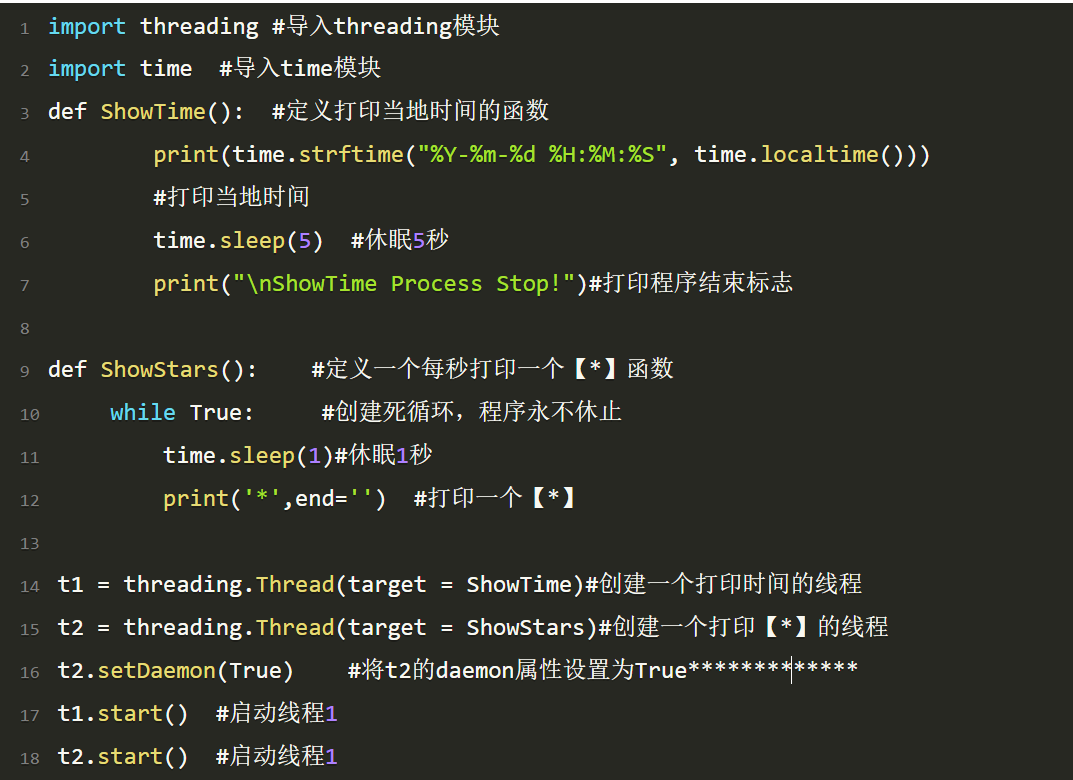
In Python, a daemon thread is a background thread that automatically terminates when the main program (the main thread) finishes execution. Think of it as a "helper" thread that performs a task but is not critical for the program's core functionality.
The key characteristic is: If the main thread is done, all daemon threads are killed, no matter what they are doing.
How to Create and Use Daemon Threads
You can mark a thread as a daemon in two ways:
-
Using the
daemonargument in the constructor: (图片来源网络,侵删)
my_thread = threading.Thread(target=my_function, daemon=True)
-
Setting the
daemonproperty after creating the thread:my_thread = threading.Thread(target=my_function) my_thread.daemon = True
A thread's daemon status can only be set before it has been started. Trying to change it after thread.start() will raise a RuntimeError.
Simple Example: A Daemon Thread
Let's create a simple example to see this in action. We'll have a daemon thread that runs indefinitely, printing a message every second.
import threading
import time
def background_task():
    """This function runs in a daemon thread."""
    print("Daemon thread: Starting.")
    while True:
        print("Daemon thread: Still running...")
        time.sleep(1)
# Create and start the daemon thread
daemon_thread = threading.Thread(target=background_task, daemon=True)
daemon_thread.start()
# The main thread does some work and then exits
print("Main thread: Starting work.")
time.sleep(3)  # Simulate main thread doing work for 3 seconds
print("Main thread: Work finished. Now exiting.")
# Once the main thread finishes, the program will exit,
# and the daemon thread will be killed abruptly.
Expected Output:
Main thread: Starting work.
Daemon thread: Starting.
Daemon thread: Still running...
Daemon thread: Still running...
Daemon thread: Still running...
Main thread: Work finished. Now exiting.
Notice that the daemon thread's "Still running..." messages stop after the main thread finishes. The program exits immediately, and the daemon thread is terminated mid-sentence.
Key Differences: Daemon vs. Non-Daemon (User) Threads
| Feature | Daemon Thread | Non-Daemon (User) Thread |
|---|---|---|
| Purpose | Background tasks, not critical for program exit. | Core tasks, must complete for the program to be considered "done". |
| Lifecycle | Automatically terminates when the main thread exits. | The program will wait for this thread to finish before exiting. |
join() Behavior |
If you call daemon_thread.join(), the main thread will wait for the daemon thread to finish. This temporarily overrides its "auto-terminate" nature. |
non_daemon_thread.join() will always make the main thread wait. |
| Use Cases | Log rotation, garbage collection, monitoring tasks, connection keep-alives. | File processing, data fetching, core business logic. |
When to Use Daemon Threads
Daemon threads are perfect for tasks that should not prevent your program from shutting down. Common use cases include:
- Logging: A thread that periodically writes logs to a file. If the program crashes, you don't want the logging thread to keep the process alive.
- Monitoring: A thread that checks system health or resource usage. It's a background helper.
- Connection Keep-Alive: A thread that sends a "ping" to a server every few minutes to maintain a connection. If the main program ends, the connection is no longer needed.
- Garbage Collection (GC): In Python, the garbage collector often runs in a daemon thread. It cleans up unused memory, but if the program is done, there's no need to finish a full GC cycle.
When NOT to Use Daemon Threads
Crucially, never use daemon threads for tasks that involve critical resources or cleanup.
Because daemon threads are killed abruptly, they are not suitable for:
- Writing to a file or database: You could leave the file in a corrupted or inconsistent state if the thread is terminated mid-write.
- Network operations: You might not be able to properly close a network socket, leading to resource leaks on the server or client.
- Any task that requires a "clean exit" or finalization.
If a thread needs to perform cleanup, it should be a non-daemon thread, and the main program should wait for it using thread.join().
The threading.main_thread()
It's important to know that the main thread of execution is, by default, a non-daemon thread. This is why the program will wait for any non-daemon threads to finish before exiting.
You can get a reference to the main thread like this:
main_thread = threading.main_thread()
print(f"Is the main thread a daemon? {main_thread.daemon}") # Output: False
A Complete Example: Waiting for a Daemon Thread
This example shows how join() can make a daemon thread behave like a non-daemon one temporarily.
import threading
import time
def long_running_daemon_task():
    print("Daemon: Starting my long task...")
    time.sleep(5) # Simulate a task that takes 5 seconds
    print("Daemon: Task finished!")
# Create a daemon thread
daemon_thread = threading.Thread(target=long_running_daemon_task, daemon=True)
daemon_thread.start()
print("Main: I will now wait for the daemon thread to finish using join().")
# The main thread will pause here until the daemon thread completes
daemon_thread.join()
print("Main: The daemon thread has completed. Now I can exit.")
Expected Output:
Main: I will now wait for the daemon thread to finish using join().
Daemon: Starting my long task...
(Delays for 5 seconds)
Daemon: Task finished!
Main: The daemon thread has completed. Now I can exit.
In this case, even though daemon_thread is a daemon, the join() call forces the main thread to wait, so the program waits for the 5-second task to complete.
Summary
- A daemon thread is a background thread that dies when the main program exits.
- Set it using
thread = threading.Thread(..., daemon=True)orthread.daemon = True. - Use daemon threads for non-critical background tasks like logging or monitoring.
- Never use them for tasks that require cleanup or handling critical resources (like files or databases).
- The main thread is always a non-daemon thread.
- You can force the main thread to wait for a daemon thread to finish by calling
thread.join().