Of course! Let's dive deep into using Python with Redis's LRANGE command. We'll cover what it is, how to use it with the popular redis-py library, and provide clear examples.

What is LRANGE in Redis?
LRANGE is a Redis command used to get a range of elements from a List.
- Command:
LRANGE key start stop - Purpose: To retrieve a slice of the list stored at
key. - Key Parameters:
key: The name of the list you want to access.start: The zero-based index of the first element to retrieve.stop: The zero-based index of the last element to retrieve.
Important Behavior of start and stop:
- Positive Indices:
0is the first element,1is the second, and so on.-1is a special value that means the last element,-2means the second-to-last, etc. - Out-of-Bounds Indices: If you use an index that is out of range (e.g., asking for index 10 in a list of 5 elements), Redis will just return as many elements as are available. It will not throw an error.
- Non-existent Keys: If the
keydoes not exist, Redis returns an empty list.
Step 1: Installation
First, you need to install the redis-py library, which is the official Python client for Redis.
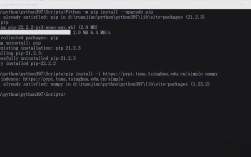
pip install redis
You also need a running Redis server. You can easily run one with Docker:
docker run -d -p 6379:6379 redis
Step 2: Connecting to Redis
Before you can use any Redis commands, you need to establish a connection.

import redis
# Connect to your Redis server
# By default, it connects to localhost on port 6379
try:
    r = redis.Redis(host='localhost', port=6379, decode_responses=True)
    # The decode_responses=True argument is very useful.
    # It makes Redis return strings instead of bytes, which is easier to work with.
    r.ping() # A simple check to see if the connection is working
    print("Connected to Redis successfully!")
except redis.ConnectionError as e:
    print(f"Could not connect to Redis: {e}")
    exit(1)
Step 3: Using LRANGE with redis-py
In redis-py, the LRANGE command is mapped to the lrange method of the Redis object.
Method Signature: r.lrange(key, start, stop)
It returns a list of strings.
Let's set up some data first.

Setup: Populating a List
We'll use LPUSH (Left Push) to add elements to a list named my_tasks. This is a common way to create a queue or a simple list.
# Clear the list to start fresh (optional)
r.delete('my_tasks')
# Add some tasks to the list using LPUSH
# LPUSH adds elements to the *beginning* of the list
r.lpush('my_tasks', 'Task 3: Write documentation')
r.lpush('my_tasks', 'Task 2: Write unit tests')
r.lpush('my_tasks', 'Task 1: Design architecture')
print("Initial list 'my_tasks':", r.lrange('my_tasks', 0, -1))
# Expected Output: ['Task 1: Design architecture', 'Task 2: Write unit tests', 'Task 3: Write documentation']
Example 1: Get the Entire List
To get all elements, you can use 0 for start and -1 for stop.
all_tasks = r.lrange('my_tasks', 0, -1)
print("\nAll tasks (0 to -1):", all_tasks)
# Expected Output: ['Task 1: Design architecture', 'Task 2: Write unit tests', 'Task 3: Write documentation']
Example 2: Get the First Two Elements
To get elements from the beginning of the list up to index 1.
first_two_tasks = r.lrange('my_tasks', 0, 1)
print("\nFirst two tasks (0 to 1):", first_two_tasks)
# Expected Output: ['Task 1: Design architecture', 'Task 2: Write unit tests']
Example 3: Get the Last Two Elements
Using negative indices is very convenient. To get the last two elements, you can use -2 for start and -1 for stop.
last_two_tasks = r.lrange('my_tasks', -2, -1)
print("\nLast two tasks (-2 to -1):", last_two_tasks)
# Expected Output: ['Task 2: Write unit tests', 'Task 3: Write documentation']
Example 4: Get a Single Element
To get a single element at a specific index, use the same index for both start and stop.
second_task = r.lrange('my_tasks', 1, 1)
print("\nSecond task (1 to 1):", second_task)
# Expected Output: ['Task 2: Write unit tests']
Example 5: Handling an Out-of-Range Index
Let's try to get elements from index 1 to 10. Our list only has 3 elements. As mentioned, Redis handles this gracefully.
out_of_range_tasks = r.lrange('my_tasks', 1, 10)
print("\nTasks from index 1 to 10:", out_of_range_tasks)
# Expected Output: ['Task 2: Write unit tests', 'Task 3: Write documentation']
# It returns all available elements from the start index.
Example 6: Handling a Non-Existent Key
Let's try to get a range from a list that doesn't exist.
non_existent_list = r.lrange('non_existent_key', 0, -1)
print("\nRange from a non-existent key:", non_existent_list)
# Expected Output: []
# It returns an empty list, which is safe to work with.
Complete Runnable Example
Here is a full script you can run to see all the examples in action.
import redis
# --- Connection ---
try:
    r = redis.Redis(host='localhost', port=6379, decode_responses=True)
    r.ping()
    print("✅ Connected to Redis successfully!")
except redis.ConnectionError as e:
    print(f"❌ Could not connect to Redis: {e}")
    exit(1)
# --- Setup ---
KEY_NAME = 'my_project_tasks'
r.delete(KEY_NAME) # Clean up previous runs
print(f"\n--- Setting up list '{KEY_NAME}' ---")
r.lpush(KEY_NAME, 'Deploy to staging')
r.lpush(KEY_NAME, 'Run integration tests')
r.lpush(KEY_NAME, 'Write code for feature X')
r.lpush(KEY_NAME, 'Review pull request')
print(f"Initial list: {r.lrange(KEY_NAME, 0, -1)}")
# --- Examples ---
# 1. Get all tasks
print(f"\n--- Example 1: Get all tasks ---")
all_tasks = r.lrange(KEY_NAME, 0, -1)
print(f"All tasks: {all_tasks}")
# 2. Get the first 2 tasks (indices 0 and 1)
print(f"\n--- Example 2: Get the first 2 tasks ---")
first_two = r.lrange(KEY_NAME, 0, 1)
print(f"First two tasks: {first_two}")
# 3. Get the last 2 tasks (using negative indices)
print(f"\n--- Example 3: Get the last 2 tasks ---")
last_two = r.lrange(KEY_NAME, -2, -1)
print(f"Last two tasks: {last_two}")
# 4. Get a single task (e.g., the third one)
print(f"\n--- Example 4: Get a single task ---")
third_task = r.lrange(KEY_NAME, 2, 2)
print(f"Task at index 2: {third_task}")
# 5. Handle out-of-range request
print(f"\n--- Example 5: Handle out-of-range request ---")
out_of_range = r.lrange(KEY_NAME, 1, 99)
print(f"Tasks from index 1 to 99: {out_of_range}")
# 6. Handle non-existent key
print(f"\n--- Example 6: Handle non-existent key ---")
non_existent = r.lrange('ghost_list', 0, -1)
print(f"Contents of 'ghost_list': {non_existent}")
Common Use Cases for LRANGE
- Activity Feeds: A user's recent activity can be stored in a list.
LRANGEcan be used to fetch the latest 10, 20, or 50 activities for their dashboard. - Data Pipelines: In a log processing system, new log entries can be
LPUSHed onto a list. A consumer process can useLRANGEto fetch a batch of logs to process. - Simple Caching: You can cache a list of results (e.g., "recent products," "top articles") in Redis and retrieve it with
LRANGE, which is extremely fast. - Message Queues (Simple): While
RPOPLPUSHorBRPOPare better for true queues,LRANGEis useful for peeking at the messages in the queue without removing them.