Of course! The phrase "Python manager list" can mean a few different things. I'll cover the most common interpretations, from the most likely meaning to others you might be looking for.
The Most Likely Meaning: A List of Python Package Managers
This is probably what you're looking for. A package manager is a tool that automates the process of installing, updating, and removing Python libraries (packages) and their dependencies.
Here is a list of the most important Python package managers, from the essential to the more specialized.
The Essential Trio: pip, venv, and py
These three tools are bundled with modern Python installations and are fundamental to any Python project.
| Manager | What It Is | Primary Use Case | Key Command Example |
|---|---|---|---|
pip |
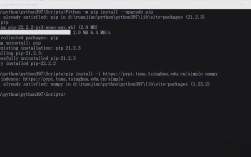
The Package Installer for Python. It's the standard tool for installing packages from the Python Package Index (PyPI). | Installing third-party libraries for your project. | pip install requests |
venv |
Virtual Environment Creator. It creates isolated, self-contained Python environments. This is crucial for managing dependencies per project. | Creating project-specific environments to avoid dependency conflicts. | python -m venv my-project-env |
py |
The Python Launcher. A cross-platform command-line tool that helps manage multiple Python versions installed on your system. | Running scripts with a specific Python version or finding where Python is installed. | py -3.11 my_script.py |
The Modern Standard: pip + venv in a pyproject.toml World
This is the current best-practice workflow, standardized by the PEP 518 and PEP 621 specifications.
| Tool/Concept | What It Is | Role in the Workflow |
|---|---|---|
pip |
The installer. | Installs packages, both from pyproject.toml and directly. |
venv |
The environment creator. | Creates an isolated space for your project's dependencies. |
pyproject.toml |
A configuration file (using TOML format). | Defines project metadata, dependencies, and build requirements in a standardized way. |
Build Backends (e.g., setuptools, flit, hatchling) |
Tools that read pyproject.toml and build your package. |
They are used by pip to install your project in "editable" mode (pip install -e .). |
Typical Modern Workflow:
python -m venv .venv.venv\Scripts\activate(on Windows) orsource .venv/bin/activate(on macOS/Linux)pip install -e .(installs your project and its dependencies frompyproject.toml)
High-Level Project and Dependency Management
These tools are built on top of pip and venv to provide more powerful features like lockfiles and dependency management across multiple environments.
| Manager | What It Is | Primary Use Case | Key Command Example |
|---|---|---|---|
| Poetry | A comprehensive tool for dependency management and packaging. It manages pyproject.toml, creates virtual environments, and builds/publishes packages. |
Full project lifecycle management, especially for libraries and complex applications. | poetry add pandas |
| PDM | A modern Python package and dependency manager that respects pyproject.toml. It uses a lockfile and is known for its speed and PEP 621 compliance. |
A powerful, fast, and modern alternative to Poetry, especially for teams. | pdm add numpy |
| Hatch | A full-featured project management and packaging system. It provides a powerful build backend and a plugin system for tools like hatch env and hatch build. |
Robust project management with a strong focus on extensibility and developer experience. | hatch run test |
Specialized and Legacy Managers
These tools are used for specific purposes or are older but still relevant in certain contexts.
| Manager | What It Is | Primary Use Case | Key Command Example |
|---|---|---|---|
| Conda | A cross-platform language-agnostic binary package and environment manager. It handles non-Python dependencies (like C libraries) very well. | Scientific computing (data science, machine learning), managing complex C/C++ dependencies. | conda install tensorflow |
easy_install |
The predecessor to pip. It was the standard for Python 2. |
(Legacy) Installing packages in older Python 2 projects. | easy_install flask |
setuptools |
A library for packaging Python projects. Its setup.py script was the traditional way to define project metadata and dependencies. |
(Legacy/Legacy migration) Defining packages for older projects or when pyproject.toml is not an option. |
python setup.py install |
Other Possible Meanings
A) How to List Installed Packages with pip
If you meant "how do I list the packages installed in my Python environment?", you use pip.
List all installed packages:
pip list
This will show you a simple list of package names and versions.
List packages with detailed output (useful for copying):
pip list --format=freeze
This is the output you would typically copy into a requirements.txt file.
List outdated packages:
pip list --outdated
This is very useful for seeing which packages have newer versions available.
B) How to List Available Environments
If you meant "how do I list the virtual environments I have created?", the answer depends on your tool.
-
For
venvenvironments: You typically have to look in your project folders. There's no globalvenvcommand to list them all. They are usually named.venv,venv, orenv. -
For
condaenvironments: Conda has a built-in command for this.conda env list # or the shorter version conda env list
-
For
venv/pipenvironments managed by a tool likePDM:pdm show envs
Summary and Recommendation
| If you want to... | Use this tool... |
|---|---|
| Install a library | pip |
| Isolate a project's dependencies | venv |
| Manage a complete project (dependencies, env, builds) | Poetry or PDM |
| Work in data science (handle C libs) | Conda |
| See what's installed in your current env | pip list |
| See what virtual environments you have | conda env list (for conda) or check your folders (for venv) |
For most new Python projects today, the recommended stack is pip + venv + pyproject.toml. For a more streamlined, all-in-one experience, Poetry or PDM are excellent choices.