Of course. "Thinking in Java" is a very famous and highly-regarded book in the programming world. Here's a detailed breakdown of the book, its author, its significance, and how to approach it.
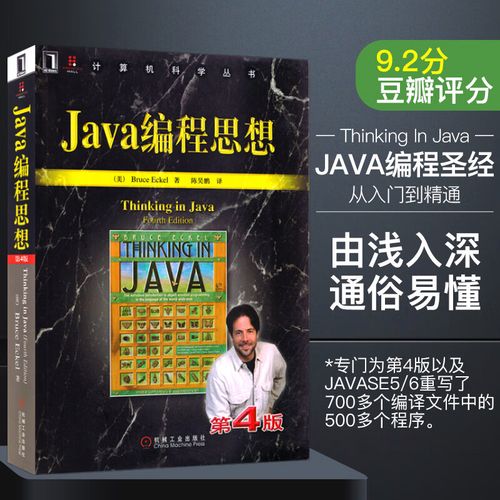
The Book: "Thinking in Java"
Author: Bruce Eckel
Full Title: Thinking in Java (often referred to as "TIJ")
Status: It is considered a classic and one of the most influential books for learning the Java programming language, especially for those who already have some programming experience.
Core Philosophy
itself, "Thinking in Java," is the core philosophy. The book is not just a reference manual that lists Java's features. Instead, it aims to teach you how to think like a Java programmer. This means:
- Object-Oriented Programming (OOP): It deeply ingrains the principles of OOP (abstraction, encapsulation, inheritance, polymorphism) specifically within the context of Java.
- The Java Way: It explains not just what a feature does, but why it was designed that way and the problems it solves.
- Comprehensive Foundation: It covers the language from the ground up, including advanced topics that are often skipped in introductory texts.
Key Features and Content
- Thoroughness: It's a massive book (over 1,000 pages in its heyday) that covers almost every corner of the core Java language.
- Clarity and Readability: Eckel is known for his clear, accessible writing style. He uses analogies and avoids overly academic jargon.
- Progressive Learning: The book is structured to build concepts upon each other, starting from the basics of syntax and objects and moving to complex topics like multithreading, networking, and advanced generics.
- Practical Examples: It's filled with code examples that are designed to be run and modified by the reader. These examples are central to the learning process.
- Focus on Fundamentals: It spends a significant amount of time on foundational concepts like:
- Control Flow
- Working with Objects and Classes
- Error Handling with Exceptions
- Strings and I/O
- Collections (Data Structures)
- Inner Classes
- Generics
- Multithreading and Concurrency
- Networking basics
Editions and Evolution
- Early Editions (2nd, 3rd, 4th): These are the most famous and widely used. The 4th Edition is often considered the peak and a masterpiece. It covers Java 5 and 6, which introduced major features like Generics,
enums, andfor-eachloops. - Later Editions (5th, 6th): These updated the book for newer Java versions (Java 7 and 8), but some readers felt the magic of the early editions was slightly diluted.
- Availability: The 4th Edition is legally available for free in PDF form from Eckel's website, which is one of the reasons for its enduring popularity.
Is It Good for You?
Who Should Read "Thinking in Java"?
- Programmers transitioning from C/C++: The book does an excellent job of explaining Java's differences from C++, making it a perfect bridge.
- Experienced programmers from other languages (Python, C#, etc.): If you know programming concepts but not Java, this book will give you a deep, solid understanding of the language's design and philosophy.
- Intermediate Java developers who want to solidify their foundation: If you've been using Java but feel you're missing some of the "why" behind the features, this book will fill those gaps.
Who Might Find It Challenging?
- Absolute Beginners: The book is dense and comprehensive. For someone with zero programming experience, it can be overwhelming. A gentler, more visual introductory book might be a better starting point.
- Developers looking for a quick reference: This is not a "cookbook" or a quick-reference guide. It's meant to be read cover-to-cover (or in large parts) to build a deep understanding.
How to Use "Thinking in Java"
It's not a book you can rush through. Here's the recommended approach:
- Get the Code: Download the source code for the examples that accompanies the book. This is essential.
- Read and Type Along: Don't just read the code. Type it into your IDE yourself. This forces you to pay attention to syntax and details.
- Modify the Examples: Once you get an example running, change it. Break it. See what happens. This is the best way to learn.
- Do the Exercises: The book includes exercises at the end of each chapter. They are crucial for reinforcing what you've learned.
- Be Patient: It's a marathon, not a sprint. Some chapters are difficult. Re-read them. Look up supplementary explanations online if needed.
Alternatives and Companions
While "Thinking in Java" is a classic, the modern Java ecosystem has other excellent resources.
-
For a Gentler Introduction:
- "Head First Java" by Kathy Sierra & Bert Bates: Uses a highly visual, non-traditional format that is excellent for absolute beginners.
- "Java: A Beginner's Guide" by Herbert Schildt: A more traditional, but still very accessible, introductory text.
-
For Modern Java (Java 8+ Features):
- "Java: The Complete Reference" by Herbert Schildt: A comprehensive reference that is updated with each new Java version. It's more of a reference manual than "Thinking in Java."
- "Modern Java in Action" by Raoul-Gabriel Urma, Mario Fusco, and Alan Mycroft: The go-to book for learning modern Java features, especially Lambdas, Streams, and functional programming. It assumes you know the basics.
-
Online Resources:
- Oracle's Java Tutorials: The official documentation, always a reliable source.
- Baeldung, GeeksforGeeks, etc.: Great for specific tutorials and "how-to" guides.
Summary
"Thinking in Java" is a foundational text that teaches you the deep philosophy and design of the Java language. It's less about syntax and more about "thinking" in the object-oriented paradigm that Java embodies. While it may feel a bit dated compared to books on modern Java features like Lambdas, its core lessons on object-oriented design and the fundamentals of the language are timeless and remain invaluable for any serious Java developer.