Of course! This is a very common point of confusion for Java developers because Java's numeric types don't directly map to C/C++'s long double.
Let's break it down.
The Short Answer
In Java, there is no long double type.
Java has two floating-point types:
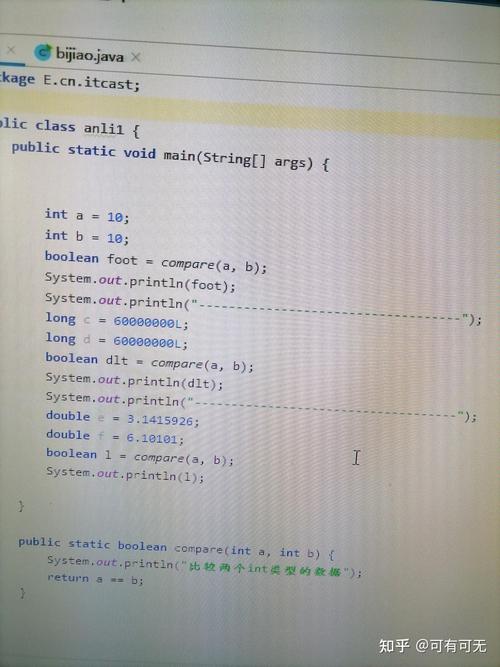
float: A 32-bit single-precision floating-point number.double: A 64-bit double-precision floating-point number.
The double type in Java is the highest-precision floating-point type available and is what you should use for almost all floating-point calculations.
Detailed Comparison
Here is a table comparing Java's types with C/C++'s types to make the distinction clear.
| Feature / Type | long (Java) |
double (Java) |
float (Java) |
long long (C/C++) |
double (C/C++) |
long double (C/C++) |
|---|---|---|---|---|---|---|
| Category | Integer | Floating-Point | Floating-Point | Integer | Floating-Point | Floating-Point |
| Size (bits) | 64 | 64 | 32 | 64 (usually) | 64 | 80, 128, or more (platform-dependent) |
| Precision | N/A (exact) | ~15-17 decimal digits | ~6-9 decimal digits | N/A (exact) | ~15-17 decimal digits | 18-21 decimal digits (or more) |
| Purpose | Whole numbers, large counts. | General-purpose decimal numbers. Scientific, financial. | Memory-efficient decimal numbers. Rarely used. | Whole numbers, very large counts. | General-purpose decimal numbers. | High-precision decimal numbers. Scientific, financial. |
| Standard | Strictly defined by the JLS. | Strictly defined by the JLS (IEEE 754). | Strictly defined by the JLS (IEEE 754). | Defined by C/C++ standard (e.g., C11). | Defined by C/C++ standard (IEEE 754). | Implementation-defined by the compiler/platform. |
Key Takeaways and Implications
double is the "High-Precision" Type in Java
When you need floating-point arithmetic in Java, you default to double. It offers 64 bits of precision, which is more than enough for the vast majority of applications, including scientific calculations, financial modeling (when combined with BigDecimal for exact arithmetic), and graphics.
// This is the standard and recommended way for high precision in Java.
double highPrecisionValue = 3.141592653589793;
No Platform-Dependent Floating-Point Sizes
A major reason Java doesn't have a long double is its "write once, run anywhere" philosophy. The size and precision of long double vary wildly between systems:
- On many Linux systems with GCC,
long doubleis 80 bits (extended precision). - On many Windows systems with MSVC,
long doubleis the same asdouble(64 bits). - On some modern systems, it can be 128 bits.
This variability would break Java's portability guarantee. By defining float and double strictly to 32 and 64 bits respectively, Java ensures that a calculation will produce the exact same result on any JVM, whether it's on Windows, Linux, macOS, or a server.
What if I Need More Precision than double?
If you find that double's ~15-17 decimal digits of precision are not sufficient for your specific use case (e.g., complex scientific simulations, high-fidelity financial calculations), Java provides a solution: the java.math.BigDecimal class.
BigDecimal is not a primitive type. It's a class that represents immutable decimal numbers with arbitrary precision. You control the precision and rounding scale, making it ideal for financial calculations where accuracy is paramount.
Example:
import java.math.BigDecimal;
import java.math.RoundingMode;
public class HighPrecisionExample {
    public static void main(String[] args) {
        // Using double for pi (limited precision)
        double piDouble = 3.141592653589793;
        System.out.println("Pi as a double: " + piDouble);
        // Using BigDecimal for high precision
        BigDecimal piBigDecimal = new BigDecimal("3.14159265358979323846264338327950288419716939937510");
        System.out.println("Pi as a BigDecimal: " + piBigDecimal);
        // A calculation where precision matters
        double a = 0.1;
        double b = 0.2;
        System.out.println("Double sum: " + (a + b)); // Often prints 0.30000000000000004
        BigDecimal bdA = new BigDecimal("0.1");
        BigDecimal bdB = new BigDecimal("0.2");
        BigDecimal sum = bdA.add(bdB);
        System.out.println("BigDecimal sum: " + sum); // Correctly prints 0.3
        // Example with rounding
        BigDecimal price = new BigDecimal("99.995");
        BigDecimal roundedPrice = price.setScale(2, RoundingMode.HALF_UP);
        System.out.println("Rounded price: " + roundedPrice); // Prints 100.00
    }
}
Summary
| If you need... | In C/C++ you might use... | In Java you should use... |
|---|---|---|
| A 64-bit integer | long long |
long |
| Standard high-precision decimal number | double |
double |
| Maximum precision decimal number | long double |
java.math.BigDecimal |
| A 32-bit decimal number | float |
float (rarely) |