Of course! This is a very common and powerful pattern in Python. You're likely asking about using an if condition inside a for loop to filter items.
Let's break it down from the most basic concept to the most common "Pythonic" way to do it.
The Core Concept: Filtering in a Loop
The fundamental idea is to iterate through a list and only perform an action on the items that meet a certain condition.
The Basic for loop with an if statement
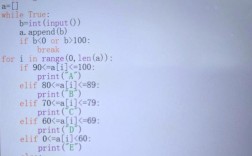
This is the most straightforward approach. You loop through every item, and for each item, you check if it meets your if condition. If it does, you do something with it.
Scenario: Let's say you have a list of numbers and you only want to print the even numbers.
numbers = [1, 2, 3, 4, 5, 6, 7, 8, 9, 10]
print("Using a for loop with an if statement:")
for number in numbers:
    # This is the "if" condition
    if number % 2 == 0:
        # This code only runs if the condition is True
        print(number)
Output:
Using a for loop with an if statement:
2
4
6
8
10
How it works:
for number in numbers:: The loop starts, and the firstnumberis1.if number % 2 == 0:: Python checks if1 % 2 == 0. This isFalse, so the code inside theifblock is skipped.- The loop continues with the next number,
2. if number % 2 == 0:: Python checks if2 % 2 == 0. This isTrue, so the codeprint(number)is executed.- This process repeats for every number in the list.
The "Pythonic" Way: List Comprehensions
Python has a more concise and often more efficient way to achieve the same result as the loop above. It's called a list comprehension. It's a one-line expression that builds a new list.
The syntax is:
new_list = [expression for item in old_list if condition]
Let's break that down:
new_list: The list you are creating.expression: The operation to perform on each item that passes the filter (e.g.,item,item * 2,item.upper()).for item in old_list: The loop part.if condition: The filter. Only items that make thisTrueare included.
List Comprehension for Filtering
Let's solve the same "print even numbers" problem, but this time we'll create a new list containing only the even numbers.
numbers = [1, 2, 3, 4, 5, 6, 7, 8, 9, 10]
# Create a new list with only the even numbers
even_numbers = [number for number in numbers if number % 2 == 0]
print(f"Original list: {numbers}")
print(f"New list with even numbers only: {even_numbers}")
Output:
Original list: [1, 2, 3, 4, 5, 6, 7, 8, 9, 10]
New list with even numbers only: [2, 4, 6, 8, 10]
This is equivalent to writing this longer code:
even_numbers = []
for number in numbers:
    if number % 2 == 0:
        even_numbers.append(number)
List Comprehension with a Transformation
You can also transform the items as you filter them.
Scenario: Get the squares of only the odd numbers.
numbers = [1, 2, 3, 4, 5, 6, 7, 8, 9, 10]
# Get the square of each number, but only if the number is odd
squared_odds = [number**2 for number in numbers if number % 2 != 0]
print(f"Squares of odd numbers: {squared_odds}")
Output:
Squares of odd numbers: [1, 9, 25, 49, 81]expressionhere isnumber**2.conditionhere isnumber % 2 != 0.
Comparison: for loop vs. List Comprehension
| Feature | for loop with if |
List Comprehension |
|---|---|---|
| Readability | Very explicit and easy for beginners to read. | Very concise and considered "Pythonic" by experienced developers. Can be less readable if complex. |
| Flexibility | High. You can have multiple if/else blocks, try/except blocks, and perform complex, multi-line operations inside the loop. |
Lower. It's designed for creating lists. You can't have complex logic like try/except inside it. |
| Use Case | Best when you need to perform multiple actions, side effects (like printing to a file), or when the logic is too complex for a single line. | Best for creating a new list by filtering and/or transforming an existing one in a simple way. It's often faster. |
| Example | python<br>result = []<br>for item in my_list:<br> if item > 5:<br> result.append(item * 2)<br> print(f"Processed: {item}")<br> | python<br># Not suitable for the example above because of the print() statement<br> |
When to Use Which?
-
Use a
forloop withifwhen:- You need to perform more than one action for each item that passes the filter.
- You are performing side effects (e.g., printing, writing to a database, updating a file).
- The filtering logic is very complex and spans multiple lines.
-
Use a list comprehension when:
- Your goal is to create a new list based on an existing one.
- You are simply filtering items.
- You are filtering and transforming items in a single, clear step.
Advanced: The if-else in a List Comprehension
You can also use an if-else expression inside a list comprehension. This is different from the filtering if. The if-else is part of the expression.
Scenario: Create a list of strings where even numbers become "even" and odd numbers become "odd".
numbers = [1, 2, 3, 4, 5]
# The 'if/else' is part of the expression, not the filter
# Note: There is no final 'if' for filtering here
parity_strings = ["even" if num % 2 == 0 else "odd" for num in numbers]
print(parity_strings)
Output:
['odd', 'even', 'odd', 'even', 'odd']- Expression:
"even" if num % 2 == 0 else "odd" - Loop:
for num in numbers
Summary
| Method | Syntax | Best For |
|---|---|---|
for loop with if |
for item in list: if condition: action() |
Flexibility, multiple actions, side effects. |
| List Comprehension | [item for item in list if condition] |
Creating a new filtered list concisely. |
List Comp. w/ if-else |
[value_if_true if condition else value_if_false for item in list] |
Transforming items based on a condition during list creation. |