Of course. This is an excellent question that gets to the heart of choosing the right tool for the job. Delphi, Java, and DES (Data Encryption Standard) are three very different things, but they can work together.
Let's break them down individually first, and then show how they can be used in combination.
Delphi
What it is: A high-level, compiled, strongly-typed, object-oriented programming language and an Integrated Development Environment (IDE) created by Embarcadero Technologies. It is most famous for its use of the Visual Component Library (VCL) for Windows desktop applications and FireMonkey (FMX) for cross-platform applications.
- Key Characteristics:
- Strong Typing: You must declare the type of every variable, which helps catch errors early.
- Compiled: Delphi code is compiled to highly optimized native machine code, resulting in fast applications.
- RAD (Rapid Application Development): The drag-and-drop form designer and component-based architecture allow for very fast development of user interfaces.
- Object-Oriented: Supports classes, inheritance, polymorphism, and encapsulation.
- Native Code: Delphi applications compile directly to executables (
.exe) for the target platform (Windows, macOS, Linux, iOS, Android) without requiring a virtual machine to be installed on the end-user's system (unlike Java or .NET). - Primary Use Case: Traditionally, Windows desktop database applications (client-server). Now, it's used for a wide range of desktop, mobile, and server applications.
Example "Hello World" in Delphi:
program HelloWorld;
uses
  System.SysUtils;
begin
  try
    Writeln('Hello, World!');
    Readln; // Wait for a key press before closing
  except
    on E: Exception do
      Writeln(E.ClassName, ': ', E.Message);
  end;
end.
Java
What it is: A class-based, object-oriented programming language designed to have as few implementation dependencies as possible. It's the foundation for the Java Platform, which includes the Java Virtual Machine (JVM) and a vast set of libraries.

- Key Characteristics:
- "Write Once, Run Anywhere" (WORA): Java code is compiled into an intermediate format called bytecode, which can then be run on any device that has a JVM installed. This makes it highly portable.
- Interpreted & Compiled: The source code is compiled to bytecode, which is then interpreted or Just-In-Time (JIT) compiled by the JVM at runtime.
- Automatic Memory Management: Uses a garbage collector to automatically manage memory allocation and deallocation, preventing memory leaks.
- Strong Typing & Object-Oriented: Similar to Delphi in its OOP principles.
- Massive Ecosystem: Has an enormous standard library and a huge ecosystem of third-party libraries available through Maven and Gradle.
- Primary Use Case: Enterprise-level backend services (web servers, microservices), large-scale desktop applications (like Eclipse or IntelliJ), and Android mobile development.
Example "Hello World" in Java:
public class HelloWorld {
    public static void main(String[] args) {
        System.out.println("Hello, World!");
    }
}
DES (Data Encryption Standard)
What it is: A symmetric-key algorithm for the encryption of digital data. It was a widely used standard for many decades but is now considered insecure and obsolete for any serious application due to its short key length (56 bits), making it vulnerable to brute-force attacks.
- Key Characteristics:
- Symmetric Encryption: The same key is used for both encrypting and decrypting the data.
- Block Cipher: It operates on 64-bit blocks of data at a time.
- Fixed Key Size: Uses a 56-bit key (often represented as a 64-bit key with 8 parity bits).
- Obsolete: Replaced by the AES (Advanced Encryption Standard) algorithm, which is the current global standard for symmetric encryption.
Modern Practice: You should almost always use AES instead of DES. DES is only mentioned today for educational purposes or for decrypting old data.
How They Work Together: Delphi, Java, and DES/AES
A very common scenario is that a Delphi application needs to communicate with a Java server. To ensure the data is secure, they need to encrypt it. This is where an algorithm like DES (or preferably, AES) comes in.
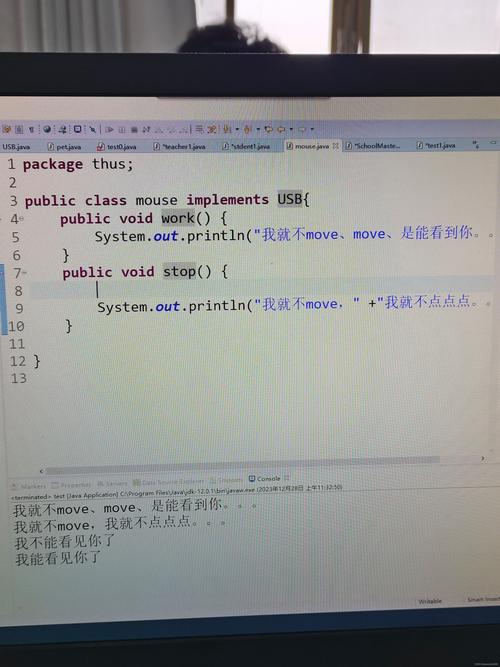
The critical rule for this to work is: Both the Delphi client and the Java server must use the same encryption algorithm, the same key, and the same mode of operation (e.g., CBC, GCM).
Scenario: Delphi Client sends encrypted data to Java Server
Let's assume we want to use AES-256 in GCM mode, which is a modern and secure choice.
Choose a Key: Both sides need to share a secret key. This is the hardest part in cryptography (the "key exchange problem"). For simplicity, let's assume the key is pre-shared (e.g., hardcoded in both apps, which is insecure but demonstrates the point).
Example Key: ThisIsASecretKey1234567890123456 (32 bytes for AES-256)
Delphi Side (Encryption):
Delphi has built-in encryption support in its System.SysUtils unit and the System.Hash unit for more modern algorithms.
   uses
     System.SysUtils, System.Hash;
   procedure EncryptData(const AData: string; out AEncryptedData: TBytes);
   var
     Key: TBytes;
     IV: TBytes;
     Cipher: TBytes;
     AE: TAlgorithmEx;
   begin
     // Key must be 16, 24, or 32 bytes for AES (128, 192, 256 bits)
     Key := TEncoding.UTF8.GetBytes('ThisIsASecretKey1234567890123456'); // 32 bytes
     // IV (Initialization Vector) should be random and unique for each encryption
     IV := TEncoding.UTF8.GetBytes('AUniqueInitializationVector'); // 16 bytes for AES block size
     AE := TAlgorithmEx.Create(TAlgorithm.AES, TMode.GCM, TPadding.None, Key, IV);
     try
       // Encrypt the data
       Cipher := AE.EncryptStringToBytes(AData);
       // In a real app, you would need to send the IV along with the ciphertext
       // The IV is not secret, but it must be unique.
       AEncryptedData := CombineBytes(IV, Cipher);
     finally
       AE.Free;
     end;
   end;
Java Side (Decryption):
Java has robust cryptography support in the javax.crypto package.
   import javax.crypto.Cipher;
   import javax.crypto.spec.GCMParameterSpec;
   import javax.crypto.spec.SecretKeySpec;
   import java.util.Base64;
   public class CryptoUtils {
       private static final String AES_KEY = "ThisIsASecretKey1234567890123456";
       private static final String AES_TRANSFORMATION = "AES/GCM/NoPadding";
       public static String decrypt(String encryptedBase64) throws Exception {
           // In a real app, you would split the received byte array to get the IV and the ciphertext
           byte[] combined = Base64.getDecoder().decode(encryptedBase64);
           byte[] iv = new byte[16]; // GCM IV is 12 bytes, but often padded to 16
           byte[] cipherText = new byte[combined.length - iv.length];
           System.arraycopy(combined, 0, iv, 0, iv.length);
           System.arraycopy(combined, iv.length, cipherText, 0, cipherText.length);
           SecretKeySpec keySpec = new SecretKeySpec(AES_KEY.getBytes(), "AES");
           GCMParameterSpec gcmSpec = new GCMParameterSpec(128, iv); // 128-bit auth tag
           Cipher cipher = Cipher.getInstance(AES_TRANSFORMATION);
           cipher.init(Cipher.DECRYPT_MODE, keySpec, gcmSpec);
           byte[] decryptedBytes = cipher.doFinal(cipherText);
           return new String(decryptedBytes);
       }
   }
Summary Table
| Feature | Delphi | Java | DES (as an algorithm) |
|---|---|---|---|
| Type | Programming Language & IDE | Programming Language & Platform | Symmetric Encryption Algorithm |
| Execution | Compiles to native code | Compiles to bytecode, runs on JVM | N/A (A set of mathematical steps) |
| Platform | Windows, macOS, Linux, iOS, Android | Any platform with a JVM | N/A |
| Key Feature | RAD, VCL/FMX, Native performance | Portability (WORA), Ecosystem | Obsolete, 56-bit key |
| Modern Use | Desktop, mobile, server apps | Enterprise backends, Android, Big Data | Educational / Decrypting old data |
| Security | Relies on libraries (e.g., System.Hash) |
Relies on java.security and javax.crypto |
INSECURE - Use AES instead |
Conclusion:
- Delphi and Java are both powerful programming languages used to build applications.
- DES is a specific, outdated encryption algorithm.
- You would use Delphi or Java to write the application logic that needs to perform encryption/decryption using an algorithm like DES or, preferably, its modern replacement, AES. The interoperability between Delphi and Java in this context depends entirely on them both implementing the cryptographic standard (e.g., AES-256-GCM) in a compatible way.