Of course! "Python Stack Overflow" can mean a few things, so I'll cover the most common interpretations.
Using the Stack Overflow Website for Python Help (Most Likely Meaning)
This is the primary way developers use the term. Stack Overflow is a massive question-and-answer site specifically for programmers. It's an essential resource for any Python developer.
How to Use It Effectively:
-
Search First, Ask Later: Before you ask a question, always use the search bar. Chances are, someone has already asked and answered your exact question.
- Good search terms:
python list comprehension error,pandas read csv specific columns,django static files not found. - Bad search terms:
help,python code,it doesn't work.
- Good search terms:
-
Asking a Good Question: If you can't find an answer, you can ask a question. A good question gets good answers.
-
Provide a Minimal, Reproducible Example (MRE): This is the single most important thing. Create a small piece of code that others can copy and paste to see the same error.
 (图片来源网络,侵删)
- Bad:
# My big, complex script with 500 lines
# It's giving me a ValueError
# I don't know why.
- Good:
# I expect this to sum the numbers, but it fails.
my_list = ['1', '2', 'three', '4']
total = sum(my_list)
print(total)
# Output: Traceback (most recent call last):
#   File "<stdin>", line 1, in <module>
# TypeError: unsupported operand type(s) for +: 'int' and 'str'
- Bad:
-
Explain What You've Tried: Show that you've made an effort to solve the problem yourself. This helps others avoid suggesting solutions you've already dismissed.
-
State Your Goal Clearly: What are you trying to achieve? Sometimes the error is a symptom of a larger design problem.
-
Include Error Messages: Copy and paste the full traceback. Don't just summarize it.
-
-
Answering Questions: As you get more experienced, you can start giving back by answering questions. This is a fantastic way to solidify your own knowledge.
Official Python Tag on Stack Overflow:
All Python-related questions are tagged with [python]. You can browse all questions with this tag here: https://stackoverflow.com/questions/tagged/python
A Python Error Related to a "Stack Overflow"
This is a much more literal and technical meaning. It refers to a specific type of error that happens when a program's call stack becomes too large.
What is a Call Stack?
Imagine you're making a sandwich. You start with the main task (make_sandwich). To do that, you need to get bread (get_bread). To get the bread, you might need to go to the store (go_to_store). Each time you start a new sub-task, you "push" it onto a mental to-do list. When you finish a task, you "pop" it off and return to the previous one.
This to-do list is the call stack in programming. It keeps track of which function is currently running and which one it should return to.
What is a Stack Overflow Error?
A stack overflow occurs when a program has too many "nested" function calls. The stack has a limited size, and when it's exceeded, the program crashes.
The most common cause is infinite recursion.
Example:
def recursive_function():
    print("Hello")
    # This function calls itself forever, never stopping.
    # Each call adds a new layer to the call stack.
    recursive_function()
# This line will cause a RecursionError (which is a type of StackOverflowError)
recursive_function()
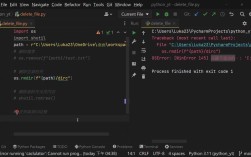
When you run this, you'll see a traceback that looks something like this:
Traceback (most recent call last):
  File "stackoverflow_example.py", line 7, in <module>
    recursive_function()
  File "stackoverflow_example.py", line 5, in recursive_function
    recursive_function()
  File "stackoverflow_example.py", line 5, in recursive_function
    recursive_function()
  ... (thousands of lines) ...
RecursionError: maximum recursion depth exceeded
How to Fix a Stack Overflow:
-
Find the Infinite Recursion: Look for a function that calls itself without a proper base case (a condition that stops the recursion).
- Bad (no base case):
def countdown(n): print(n) countdown(n - 1) # This will run forever for n > 0 - Good (with a base case):
def countdown(n):
    # Base case: if n is 0 or less, stop.
    if n <= 0:
        return
    print(n)
    # Recursive step: call the function with a smaller number.
    countdown(n - 1)
- Bad (no base case):
-
Use Iteration Instead: For many problems, a simple
fororwhileloop is more efficient and easier to understand than recursion.- Instead of the recursive
countdown, use a loop:def countdown(n): while n > 0: print(n) n -= 1
- Instead of the recursive
Python's Built-in stack Object (Less Common)
Python has a stack object, but it's not a built-in type like list or dict. It's part of the queue module and is a specialized class designed for Last-In, First-Out (LIFO) operations.
import queue
# Create a LIFO stack
s = queue.LifoQueue()
# Add items to the stack (push)
s.put('first')
s.put('second')
s.put('third')
# Get items from the stack (pop) - LIFO order
print(s.get())  # Output: 'third'
print(s.get())  # Output: 'second'
print(s.get())  # Output: 'first'
# If you try to get from an empty queue, it will block by default
# s.get() # This will wait forever
In practice, most Python developers just use a list as a stack because it's simple and effective:
stack = []
# Push
stack.append('first')
stack.append('second')
stack.append('third')
# Pop
print(stack.pop()) # Output: 'third'
print(stack.pop()) # Output: 'second'
print(stack.pop()) # Output: 'first'
Summary
| Term | Meaning | Key Takeaway |
|---|---|---|
| Python Stack Overflow (as a resource) | The website for asking and answering Python programming questions. | Search first! Provide a Minimal, Reproducible Example when asking. |
| Python Stack Overflow (as an error) | A crash caused by a call stack that is too large, usually due to infinite recursion. | Look for a function that calls itself without a base case. Use loops instead. |
Python stack |
A LIFO data structure. Can be implemented with a list or from the queue module. |
list.append() to push, list.pop() to pop. It's simple and idiomatic. |