Of course! Let's break down if not False in Python.
(图片来源网络,侵删)
The Short Answer
if not False evaluates to True. The code inside the if block will execute.
Detailed Explanation
To understand why, let's look at the two parts of the statement: not and False.
The False Value
In Python, False is a boolean literal. It represents a value that is not true. Other values that are considered "falsy" (and evaluate to False in a boolean context) include:
- The number
0 - Empty sequences (like ,
[], , ) - The special value
None
The not Operator
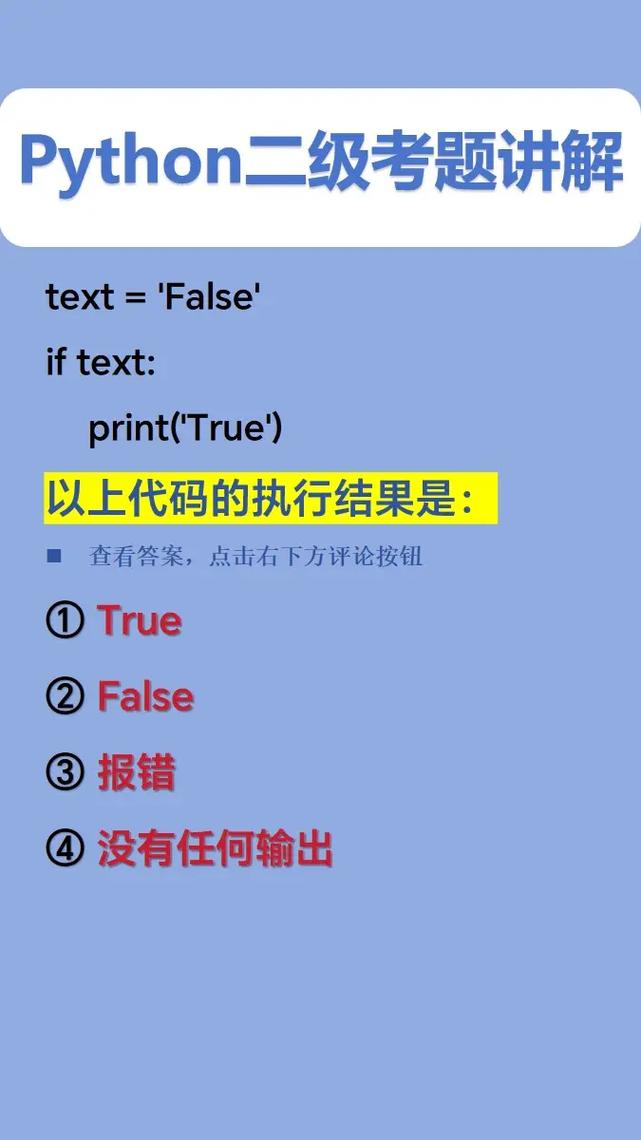
The not operator is a logical operator that performs negation. It takes a single boolean expression and flips its value:
(图片来源网络,侵删)
- If the expression is
True,notmakes itFalse. - If the expression is
False,notmakes itTrue.
Putting It Together: not False
- Python first evaluates the expression on the right side of
not, which isFalse. - Then, the
notoperator flips that value. not FalsebecomesTrue.- The
ifstatement checks if the condition isTrue. Since it is, the code block is executed.
Code Example
Here is a simple, runnable example that demonstrates this.
# The condition is 'not False'
if not False:
    print("This code will be executed!")
    print("Because 'not False' is equivalent to 'True'.")
print("\n--- --- ---\n")
# Let's compare it to the other possibilities
if True:
    print("This code also executes, because the condition is True.")
if False:
    print("This code will NOT be executed.")
if not True:
    print("This code will NOT be executed, because 'not True' is False.")
Output:
This code will be executed!
Because 'not False' is equivalent to 'True'.
--- ---
This code also executes, because the condition is True.
Common Use Case: Checking for "Empty" or "None"
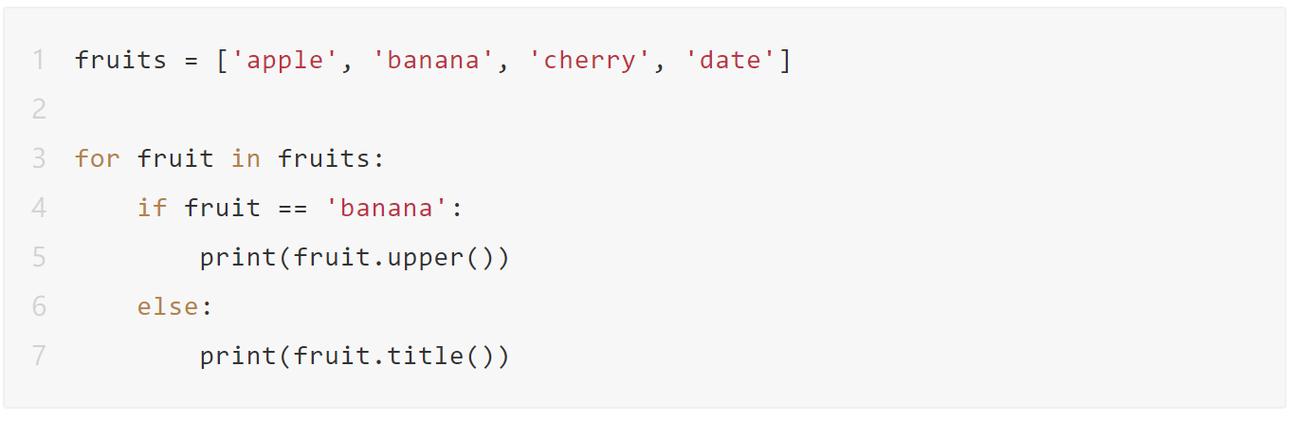
The most common reason to use not is to check if a variable is "empty" or "falsy". This is very practical and Pythonic.
# Example 1: Checking if a list is empty
my_list = []
if not my_list:
    print("The list is empty!")
# Example 2: Checking if a string is empty
name = ""
if not name:
    print("A name was not provided.")
# Example 3: Checking if a variable is None
result = None
if not result:
    print("The result is None.")
# Example 4: The opposite - checking if a variable has a value
my_list = [1, 2, 3]
if my_list:  # This is shorthand for `if my_list is not empty:`
    print("The list is not empty, it has items.")
Output:
(图片来源网络,侵删)
The list is empty!
A name was not provided.
The result is None.
The list is not empty, it has items.
Summary Table
| Expression | Evaluation | Result |
|---|---|---|
if False: |
False is False |
Code block does not run |
if not False: |
not flips False to True |
Code block runs |
if True: |
True is True |
Code block runs |
if not True: |
not flips True to False |
Code block does not run |