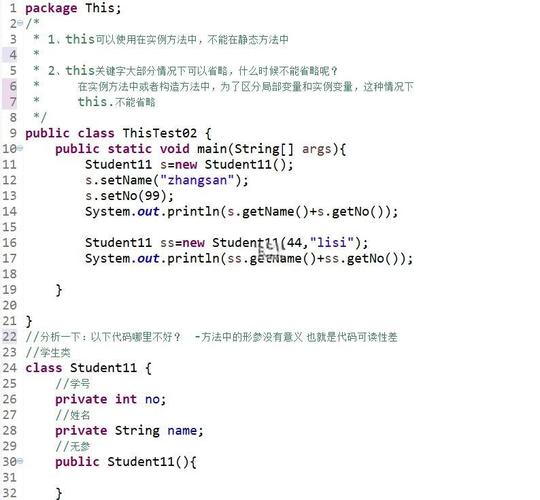
Of course! In Java, the keyword this is a reference to the current object—the object whose method or constructor is being called.
Using return this; is a common and powerful technique, especially in the context of method chaining (also known as a "fluent interface"). Let's break down what it means and why you'd use it.
What return this; Means
When you write return this; inside a method, you are returning a reference to the very same object that the method was called on.
Think of it like this: if you have a Car object named myCar, and you call a method on it like myCar.setColor("red"), then this inside that setColor method refers to myCar. If the setColor method ends with return this;, it's returning the exact same myCar object.
The Primary Use Case: Method Chaining
This is the most common and important reason to use return this;. Method chaining allows you to call multiple methods on the same object in a single, continuous statement.
Without Method Chaining (The "Verbose" Way)
Imagine a Person class with setters.
class Person {
    private String name;
    private int age;
    private String city;
    public void setName(String name) {
        this.name = name;
    }
    public void setAge(int age) {
        this.age = age;
    }
    public void setCity(String city) {
        this.city = city;
    }
    @Override
    public String toString() {
        return "Person{name='" + name + "', age=" + age + ", city='" + city + "'}";
    }
}
public class Main {
    public static void main(String[] args) {
        Person person = new Person();
        person.setName("Alice");
        person.setAge(30);
        person.setCity("New York");
        System.out.println(person);
    }
}
Output:
Person{name='Alice', age=30, city='New York'}This works, but it requires three separate lines to configure the object.
With Method Chaining (Using return this;)
Now, let's modify the setters to return this.
class FluentPerson {
    private String name;
    private int age;
    private String city;
    // The 'setter' methods now return 'this'
    public FluentPerson setName(String name) {
        this.name = name;
        return this; // Return the current object
    }
    public FluentPerson setAge(int age) {
        this.age = age;
        return this; // Return the current object
    }
    public FluentPerson setCity(String city) {
        this.city = city;
        return this; // Return the current object
    }
    @Override
    public String toString() {
        return "FluentPerson{name='" + name + "', age=" + age + ", city='" + city + "'}";
    }
}
public class Main {
    public static void main(String[] args) {
        FluentPerson person = new FluentPerson()
            .setName("Alice")       // setName() returns the FluentPerson object
            .setAge(30)             // setAge() is called on the returned object
            .setCity("New York");   // setCity() is called on the returned object
        System.out.println(person);
    }
}
Output:
FluentPerson{name='Alice', age=30, city='New York'}Notice how much cleaner the main method is! The code reads like a sentence: "Create a new FluentPerson, set its name to 'Alice', set its age to 30, and set its city to 'New York'."
How it Works: A Step-by-Step Breakdown
Let's trace the execution of the chained call:
new FluentPerson(): A newFluentPersonobject is created in memory. Let's call its referenceobj1..setName("Alice"): This method is called onobj1.- Inside
setName,thisrefers toobj1. - The name is set to "Alice".
return this;is executed, which returns the referenceobj1.
- Inside
.setAge(30): The result of the previous call (obj1) is used to call this method. So,setAge(30)is called onobj1.- Inside
setAge,thisrefers toobj1. - The age is set to
30. return this;is executed, which again returns the referenceobj1.
- Inside
.setCity("New York"): The result of the previous call (obj1) is used to call this method. So,setCity("New York")is called onobj1.- Inside
setCity,thisrefers toobj1. - The city is set to "New York".
return this;is executed, which returns the referenceobj1.
- Inside
- The final expression evaluates to
obj1, which is then assigned to thepersonvariable.
Other (Less Common) Use Cases for return this;
While method chaining is the star, there are other scenarios where you might return this.
a) In Constructors
You can use return this; in a constructor to provide a default or alternative object. This is less common for simple constructors but can be useful in builder patterns or when a constructor might decide to return a cached or different instance.
class Car {
    private String model;
    public Car(String model) {
        this.model = model;
    }
    // A constructor that might return a different object
    public Car createDefaultCar() {
        if (this.model == null || this.model.isEmpty()) {
            // If the model is not set, return a new default car instead
            return new Car("Default Model");
        }
        // Otherwise, return the current object
        return this;
    }
}
b) To Return the Current Object from a Non-"Setter" Method
Any method that modifies the object and is intended to be part of a chain can return this.
class StringBuilderExample {
    private StringBuilder sb = new StringBuilder();
    public StringBuilderExample append(String text) {
        sb.append(text);
        return this; // Allow chaining
    }
    public StringBuilderExample toUpperCase() {
        String current = sb.toString();
        sb = new StringBuilder(current.toUpperCase());
        return this; // Allow chaining
    }
    @Override
    public String toString() {
        return sb.toString();
    }
}
public class Main {
    public static void main(String[] args) {
        String result = new StringBuilderExample()
            .append("hello ")
            .append("world")
            .toUpperCase()
            .toString();
        System.out.println(result); // Output: HELLO WORLD
    }
}
Key Takeaways
this: A reference to the current object instance.return this;: Returns a reference to the very same object the method was called on.- Main Purpose: To enable method chaining, resulting in more readable, concise, and "fluent" code.
- Common Pattern: Used in "setter" methods of builder classes or configuration objects.
- Not Always Needed: You should only use
return this;if you have a specific reason, like enabling chaining. If a method is a simple "getter" or performs an action that doesn't logically lead to another call on the same object, it should typically returnvoidor a relevant value (like a primitive or a different object).