Of course! This is a great question that touches on a bit of history in the Python game development world.
Here’s a comprehensive breakdown of Cocos2d for Python, covering what it is, its history, its current status, and the best modern alternatives.
What is Cocos2d for Python?
Cocos2d is a free, open-source framework for building 2D games, demos, and other graphical applications. It was heavily inspired by the popular Cocos2d-iphone framework.
Its core features include:
- Scene Management: A robust system to manage different screens of your game (e.g., main menu, level 1, game over screen).
- Director: The singleton object that controls the flow of your game, managing scenes, transitions, and the game loop.
- Sprites: Easy-to-use classes for handling 2D images (characters, backgrounds, items).
- Actions & Sequences: A powerful system for creating animations and movements without manually updating positions every frame. You can chain actions together in sequences.
- Labels: For rendering text on screen.
- Menus: Simple creation of interactive menus.
- Event Handling: A clean system for handling user input (keyboard, mouse, touch).
- Scheduler: A built-in system for running periodic tasks.
The Python version, Cocos2d for Python (cocos2d-py), used the Pyglet library as its underlying rendering engine.
The History and Current Status (The Important Part)
This is the most critical piece of information you need to know.
Cocos2d-py is no longer actively maintained.
The last major release, cocos2d v0.6.9, was released in 2025. Since then, there have been no significant updates, bug fixes, or support for newer Python versions or operating systems.
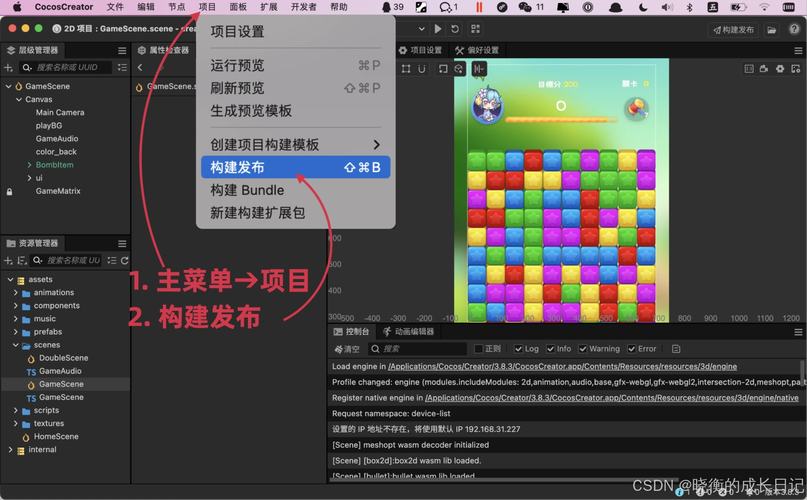
Why did this happen? The community and developers behind Cocos2d-py moved on to create a next-generation framework called Cocos Creator.
Cocos Creator is a completely different beast:
- It's a visual editor-first framework. You design your game's scenes, UI, and logic graphically in a desktop application.
- It primarily uses TypeScript (a superset of JavaScript) for scripting, not Python.
- It is incredibly modern, powerful, and widely used in the industry, especially for mobile and web games.
Conclusion: While you can still find and install cocos2d-py using pip, it is considered a legacy, deprecated project. You should not start a new, serious project with it unless you have a very specific reason (e.g., maintaining an old codebase).
Installation (For Legacy Purposes or Curiosity)
If you want to experiment with it for historical or educational reasons, you can install it. Be aware of the potential issues.
# Install the last known version
pip install cocos2d
# You will also need to install its dependency, Pyglet
pip install pyglet
You may run into issues on modern operating systems (like macOS M-series chips or newer Linux distributions) or with newer Python versions (3.10+), as neither Pyglet nor Cocos2d-py were built to support them.
Modern Alternatives to Cocos2d for Python
If you're looking to build a 2D game in Python today, you have several excellent, actively maintained alternatives. Here are the top recommendations:
Pygame
This is the most popular and well-known Python game library. It's a low-level library that gives you a lot of control.
- Pros:
- Huge community and massive amounts of tutorials, examples, and assets.
- Very flexible and great for learning the fundamentals of game development (game loop, event handling, drawing).
- Lightweight and easy to get started with.
- Cons:
- "Batteries not included." You have to build higher-level systems (like a scene manager or UI) yourself.
- Can become verbose for complex games.
- Best for: Beginners, developers who want full control, small to medium-sized projects, and those who want to learn the nuts and bolts of game programming.
Arcade
Arcade is a modern library designed to be a more user-friendly and higher-level alternative to Pygame. It's built from the ground up with ease of use in mind.
- Pros:
- Excellent documentation and beginner-friendly tutorials.
- Built-in support for features like Sprites, Sprite Lists (for efficient drawing), Physics Engines, and GUIs.
- Actively developed and supports modern Python.
- Great performance for 2D games.
- Cons:
- Smaller community than Pygame, so fewer third-party resources.
- Less flexible than Pygame if you need to do something highly unconventional.
- Best for: Beginners, developers who want a "batteries-included" experience, and those building 2D games that need common features (physics, GUI) without extra hassle.
Panda3D
This is a step up in complexity. Panda3D is a powerful, professional-grade 3D engine that also has excellent support for 2D games.
- Pros:
- Extremely powerful and capable of handling very complex games.
- Has built-in support for tasks like networking, audio, and advanced shaders.
- Used in some professional and indie games.
- The "ShowBase" system makes it easy to get a 3D scene up and running quickly.
- Cons:
- Steeper learning curve than Pygame or Arcade.
- Can be overkill for simple 2D projects.
- Best for: Developers who are comfortable with more complex APIs and want to build more ambitious 2D or 3D games.
Godot Engine with GDScript
This isn't a Python library, but it's the most important alternative to know. Godot is a completely free and open-source game engine.
- GDScript is a scripting language designed specifically for Godot. It is syntactically almost identical to Python. If you know Python, you can learn GDScript in a few hours.
- Pros:
- Incredibly powerful and modern, rivaling commercial engines like Unity.
- Excellent 2D and 3D support.
- Fantastic, in-editor documentation and a massive, welcoming community.
- Node-based scene system, similar to Cocos Creator.
- Runs on all platforms and can export to Windows, macOS, Linux, Android, iOS, and Web.
- Cons:
It's not Python. While the syntax is the same, you are learning a new engine and its specific APIs.
- Best for: Almost everyone. This is the recommended path if you want to build a serious, cross-platform 2D or 3D game with a Python-like language.
Summary Table
| Framework | Language | Status | Best For |
|---|---|---|---|
| Cocos2d-py | Python | Deprecated / Legacy | Maintaining old projects, historical interest. Not for new projects. |
| Pygame | Python | Active / Stable | Beginners, learning fundamentals, full control, small/medium 2D games. |
| Arcade | Python | Active / Modern | Beginners, "batteries-included" 2D games, fast development. |
| Panda3D | Python | Active / Professional | Ambitious 2D/3D projects, developers wanting a full-featured engine. |
| Godot Engine | GDScript (Python-like) | Active / Thriving | The top recommendation. Serious cross-platform 2D/3D game development. |
Final Recommendation
Do not use Cocos2d for Python for a new project.
For modern Python game development:
- If you want to stay strictly within the Python ecosystem and build a 2D game, start with Arcade or Pygame.
- If you are open to using a different but Python-like language and want the most powerful, modern, and future-proof tool, learn Godot Engine with GDScript. It is by far the best choice for anyone serious about game development today.