Of course! Let's break down "Eclipse Java EE" from the ground up. It's a common term, but it can mean a few different things, which can be a source of confusion.
Here’s a complete guide covering what it is, how to use it, and what the modern alternatives are.
What "Eclipse Java EE" Actually Means (The Confusion)
The term "Eclipse Java EE" is often used loosely. It can refer to three main things:
A. The Eclipse IDE for Java EE Developers (The Old, All-in-One Package)
This is the most common meaning. For many years, Eclipse.org released a pre-packaged version of the Eclipse IDE specifically tailored for Java EE (now Jakarta EE) development.
- What it was: A single download (
eclipse-jee-...zip) that came with:- The core Eclipse Platform.
- The Java Development Tools (JDT) for writing Java code.
- The Eclipse Web Tools Platform (WTP): This was the key component. It added tools for:
- Web Development: HTML, CSS, JavaScript editors.
- Server Integration: Tools to easily configure and deploy to servers like Apache Tomcat, WildFly, and JBoss.
- Database Development: Data Source Explorer, SQL query tools.
- XML Development: Advanced editors for XML, XSD, and WSDL files.
- Maven/Build Integration: Better support for Maven projects.
- Status: This package is deprecated and no longer available. The Eclipse project stopped shipping these "all-in-one" packages to encourage a more modular approach.
B. The Eclipse IDE with Jakarta EE (The Modern Way)
Today, the recommended way to get a "Java EE" development environment is to start with the base Eclipse IDE for Enterprise Java and Web Developers and add the necessary tools yourself.
- What it is:
- You download the standard "Eclipse IDE for Enterprise Java and Web Developers" from the Eclipse download site. This package is essentially the old "Java EE" package without the heavy, bundled server runtimes.
- You use the Eclipse Marketplace or the "Install New Software" feature to add the specific tools you need, like a server adapter (e.g., for WildFly) or a database connector.
C. The Eclipse Jakarta EE Tools Project (The Underlying Technology)
This is the technical foundation. It's an open-source project within the Eclipse Foundation that provides the core tools for building Jakarta EE applications.
- What it provides:
- Frameworks for building server adapters.
- Tooling for working with Jakarta EE specifications (like Servlets, JPA, EJB).
- Integration with build tools like Maven and Gradle.
- In short: This is the "engine" that powers the IDE's Java EE/Jakarta EE capabilities. You don't download this project directly; you use the IDE that includes it.
Key Features (What You Get with Modern Eclipse for Jakarta EE)
Whether you install the tools yourself or use the modern "Enterprise" package, you get access to a powerful set of features:
- Integrated Web Server: Easily add and manage servers like Apache Tomcat, WildFly, and Payara directly from the "Servers" view. You can start, stop, and deploy to them with a single click.
- Dynamic Web Project Wizard: A streamlined project creation wizard for setting up standard web application structures (
src/main/java,src/main/webapp, etc.). - HTML/CSS/JavaScript Editor: A decent editor for front-end code, though not as advanced as dedicated editors like VS Code.
- Maven Integration: Excellent first-class support for creating, managing, and building Maven projects.
- Database Tooling: The Data Tools Platform (DTP) allows you to connect to databases, browse tables, write and execute SQL queries, and generate data source objects for your application.
- Source Code and Visual Editors: For files like
web.xml,pom.xml, and even some JSP files, you get rich editors that provide auto-completion and validation.
How to Set Up a Modern Java EE/Jakarta EE Project in Eclipse
Here’s a step-by-step guide to get you started today.
Step 1: Download and Install Eclipse
- Go to the Eclipse IDE for Enterprise Java and Web Developers download page.
- Download the version for your operating system (Windows, Mac, Linux).
- Unzip the downloaded file. There is no installer, just run the
eclipse.exe(or equivalent) file.
Step 2: Install a Server (e.g., Apache Tomcat)
- In the Eclipse menu, go to Window > Show View > Servers. This will open the Servers view at the bottom.
- In the Servers view, right-click and select New > Server.
- In the "Define a New Server" dialog, expand the Apache folder and select Apache Tomcat v9.0 (or your desired version).
- Click Next.
- You will be prompted to define a runtime. If you don't have one, click Add....
- Point the wizard to the directory where you unzipped your Tomcat download. Eclipse will automatically detect the installation.
- Finish the wizard. Your new Tomcat server will now appear in the Servers view.
Step 3: Create a Dynamic Web Project
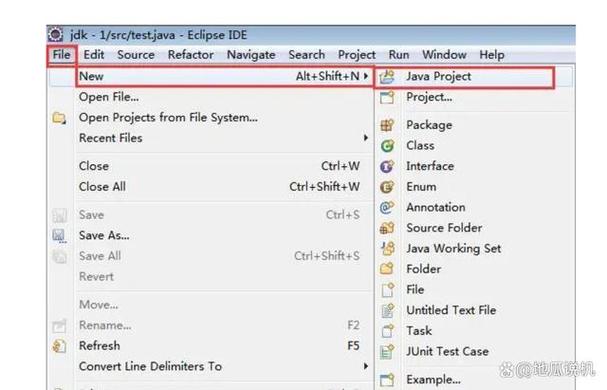
- In the Project Explorer, right-click and select New > Dynamic Web Project.
- Give your project a name (e.g.,
MyWebApp). - Ensure the "Target runtime" is set to the Apache Tomcat server you just configured.
- Configure the rest of the settings (e.g., generate
web.xmldeployment descriptor) and click Finish.
Step 4: Add Jakarta EE Dependencies (via Maven)
The modern way to manage dependencies is with Maven.
- Right-click your new project in the Project Explorer and select Configure > Convert to Maven Project.
- Open your
pom.xmlfile. Add thejakartaee-web-apidependency. This gives you access to all the standard Jakarta EE APIs (like@WebServlet,EntityManager, etc.) without needing to include them all individually.
<dependencies>
    <dependency>
        <groupId>jakarta.platform</groupId>
        <artifactId>jakarta.jakartaee-web-api</artifactId>
        <version>10.0.0</version> <!-- Use the latest version -->
        <scope>provided</scope>
    </dependency>
</dependencies>
Step 5: Write a Simple Servlet
- Right-click the
src/main/javafolder, select New > Servlet. - Give it a name (e.g.,
HelloServlet) and a package (e.g.,com.example). - Click Finish. Eclipse will create a basic servlet class.
- Modify the
doGetmethod to write a simple response:
package com.example;
import java.io.IOException;
import java.io.PrintWriter;
import jakarta.servlet.ServletException;
import jakarta.servlet.annotation.WebServlet;
import jakarta.servlet.http.HttpServlet;
import jakarta.servlet.http.HttpServletRequest;
import jakarta.servlet.http.HttpServletResponse;
@WebServlet("/hello")
public class HelloServlet extends HttpServlet {
    private static final long serialVersionUID = 1L;
    protected void doGet(HttpServletRequest request, HttpServletResponse response) throws ServletException, IOException {
        response.setContentType("text/html");
        PrintWriter out = response.getWriter();
        out.println("<h1>Hello from Jakarta EE in Eclipse!</h1>");
    }
}
Step 6: Run Your Application
- In the Servers view, right-click your Tomcat server and select Add and Remove....
- Move your
MyWebAppproject from the "Available" list to the "Configured" list and click Finish. - Right-click the server again and select Start.
- Once the server is started, right-click your project in the Project Explorer and select Run As > Run on Server.
- Choose your Tomcat server and click Finish.
- Your default web browser will open to
http://localhost:8080/MyWebApp/hello, and you will see your "Hello World" message.
Modern Alternatives to Eclipse
While Eclipse is a powerful and capable IDE, the landscape has changed.
| IDE / Tool | Best For | Pros | Cons |
|---|---|---|---|
| Eclipse IDE | Enterprise Java Developers who are already familiar with it or need deep integration with specific Java EE tools. | - Extremely powerful and mature. - Excellent built-in server tooling. - Strong Maven/Gradle integration. |
- Can feel slow and clunky. - Steep learning curve for beginners. - The UI is dated compared to modern IDEs. |
| VS Code | Full-stack developers and those who want a lightweight, fast, and highly customizable experience. | - Extremely fast and lightweight. - Huge marketplace of extensions (including Java from Red Hat). - Excellent Git integration and terminal. |
- Java tooling is an extension, not built-in (though very good). - Less integrated "all-in-one" feel for pure EE development. |
| IntelliJ IDEA | Serious Java developers who want the absolute best-in-class code intelligence, refactoring, and developer experience. | - Unmatched code analysis and refactoring. - Best-in-class debugger. - Superior Spring Boot and microservices support. |
- The "Ultimate" version is very expensive (though a free "Community" version exists). - Can be resource-intensive. |
Recommendation:
- If you are new to Java EE development, start with VS Code. It's modern, fast, and the community support is excellent.
- If you are working on a large, traditional enterprise project and need the deepest possible integration with servers and legacy tooling, Eclipse is still a solid choice.
- If budget is not a concern and you want the best possible Java development experience, IntelliJ IDEA Ultimate is the industry standard.