Of course! Let's break down static final in Java, one of the most fundamental and commonly used combinations of keywords.

High-Level Summary
In simple terms, static final declares a constant.
static: Means the variable belongs to the class, not to any specific instance (object) of the class. There is only one copy of this variable, shared by all objects.final: Means the variable's value cannot be changed once it has been initialized.
Combining them creates a single, unchangeable value that is accessible directly from the class without needing to create an object.
Detailed Breakdown
Let's look at each keyword's role and then their combined effect.
The static Keyword
When you declare a variable with static, you create a class variable.
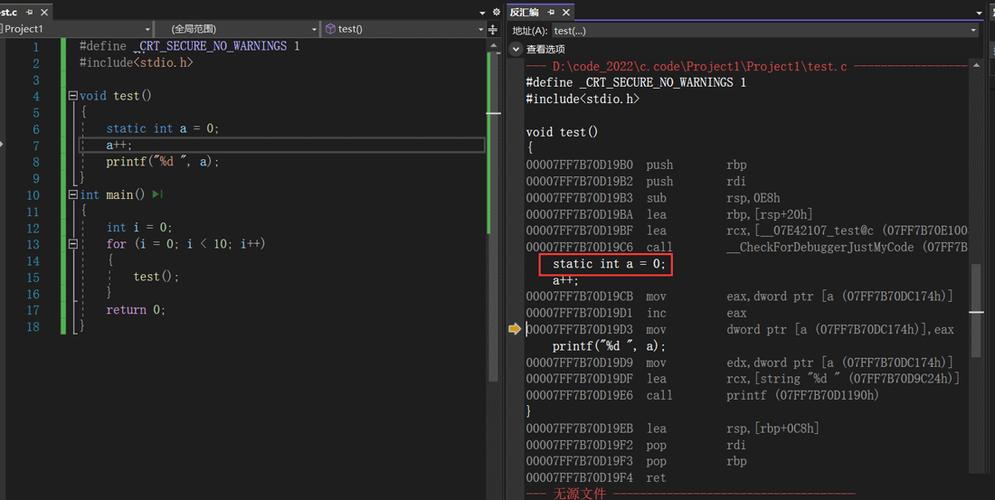
- Single Copy: Only one instance of the variable exists, regardless of how many objects of the class are created.
- Memory Allocation: It's allocated in the static memory area (often called the method area) when the class is loaded by the JVM.
- Access: You can access it directly using the class name:
ClassName.VARIABLE_NAME. You can also access it via an object reference, but using the class name is the standard and clearer way.
Example without static:
public class Car {
    String model; // Instance variable
    public Car(String model) {
        this.model = model;
    }
}
Car car1 = new Car("Tesla");
Car car2 = new Car("Ford");
// car1.model and car2.model are two separate variables in memory.
// Changing one does not affect the other.
car1.model = "Model S";
System.out.println(car2.model); // Output: Ford
Example with static:
public class Car {
    static String manufacturer = "Generic Motors"; // Class variable
    String model; // Instance variable
    public Car(String model) {
        this.model = model;
    }
}
Car car1 = new Car("Model A");
Car car2 = new Car("Model B");
// There is only ONE manufacturer variable. It's shared by all Car objects.
System.out.println(car1.manufacturer); // Output: Generic Motors
System.out.println(car2.manufacturer); // Output: Generic Motors
// Changing it via one object affects all other objects.
car1.manufacturer = "Tesla Motors";
System.out.println(car2.manufacturer); // Output: Tesla Motors
The final Keyword
When you declare a variable with final, you create a constant.
- Assignment Once: You can assign a value to a
finalvariable only once. - Initialization: This assignment can happen in one of two places:
- At the point of declaration (most common).
- In the constructor (for instance variables).
- Naming Convention: By convention,
finalvariable names are written in ALL_CAPS with words separated by underscores.
Example of final instance variable:

public class Person {
    // This ID can only be set in the constructor and cannot be changed afterwards.
    final String idNumber;
    public Person(String idNumber) {
        this.idNumber = idNumber;
    }
    // public void setIdNumber(String newId) { COMPILE ERROR!
    //     this.idNumber = newId; // Cannot assign a value to a final variable
    // }
}
Example of final class variable (static):
public class MathUtils {
    // PI is a constant. Its value is set once and never changes.
    public static final double PI = 3.14159;
}
// You can use it like this:
double circumference = 2 * MathUtils.PI * 10.0;
The Power Couple: static final
When you combine static and final, you get the Java equivalent of a global constant.
static: It's a class-level variable. One copy for the entire application.final: Its value is fixed and cannot be modified.
This combination is used for values that are universal and unchanging, like:
- Configuration values (e.g., API endpoint URLs)
- Mathematical constants (e.g., PI, E)
- Default settings (e.g., max number of retries)
- Enum values (though enums are often a better choice for groups of related constants)
Example: static final in Action
public class ApplicationConfig {
    // Database connection details - these are constants for the app.
    public static final String DB_URL = "jdbc:mysql://localhost:3306/my_app";
    public static final String DB_USER = "admin";
    public static final String DB_PASSWORD = "secret";
    // A setting that can be configured but shouldn't change at runtime.
    public static final int MAX_LOGIN_ATTEMPTS = 3;
    // A final instance variable (not static)
    final String applicationName;
    public ApplicationConfig(String name) {
        this.applicationName = name; // OK: final instance var can be set in constructor
    }
    public static void main(String[] args) {
        // Accessing the constants directly from the class
        System.out.println("Connecting to: " + ApplicationConfig.DB_URL);
        System.out.println("Max login attempts: " + ApplicationConfig.MAX_LOGIN_ATTEMPTS);
        // Trying to change a constant will result in a COMPILE ERROR
        // ApplicationConfig.MAX_LOGIN_ATTEMPTS = 5; // COMPILE ERROR!
        // Creating an instance
        ApplicationConfig config = new ApplicationConfig("MyCoolApp");
        System.out.println("App Name: " + config.applicationName);
        // Trying to change the final instance variable will also fail
        // config.applicationName = "NewName"; // COMPILE ERROR!
    }
}
Key Differences: static final vs. final
| Feature | static final (Class Constant) |
final (Instance Constant) |
|---|---|---|
| Belongs to | The class. There is only one copy. | The instance. Each object has its own copy. |
| Memory | Allocated once when the class is loaded. | Allocated for each new object created. |
| Access | ClassName.CONSTANT_NAME or object.CONSTANT_NAME |
object.CONSTANT_NAME |
| Initialization | At declaration or in a static initializer block. | At declaration or in the constructor. |
| Use Case | For values that are the same for all instances (e.g., Math.PI, URLs). |
For values that are set once per object and never change (e.g., a unique ID, creation timestamp). |
Best Practices and Conventions
-
Naming Convention: Use
ALL_CAPS_WITH_UNDERSCORESforstatic finalvariables. This immediately signals to other developers that it's a constant.public static final int MAX_SIZE = 100;
-
Immutability: While the reference itself is
final, if the variable holds a mutable object (like aListorMap), the contents of that object can still be changed.public static final List<String> NAMES = new ArrayList<>(); NAMES.add("Alice"); // This is ALLOWED. The list object is not immutable. // NAMES = new ArrayList<>(); // This is NOT ALLOWED. The reference is final.To create a truly immutable constant, you should use an immutable object like those from the Java Collections Framework:
// Good practice for a constant list public static final List<String> IMMUTABLE_NAMES = List.of("Alice", "Bob", "Charlie"); -
When to Use Enums: If you have a set of related constants (e.g., days of the week, user roles), using an
enumis almost always better than astatic finalvariable. It provides type safety and groups the constants logically.// Better than multiple static final strings public enum UserRole { ADMIN, EDITOR, VIEWER }