Of course! Let's break down the Java EE (now Jakarta EE) Web Profile in a comprehensive and easy-to-understand way.
What is the Java EE Web Profile?
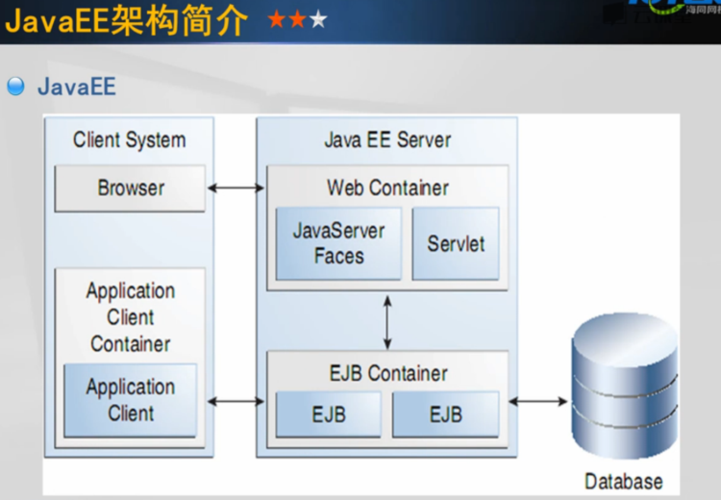
At its core, the Java EE Web Profile is a certified, curated subset of the larger Java EE (Enterprise Edition) platform.
Think of it like this:
- Full Java EE Platform: A massive toolbox with every possible tool for building any kind of enterprise application (from simple web apps to complex, distributed systems with messaging, transactions, and batch processing).
- Java EE Web Profile: A smaller, more focused toolbox containing only the essential tools needed to build modern, web-centric applications.
It was created to address a common problem: many developers didn't need the complexity and heavy dependencies of the full Java EE platform. They just wanted to build standard, scalable web applications. The Web Profile provides a lightweight, standardized stack that is perfect for this purpose.
Why Does the Web Profile Exist? (The "Why")
Before the Web Profile, developers building web applications faced a dilemma:

- Use the Full Java EE Platform: This included technologies like Enterprise JavaBeans (EJB), which were powerful but complex and required a heavy application server. It was often overkill for simpler web apps.
- Use a "Frankenstein" Stack: Developers would hand-pick individual technologies (like Servlets, JPA, and JSF) from various non-standard sources. This led to compatibility issues, long integration cycles, and a "reinvention of the wheel" for every project.
The Web Profile solves this by providing a pre-vetted, standardized, and certified stack that includes:
- Essential Web Technologies: Servlets, JSP, JSON-P/JSON-B.
- Core Persistence: JPA (Java Persistence API).
- Dependency Injection: CDI (Contexts and Dependency Injection).
- Security: Basic Authentication and Authorization.
- Web Services: JAX-RS (RESTful services) and JAX-WS (SOAP services).
This allows developers to build robust web applications using a well-defined, interoperable set of APIs without the overhead of the full platform.
Key Technologies in the Web Profile
The Web Profile includes a carefully selected set of about 20+ specifications. Here are the most important ones:
| Specification | Abbreviation | What it Does | Analogy |
|---|---|---|---|
| Servlet | - | The foundation. Handles HTTP requests and responses, manages the web container lifecycle. | The engine and chassis of a car. |
| JavaServer Faces | JSF | A component-based framework for building user interfaces (UIs) for web apps. | The car's dashboard, steering wheel, and seats. |
| Contexts and Dependency Injection | CDI | A powerful dependency injection and eventing framework that manages the lifecycle of objects (beans). | The car's electrical system and wiring that connects everything. |
| Java Persistence API | JPA | A standard API for interacting with a database, allowing you to map Java objects to database tables (ORM). | The car's fuel system and engine management. |
| Java API for RESTful Web Services | JAX-RS | The standard for building RESTful web services, which are the backbone of modern APIs. | The car's GPS and communication system. |
| JSON Processing | JSON-P | API for parsing, generating, querying, and transforming JSON data. | The car's ability to read and write maps (data format). |
| JSON Binding | JSON-B | API to bind between Java objects and JSON documents. | A more advanced map reader that can automatically convert locations to addresses and vice-versa. |
| Bean Validation | Bean Validation | Provides a way to declare constraints on Java beans (e.g., @NotNull, @Size) for validation. |
The car's safety checks (e.g., seatbelt alarm). |
| Java Authentication Service Provider Interface | JASPIC | A standard API for authentication (who are you?) and authorization (what are you allowed to do?). | The car's key fob and security system. |
| Common Annotations | - | Provides basic annotations like @Resource, @PostConstruct, @PreDestroy. |
Standard nuts and bolts used everywhere. |
What's NOT in the Web Profile?
This is just as important as what is included. The Web Profile explicitly excludes technologies designed for more complex, distributed, or batch-oriented applications. Key exclusions include:

- Enterprise JavaBeans (EJB): The "heavyweight" component model. The Web Profile relies on the much simpler and more powerful CDI for its needs.
- Java Transaction API (JTA): For complex, distributed transactions across multiple resources. The Web Profile uses the simpler, container-managed transactions available to Servlets.
- Java Message Service (JMS): For asynchronous, message-based communication between applications.
- Java EE Connector Architecture (JCA): For connecting to legacy systems (EIS).
- Batch Applications (JBatch): For large-scale batch processing jobs.
- Java EE Management & Monitoring APIs: For managing the application server itself.
By excluding these, the Web Profile achieves its goal of being lightweight, fast to start, and have a smaller memory footprint.
The Transition from Java EE to Jakarta EE
This is a critical point of understanding for modern developers.
In 2025, Oracle donated the Java EE source code to the Eclipse Foundation. Due to trademark issues, the platform was renamed to "Jakarta EE".
- Java EE 8 was the final version under Oracle.
- Jakarta EE 8 was essentially a rebranding of Java EE 8.
- Jakarta EE 9+ introduced a major change: all specifications were moved to the
jakarta.*namespace (e.g.,javax.servletbecamejakarta.servlet).
This means the Jakarta EE Web Profile is the direct successor to the Java EE Web Profile. All the concepts and technologies are the same, you just use the new package names.
| Old (Java EE 8) | New (Jakarta EE 9+) |
|---|---|
javax.servlet |
jakarta.servlet |
javax.persistence |
jakarta.persistence |
javax.enterprise.context |
jakarta.enterprise.context |
javax.ws.rs |
jakarta.ws.rs |
Modern Implementations and Servers
You can't use the Web Profile in a vacuum; you need an application server or servlet container that is certified for it.
Popular Certified Jakarta EE Web Profile Servers:
- Payara: A fork of GlassFish, known for being a very compliant and full-featured (yet lightweight) server.
- WildFly: Formerly known as JBoss, a very popular and high-performance application server from Red Hat.
- OpenLiberty: A lightweight, modular, and fast application server from IBM.
- Tomcat: While not a full Jakarta EE server, it's the most popular servlet container. To get the full Web Profile experience, you would add libraries for CDI, JPA, JAX-RS, etc., manually or via a project template (like with Spring Boot, though Spring Boot isn't certified).
Is the Web Profile Still Relevant Today?
This is an excellent question. The rise of Spring Boot and Microservices has changed the landscape.
Arguments for its relevance:
- Standardization & Portability: If you build a Web Profile app, it's guaranteed to run on any certified server (Payara, WildFly, etc.). This is a huge advantage over Spring Boot, which can have subtle behavioral differences between versions.
- Vendor Neutrality: You are not locked into the Spring ecosystem or any single vendor. You can choose your server, database, and tools freely.
- Simplicity over Framework Bloat: For many applications, a stack based on CDI, JAX-RS, and JPA is perfectly sufficient and avoids the "magic" and complexity of a large framework like Spring.
- Modern Implementations: Servers like Payara and OpenLiberty are incredibly fast, lightweight, and modern, bridging the gap with the microservices world.
The reality: For new greenfield projects, especially microservices, Spring Boot is often the default choice due to its incredible developer experience, opinionated defaults, and vast ecosystem. However, the Jakarta EE Web Profile remains a robust, standardized, and viable alternative, particularly for organizations that value portability and vendor neutrality over rapid development with a specific framework.
Summary
| Feature | Description |
|---|---|
| What it is | A certified, standardized subset of the Java EE/Jakarta EE platform for building web applications. |
| Core Goal | Provide a lightweight, focused stack without the complexity of the full platform. |
| Key Tech | Servlets, JSF, CDI, JPA, JAX-RS, Bean Validation. |
| Key Exclusions | EJB, JTA, JMS (keeps |