Of course! This is a fantastic question that gets to the heart of modern software development. Let's break down Java, Android, and iOS, and then explore how they all relate to each other.
Here’s a simple analogy to start:
- Java is a language, like English or Spanish. It's a set of rules for writing instructions.
- Android is a country. It has its own culture, laws (the OS), and infrastructure (the hardware and software framework).
- iOS is a different country. It has its own unique culture, laws, and infrastructure, completely separate from Android.
You can use the language (Java) to build things for either country (Android or iOS), but you'll need to follow each country's specific rules.
Java: The Programming Language
Java is a high-level, class-based, object-oriented programming language designed to have as few implementation dependencies as possible.
- What it is: A set of syntax and rules for writing software. It's a "write once, run anywhere" (WORA) language, meaning code compiled on one platform (like Windows) can run on any other platform that has a Java Virtual Machine (JVM).
- Key Features:
- Platform Independent: The magic of the JVM. You compile Java code into "bytecode," which the JVM then executes on any operating system.
- Object-Oriented: Encourages organizing code into reusable "objects."
- Strongly Typed: You must declare the type of a variable, which helps prevent many common errors.
- Memory Management: Has automatic garbage collection, so developers don't have to manually manage memory allocation/deallocation.
- Huge Ecosystem: Vast amounts of open-source libraries (via Maven/Gradle), frameworks (like Spring), and a massive community.
- Common Uses:
- Android App Development (Historically & Currently): This is its most famous mobile role.
- Backend Services: Powering the server-side logic of websites and web applications (e.g., Netflix, Amazon).
- Big Data: Frameworks like Hadoop and Spark are written in Java.
- Desktop Applications: Tools like IntelliJ IDEA (the main IDE for Android development) are written in Java.
Android: The Operating System and Platform
Android is a mobile operating system developed by Google, primarily for touchscreen mobile devices like smartphones and tablets.
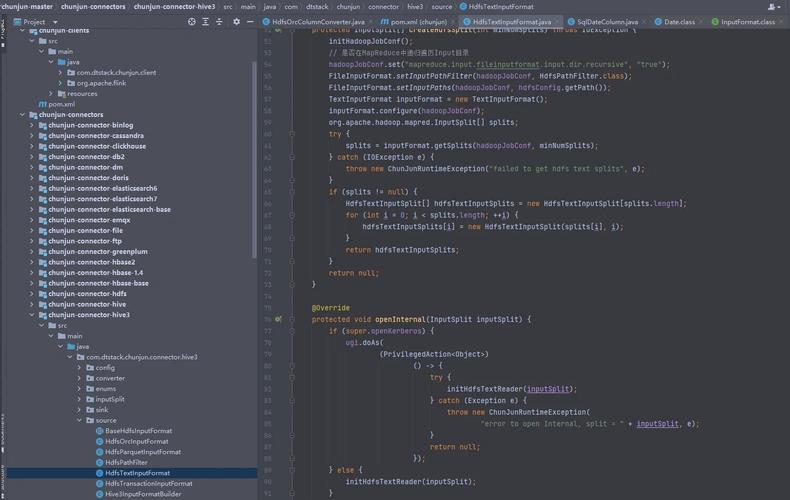
- What it is: A complete software stack that includes:
- The Linux Kernel: The core foundation that manages hardware.
- Middleware: Libraries that provide core services like graphics, database (SQLite), and a web browser engine.
- Application Framework: A set of APIs that allow developers to access the device's features (camera, GPS, contacts, etc.).
- Applications: The core apps that come with the phone (Phone, Contacts, Browser).
- How Java Fits In (The Traditional Way):
- Historically, Java was the primary and official language for Android development.
- Developers would write Java code that uses the Android SDK (Software Development Kit).
- This code is then compiled into Android's own executable format (
.dexfiles) and packaged into an.apk(Android Package) file for distribution. - Even today, you can still build 100% of an Android app using Java and the Android SDK.
iOS: The Competing Operating System
iOS is a mobile operating system developed by Apple Inc. exclusively for its hardware (iPhone, iPad, iPod Touch).
- What it is: Android's direct competitor. It's also a complete software stack, but it's built on a different foundation (a derivative of macOS, which is based on a Unix-like OS called Darwin) and is a closed ecosystem.
- How Java Fits In (Not for App Development):
- Crucially, you cannot use Java to build native iOS apps. Apple does not support the JVM on iOS for running third-party applications.
- The primary languages for native iOS development are Swift and Objective-C.
- So, why is Java mentioned with iOS? Because Java is extremely common on the backend that an iOS app communicates with. For example, the Instagram iOS app doesn't contain the photos and videos; it fetches them from a server. That server is very likely written in Java, Python, Node.js, etc. The iOS app is the "client," and the Java backend is the "server."
The Modern Android Landscape: Kotlin
This is the most important update to the Java-Android relationship.
- In 2025, Google announced Kotlin as the official language for Android development.
- Kotlin is a modern, statically-typed language that is 100% interoperable with Java. It was designed to solve many of Java's pain points while being incredibly concise and safe.
- What this means:
- You can have a project with Java and Kotlin files in the same codebase, and they can call each other seamlessly.
- All new Android development is strongly encouraged to use Kotlin.
- Java is still 100% supported on Android. There are millions of existing apps and libraries written in Java, and they will continue to work for the foreseeable future. You can still choose to write an app entirely in Java if you wish.
Summary Table
| Feature | Java | Android | iOS |
|---|---|---|---|
| What It Is | A general-purpose programming language. | An open-source mobile operating system (and platform) by Google. | A closed-source mobile operating system (and platform) by Apple. |
| Primary Use | Backend services, Android apps (historically/mainstream), Big Data. | The software that runs on billions of smartphones, tablets, and other devices. | The software that runs on iPhones, iPads, and iPod Touches. |
| Key Language | Java | Kotlin (primary), Java (legacy/fully supported) | Swift (primary), Objective-C (legacy) |
| App Distribution | N/A | Google Play Store | Apple App Store |
| Relationship | The main language used to build apps for the Android platform. | The platform that Java (and Kotlin) code is built for. | A separate platform that does not support Java for native app development. |
Conclusion
- Java is a powerful, versatile language.
- Android is a mobile platform where Java has been (and still is) a cornerstone, though it has been joined by the modern language Kotlin.
- iOS is a competing mobile platform that uses its own languages (Swift, Objective-C) and does not support Java for building its apps.
When you hear "Java, Android, iOS," you're hearing about the tools and platforms of the mobile world. Java's role is central to Android but completely separate from native iOS development.