Of course! This is a fundamental concept in Java (and object-oriented programming in general). Let's break down extends and super clearly.
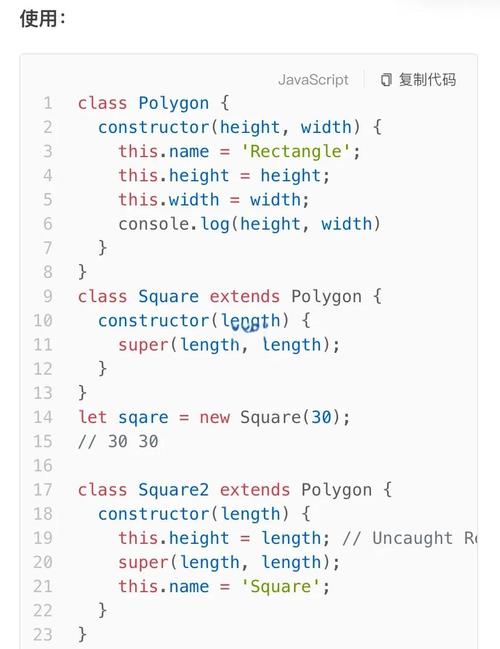
extends (Inheritance)
The extends keyword is used to create a new class (the subclass or child class) that inherits attributes and methods from an existing class (the superclass or parent class).
Think of it as an "is-a" relationship. For example, a Dog is a Animal, so a Dog class can extend an Animal class.
Why use extends?
- Code Reusability: You don't have to write the same code over and over again. You can put common code in a parent class and have child classes inherit it.
- Method Overriding: A child class can provide a specific implementation of a method that is already defined in its parent class. This is a key part of polymorphism.
- Logical Structure: It helps you model real-world relationships in your code, making it more organized and understandable.
Simple Example of extends
Let's create an Animal parent class and a Dog child class.
The Superclass (Animal.java)
This class contains general properties and behaviors that all animals might share.
// File: Animal.java
public class Animal {
    // A field (attribute) in the parent class
    String name;
    // The constructor for the parent class
    public Animal(String name) {
        this.name = name;
    }
    // A method in the parent class
    public void eat() {
        System.out.println(name + " is eating.");
    }
    public void sleep() {
        System.out.println(name + " is sleeping.");
    }
}
The Subclass (Dog.java)
This class extends Animal. It inherits name, eat(), and sleep(). It also adds its own specific properties and methods.
// File: Dog.java
public class Dog extends Animal { // "Dog extends Animal" means Dog inherits from Animal
    // A new field specific to Dog
    String breed;
    // The constructor for the Dog class
    // It MUST call the parent's constructor using super()
    public Dog(String name, String breed) {
        super(name); // Calls the constructor of the Animal class
        this.breed = breed;
    }
    // A new method specific to Dog
    public void bark() {
        System.out.println(name + " the " + breed + " says: Woof!");
    }
    // Method OVERRIDING: Providing a new implementation for an inherited method
    @Override
    public void eat() {
        System.out.println(name + " the " + breed + " is eating dog food.");
    }
}
The Main Class (Main.java) - To see it in action
// File: Main.java
public class Main {
    public static void main(String[] args) {
        // Create an instance of the Dog subclass
        Dog myDog = new Dog("Buddy", "Golden Retriever");
        // You can use methods inherited from the Animal class
        myDog.eat();      // Calls the OVERRIDDEN eat() method in Dog
        myDog.sleep();    // Calls the inherited sleep() method from Animal
        myDog.bark();     // Calls the specific bark() method in Dog
        System.out.println("Dog's name: " + myDog.name); // Access inherited field
    }
}
Output:
Buddy the Golden Retriever is eating dog food.
Buddy is sleeping.
Buddy the Golden Retriever says: Woof!
Dog's name: Buddy
super (Keyword to Access Superclass Members)
The super keyword is a reference variable used to refer to the immediate parent class object. It's used for two main purposes:
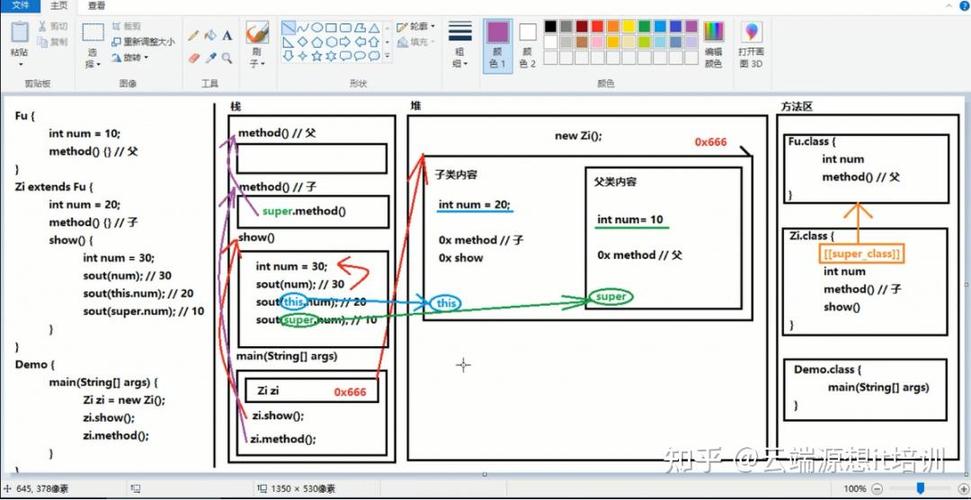
- To call the constructor of the parent class.
- To access a member (field or method) of the parent class when it is hidden by the subclass.
super() in Constructors
When you create an object of a subclass, the constructor of the parent class is always called first. This ensures that the inherited part of the object is initialized correctly.
- If you don't explicitly write
super(...)in the subclass's constructor, Java automatically inserts a call to the no-argument constructor of the parent class (super();). - If the parent class does not have a no-argument constructor, you must explicitly call one of its parameterized constructors using
super(...).
From our Dog example above:
public Dog(String name, String breed) {
    super(name); // This line is crucial. It calls Animal's constructor: public Animal(String name)
    this.breed = breed;
}
super for Accessing Members
Use super when your subclass has a field or method with the same name as one in the parent class. This is called shadowing.
super.fieldName: Accesses the parent class's field.super.methodName(): Calls the parent class's method.
Example of super for Member Access
Let's modify our Dog class to show this.
// File: Dog.java
public class Dog extends Animal {
    String name; // This 'name' SHADOWS the 'name' field in Animal
    public Dog(String nameFromUser, String breed) {
        super(nameFromUser); // Initialize the parent's 'name' field
        this.name = breed;   // Initialize the Dog's 'name' field with the breed
    }
    @Override
    public void eat() {
        // Call the parent's eat() method first
        super.eat();
        // Then add some dog-specific behavior
        System.out.println("And he's enjoying it!");
    }
    public void displayNames() {
        System.out.println("Parent's name (from super.name): " + super.name);
        System.out.println("Dog's name (from this.name): " + this.name);
    }
}
Main Class to test this:
public class Main {
    public static void main(String[] args) {
        Dog myDog = new Dog("Rex", "German Shepherd");
        myDog.displayNames();
        System.out.println("---");
        myDog.eat();
    }
}
Output:
Parent's name (from super.name): Rex
Dog's name (from this.name): German Shepherd
---
Rex is eating.
And he's enjoying it!
Summary Table: extends vs. super
| Feature | extends |
super |
|---|---|---|
| Type | Keyword used in a class declaration. | Keyword used inside a method or constructor. |
| Purpose | To establish an inheritance ("is-a") relationship between classes. | To access members (fields, methods, constructors) of the parent class. |
| Analogy | "A Car is a Vehicle." |
"Use the parent's version of this method/field." |
| Common Use | public class Car extends Vehicle { ... } |
super(speed); (call parent constructor)super.startEngine(); (call parent method) |
| Relationship | Defines the structure of the class hierarchy. | Operates within the structure to access parent components. |
Important Related Concept: implements
You might also see implements used with classes. This is different from extends.
extends: Used for class inheritance (a subclass inherits from a superclass). A class can only extend one other class (single inheritance).implements: Used for interface implementation. An interface is a "contract" that defines a set of methods a class must have. A class can implement multiple interfaces.
Example:
// A class can only extend one class
public class Dog extends Animal { ... }
// But can implement multiple interfaces
public class SmartDog extends Animal implements Pet, GuardDog { ... }