Of course. "Thinking in Java" is a highly regarded and classic programming book, especially for those looking to gain a deep understanding of the Java language.
Here’s a comprehensive guide on finding the PDF, understanding the book, and its alternatives.
Is the PDF Available Legally for Free?
The short answer is no, not legally. "Thinking in Java" is a copyrighted work. The author, Bruce Eckel, and the publisher, Prentice Hall, own the rights. Distributing the full book for free without permission is piracy.
However, there are legitimate ways to access it:
-
Older Editions for Free: Bruce Eckel has been a strong proponent of making knowledge accessible. He has made the 3rd Edition of "Thinking in Java" available for free on his official website. This edition is from 2002, so it's very outdated for modern Java development (it doesn't cover Generics, Annotations, lambdas, etc.), but it's excellent for understanding the core fundamentals of the language.
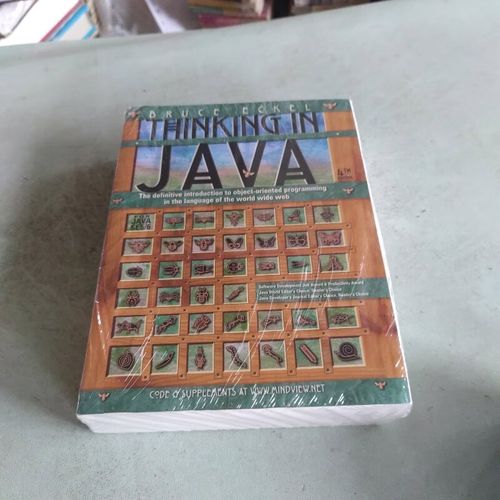 (图片来源网络,侵删)
- Link to Bruce Eckel's Official Site: mindviewinc.com/Books/TIJ4thEdition (Note: This link is for the 4th edition, which he also made available, but the 3rd is often linked from his site as well).
-
Public Domain: The book is not old enough to be in the public domain. Copyright typically lasts for the life of the author plus many decades.
How to Get the Legitimate, Latest Edition (Recommended)
If you want to learn modern, professional Java, you need a recent edition. The best way to support the author and get the most up-to-date content is to purchase it.
-
Purchase the Latest Edition (4th or 5th):
- Amazon: You can buy the Kindle version, which is often cheaper and includes features like search and highlighting. You can also buy a physical copy.
- Pearson (Official Publisher): You can buy it directly from the publisher's website.
- Online Bookstores: Sites like Book Depository often offer good deals on international shipping.
-
Free Access through Libraries (The Best Legal "Free" Option):
 (图片来源网络,侵删)
- Many public and university libraries subscribe to digital services like OverDrive, Libby, or hoopla.
- You can borrow the eBook version of "Thinking in Java" for free with a valid library card, just like a physical book. This is the best way to legally access the latest edition without paying.
About the Book: "Thinking in Java"
-
Author: Bruce Eckel
-
Focus: As the name suggests, the book's primary goal is to teach you to "think in Java." It's not just a list of syntax; it delves into the philosophy and design patterns of the language. It's famous for its in-depth explanations of complex topics like:
- Object-Oriented Programming (OOP) principles
- Collections Framework
- Concurrency and Multithreading
- I/O and Networking
- Generics
- Annotations
- And much more.
-
Pros:
- In-depth and Comprehensive: Covers the language in great detail.
- Excellent for OOP: Builds a very strong foundation in object-oriented concepts.
- Clear Explanations: Bruce Eckel is known for his ability to explain complex topics in a clear, understandable way.
- Includes Exercises: Each chapter has exercises to solidify your understanding.
-
Cons:
- Dense and Long: It's a massive book (over 1,000 pages), which can be intimidating for complete beginners.
- Can be Tedious: Some readers find the style a bit verbose or academic compared to more modern, "get started quickly" books.
- Java 8 Focus (4th Ed): The 4th edition is based on Java 5/6, and while the 5th edition covers Java 8, it's not as updated for Java 11, 17, or 21 as some other modern books.
Excellent Alternatives to "Thinking in Java"
If "Thinking in Java" seems too dense or you want a more modern approach, here are some of the best alternatives.
For Absolute Beginners:
-
"Head First Java" by Kathy Sierra & Bert Bates:
- Style: Extremely visual, conversational, and uses cognitive science to make learning stick. It's fun and easy to read.
- Best for: People who have never programmed before or learn best with pictures, puzzles, and a non-intimidating tone.
-
"Java: A Beginner's Guide" by Herbert Schildt:
- Style: A more traditional, straightforward tutorial. It's well-structured and gets you writing code quickly.
- Best for: Beginners who prefer a no-nonsense, step-by-step approach.
For Modern, Professional Java (Post-Java 8):
-
"Modern Java in Action" by Raoul-Gabriel Urma, Mario Fusco, and Alan Mycroft:
- Style: The current gold standard for learning modern Java. It focuses on features like lambdas, streams, functional programming, and modularization.
- Best for: Developers who already know the basics of Java and want to level up to modern, professional-grade code.
-
"Core Java Volume I--Fundamentals" by Cay S. Horstmann:
- Style: A thorough, well-written, and practical guide. It's more detailed than "Head First" but more accessible than "Thinking in Java." It's updated for the latest Java versions.
- Best for: Serious students and professionals who want a deep, practical understanding of the core language.
For a Quick Reference or "Cheat Sheet":
- "Java: The Reference" (formerly "Java Pocket Guide"):
- Style: A concise, no-fluff reference for looking up syntax and API details quickly.
- Best for: Developers who already know Java and need a quick reminder on how something works.
Summary Table
| Book Title | Best For | Style | Key Feature |
|---|---|---|---|
| Thinking in Java | Deep understanding of core Java & OOP | In-depth, academic, comprehensive | The "bible" for Java philosophy. |
| Head First Java | Absolute beginners | Visual, fun, conversational | Makes learning enjoyable and less intimidating. |
| Modern Java in Action | Learning modern Java (lambdas, streams) | Modern, practical, project-focused | The go-to book for becoming a modern Java developer. |
| Core Java Volume I | Serious students & professionals | Thorough, well-structured, practical | A great balance of depth and readability. |
Final Recommendation:
- If you are a complete beginner, start with "Head First Java".
- If you want a deep, foundational understanding and don't mind a long read, "Thinking in Java" is a classic for a reason.
- If you already know Java basics and want to upgrade to modern features, "Modern Java in Action" is essential.