Of course! Let's break down the Java Virtual Machine (JVM) in a comprehensive and easy-to-understand way.
What is the JVM? The Core Idea
At its simplest, the Java Virtual Machine (JVM) is a virtual machine that enables a computer to run Java programs (and other languages that compile to Java bytecode, like Kotlin, Scala, and Groovy).
Think of it as a translator or a middleman.
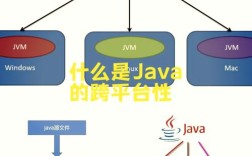
- The Problem: Java's "write once, run anywhere" (WORA) philosophy means you want to compile your code once and have it run on any operating system (Windows, macOS, Linux, etc.). However, every computer has a different native machine code that its CPU understands directly.
- The Solution (JVM): You don't compile your Java code directly to the machine code of a specific OS. Instead, you compile it to an intermediate format called bytecode. This bytecode is then executed by the JVM. Since the JVM is available for every major OS, your Java code can run anywhere a JVM is installed.
The Three Key Players in the Java Ecosystem
It's crucial to distinguish the JVM from the other two components of the Java Development Kit (JDK):
-
JDK (Java Development Kit): This is what developers use. It includes everything needed to develop and run Java applications.
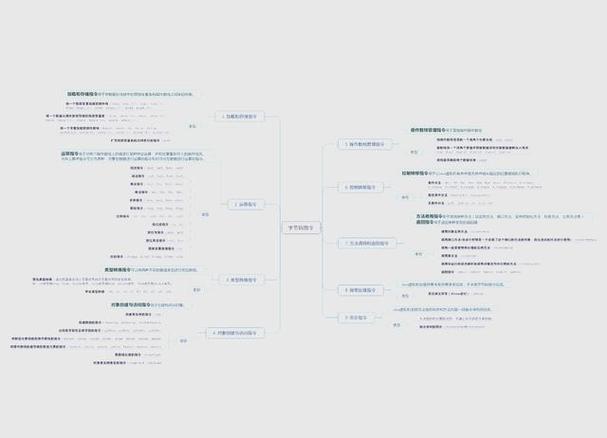 (图片来源网络,侵删)
- Compiler (
javac): Converts your human-readable.javasource files into.classbytecode files. - JRE (Java Runtime Environment): Contains the JVM and other libraries needed to run Java applications.
- Debuggers, profilers, documentation, etc.
- Compiler (
-
JRE (Java Runtime Environment): This is what users need to run Java applications. It's a subset of the JDK.
- JVM: The core engine that executes bytecode.
- Core Libraries: Essential classes for basic functionality (e.g.,
String,ArrayList, networking, file I/O).
-
JVM (Java Virtual Machine): This is the runtime engine. It takes your compiled bytecode and dynamically translates it into native machine code that the host CPU can execute. It's the heart of the Java platform.
Analogy:
- JDK is a full kitchen with an oven, stove, utensils, and recipes.
- JRE is a microwave and a few pre-packaged meals.
- JVM is the microwave itself that heats the food (executes the code).
How the JVM Works: The Execution Process
When you run a Java program (e.g., java MyProgram), here's what happens step-by-step:
-
Loading: The JVM's Class Loader subsystem finds the bytecode for your
MyProgramclass and loads it into memory. It loads not just your class, but also all the classes it depends on from the core libraries. -
Linking: The loaded classes are prepared for execution. This involves:
- Verification: Ensuring the bytecode is valid, safe, and doesn't violate Java's security constraints. This is a key security feature.
- Preparation: Allocating memory for static variables and setting them to default values.
- Resolution: Replacing symbolic references in the code with direct references to memory locations.
-
Initialization: Static variables are assigned their actual values, and static initialization blocks are executed.
-
Execution: The Execution Engine takes over. It has two main ways to run the bytecode:
- Interpreter: Reads the bytecode instruction by instruction and executes it. This is simple but can be slow because it reinterprets the same instructions repeatedly.
- Just-In-Time (JIT) Compiler: To solve the interpreter's slowness, the JVM includes a JIT compiler. It identifies "hot spots" in the code (methods or loops that are executed frequently) and compiles that specific bytecode into highly optimized native machine code. The next time that code is executed, it runs directly on the CPU at native speed, bypassing the interpreter. This is a huge part of Java's performance.
Key Components of the JVM Architecture
The JVM can be visualized as having several main areas, often depicted as a memory model and execution components.
A. Memory Areas (Runtime Data Areas)
- Method Area (or Metaspace): A shared space for storing class structures (like method code, constant pools, and static variables). In modern Java (8+), this is called the Metaspace and is allocated in native memory, not the Java heap.
- Heap: The most important memory area. This is where all object instances and arrays are created. It's shared among all threads and is the main target for the Garbage Collector (GC).
- Stack (or Java Stack): Each thread gets its own stack. It's a Last-In, First-Out (LIFO) data structure that stores frames. Each frame contains:
- Local variables.
- The operand stack (for intermediate calculations).
- The method's return address.
- PC (Program Counter) Register: Each thread has a PC register that points to the current instruction being executed by that thread.
- Native Method Stack: Similar to the Java stack, but it stores native method information (methods written in C/C++, etc.).
- Native Method Interface (JNI) & Native Method Libraries: An interface that allows Java code to call and be called by native applications (code written in other languages like C/C++).
B. Execution Engine Components
- Class Loader: As described above, it loads classes.
- Bytecode Verifier: Ensures the code is safe.
- Execution Engine: Contains the Interpreter and the JIT Compiler to execute the code.
Key Features of the JVM
- Platform Independence (WORA): This is the primary reason for its existence. Compile once, run anywhere.
- Security: The bytecode verifier and the "sandbox" environment prevent malicious code from harming the host system.
- Performance: The JIT compiler makes Java applications highly efficient, often approaching the speed of compiled languages like C++.
- Robustness: Features like automatic memory management (Garbage Collection) prevent common errors like memory leaks and dangling pointers.
- Multithreading: The JVM provides built-in, robust support for multithreading, allowing programs to perform multiple tasks concurrently.
Modern JVMs (Beyond Java)
The concept of the JVM is so powerful that it's no longer limited to the Java language. It's a platform in its own right.
- Kotlin: The official language for Android development, it compiles to the same JVM bytecode as Java.
- Scala: A powerful, object-functional language that runs on the JVM.
- Groovy, Clojure, JRuby, Jython: Many other languages target the JVM, giving you access to the entire Java ecosystem of libraries and tools while using a different syntax or programming paradigm.
Summary
| Aspect | Description |
|---|---|
| What it is | An abstract, virtual machine that provides a runtime environment to execute Java bytecode. |
| Primary Role | Acts as a middleman, translating Java bytecode into native machine code for the host OS. |
| Key Benefit | Enables "Write Once, Run Anywhere" (WORA) platform independence. |
| Core Components | Class Loader, Execution Engine (with JIT Compiler), Garbage Collector, and Runtime Data Areas (Heap, Stack, etc.). |
| Modern Use | A platform for many languages beyond Java, including Kotlin, Scala, and Groovy. |