Of course! Let's break down newInstance() in Java, covering its meaning, the different contexts where it's used, and best practices.
The Core Idea: Creating an Instance
At its heart, newInstance() is a method used to create a new instance (an object) of a class. However, its behavior and usage have evolved significantly between Java versions, leading to some important distinctions.
Class.newInstance() (The Old, Deprecated Way)
This is the original newInstance() method, found on the java.lang.Class object. It was the primary way to dynamically create objects before Java 9.
How it Works
You get the Class object for a class (e.g., MyClass.class or Class.forName("com.example.MyClass")), and then you call its newInstance() method.
Example
// Let's say we have this simple class
class OldWayExample {
    public OldWayExample() {
        System.out.println("OldWayExample constructor called!");
    }
}
// Now, let's create an instance dynamically
try {
    // Get the Class object for OldWayExample
    Class<?> clazz = Class.forName("com.example.OldWayExample");
    // Create an instance using the deprecated newInstance()
    Object instance = clazz.newInstance();
    // Check if it's an instance of our class
    if (instance instanceof OldWayExample) {
        OldWayExample example = (OldWayExample) instance;
        System.out.println("Successfully created an instance: " + example);
    }
} catch (ClassNotFoundException e) {
    System.err.println("Class not found.");
} catch (InstantiationException e) {
    System.err.println("Cannot instantiate abstract class or interface.");
} catch (IllegalAccessException e) {
    System.err.println("Constructor is not accessible.");
}
Why it's Deprecated (and Dangerous)
The Class.newInstance() method was deprecated in Java 9 and removed in Java 17. Here’s why:
- Limited Exception Handling: It can only throw
InstantiationExceptionorIllegalAccessException. It cannot handle other exceptions that the constructor might throw, likeNullPointerExceptionorIllegalArgumentException. This forces you to wrap the constructor call in atry-catchblock, which is clumsy and hides the real cause of a failure. - Security Issues: It bypasses compile-time access checks. If a constructor is
private, you can still callnewInstance()on it if you have access to theClassobject, which violates encapsulation. - No Parameter Support: It can only call the no-argument (zero-argument) constructor. If the only available constructor requires arguments,
newInstance()will fail with anInstantiationException.
The Modern Replacement: Constructor.newInstance()
The modern, safe, and recommended way to dynamically create an object is to use the newInstance() method on a java.lang.reflect.Constructor object. This gives you full control.
How it Works
- Get the
Classobject for your target class. - Get the specific
Constructorobject you want to invoke (e.g., the no-arg constructor, or a constructor that takes aStringand anint). - Call
constructor.newInstance(), passing in the arguments for that constructor.
Example
Let's use a class with a parameterized constructor to show the power of this approach.
// A class with a parameterized constructor
class ModernWayExample {
    private String name;
    private int value;
    public ModernWayExample(String name, int value) {
        this.name = name;
        this.value = value;
        System.out.println("ModernWayExample constructor called with: " + name + ", " + value);
    }
    @Override
    public String toString() {
        return "ModernWayExample{name='" + name + "', value=" + value + "}";
    }
}
// Now, let's create an instance dynamically
try {
    // 1. Get the Class object
    Class<?> clazz = Class.forName("com.example.ModernWayExample");
    // 2. Get the specific constructor (String, int)
    // The parameter types define which constructor to get.
    Constructor<?> constructor = clazz.getConstructor(String.class, int.class);
    // 3. Create an instance using the constructor's newInstance() method
    // Pass the arguments in the same order as the parameter types.
    Object instance = constructor.newInstance("Dynamic Object", 123);
    if (instance instanceof ModernWayExample) {
        ModernWayExample example = (ModernWayExample) instance;
        System.out.println("Successfully created: " + example);
    }
} catch (ClassNotFoundException e) {
    System.err.println("Class not found.");
} catch (NoSuchMethodException e) {
    System.err.println("Constructor with those parameters not found.");
} catch (InstantiationException e) {
    System.err.println("Cannot instantiate abstract class or interface.");
} catch (IllegalAccessException e) {
    System.err.println("Constructor is not accessible.");
} catch (Exception e) { // Catch other exceptions from the constructor itself
    System.err.println("An error occurred during instantiation: " + e.getMessage());
    e.printStackTrace();
}
Advantages of Constructor.newInstance()
- Full Control: You can choose any accessible constructor, including those with parameters.
- Proper Exception Handling: It wraps any exception thrown by the constructor (like
NullPointerException) in anInvocationTargetException, allowing you to see the real cause of the failure. - Security: It respects access control. You cannot access a
privateconstructor unless you've first made it accessible usingconstructor.setAccessible(true), which is a deliberate security action. - Flexibility: It's the foundation for powerful frameworks like Spring, Hibernate, and JUnit, which need to create objects based on configuration files or annotations.
newInstance() in Other Contexts (Factory Pattern)
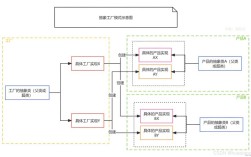
The name newInstance() is also used in the Factory Design Pattern. In this context, it's not related to reflection. It's simply a convention for a static factory method that creates and returns a new instance of its own class or a related class.
Example: Calendar.getInstance()
The Calendar class is a classic example. It's an abstract class, so you can't use new Calendar(). Instead, it provides a static factory method to get a concrete instance.
// This is NOT reflection. It's a static factory method.
// It hides the complex logic of deciding which Calendar implementation to use.
Calendar myCalendar = Calendar.getInstance(); // Returns a GregorianCalendar instance
Example: DriverManager.getConnection()
While not named newInstance(), this is another factory method. It doesn't return a DriverManager instance; it returns a Connection object by finding and using the appropriate JDBC driver.
// Factory method: DriverManager creates and returns a Connection object.
Connection conn = DriverManager.getConnection("jdbc:mysql://localhost:3306/mydb", "user", "password");
Summary Table
| Feature | Class.newInstance() (Deprecated) |
Constructor.newInstance() (Recommended) |
Factory Method (e.g., getInstance()) |
|---|---|---|---|
| Location | java.lang.Class |
java.lang.reflect.Constructor |
Static method on any class |
| Purpose | Dynamically create an instance via reflection. | Dynamically create an instance via reflection with full control. | Encapsulate object creation logic. |
| Constructor | Only calls the no-arg constructor. | Can call any accessible constructor (by specifying its parameters). | Can create any type of object, not necessarily its own class. |
| Exceptions | InstantiationException, IllegalAccessException. Hides other constructor exceptions. |
Wraps constructor exceptions in InvocationTargetException. |
Depends on the implementation. Can throw checked/unchecked exceptions. |
| Usage | Avoid. Removed in Java 17. | Standard for reflection-based instantiation. | Common pattern for providing object creation flexibility. |
Final Recommendation
Always use Constructor.newInstance() for reflective object creation. It is safer, more flexible, and provides better error handling. The old Class.newInstance() is a legacy of Java's early days and should not be used in modern code. Remember that the name newInstance() can also be a simple convention for factory methods, so always check the context.