Of course! This is a very common question for Python developers, especially those coming from languages like Java, C++, or JavaScript.
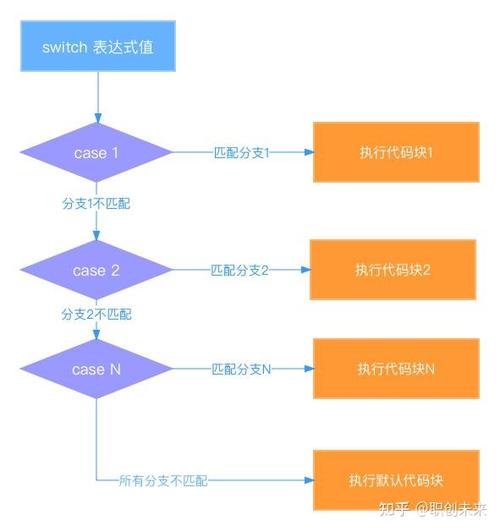
Here’s a complete guide to how Python handles "switch-case" logic, from the traditional way to the modern, recommended approach.
The Short Answer: Python Doesn't Have a Native switch Statement
Unlike many other programming languages, Python does not have a built-in switch or case keyword. The language's creator, Guido van Rossum, decided against it, favoring other constructs that he considered more "Pythonic."
However, there are several excellent ways to achieve the same functionality, each with its own pros and cons.
Method 1: The Classic if-elif-else Statement
This is the most common, straightforward, and readable way to handle multiple conditional branches in Python. It's the idiomatic approach for simple cases.
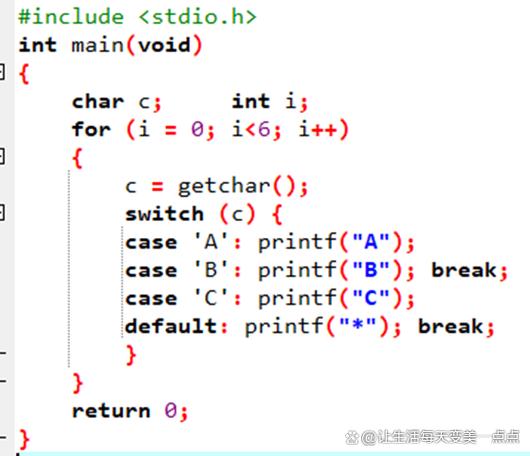
How it works: You chain together if and elif (else if) statements. The elif statements are only checked if the previous if or elif was False. The else block is a catch-all if none of the conditions are met.
Example:
def get_day_type(day):
    """Categorizes a day of the week."""
    if day == "Monday":
        return "A weekday"
    elif day == "Tuesday":
        return "A weekday"
    elif day == "Wednesday":
        return "A weekday"
    elif day == "Thursday":
        return "A weekday"
    elif day == "Friday":
        return "A weekday"
    elif day == "Saturday" or day == "Sunday":
        return "The weekend"
    else:
        return "Invalid day"
# --- Usage ---
print(f"Monday is: {get_day_type('Monday')}")
print(f"Saturday is: {get_day_type('Saturday')}")
print(f"Gibberish is: {get_day_type('Gibberish')}")
Pros:
- Extremely Readable: Everyone who knows Python understands this immediately.
- Flexible: You can use complex conditions (e.g.,
elif day > 5 and day < 15:). - No Imports Needed: It's a fundamental part of the language.
Cons:
- Can become verbose if you have many simple cases to check against a single variable.
Method 2: The Dictionary Mapping (Most "Pythonic" for Simple Cases)
This is a highly elegant and efficient pattern for when you are mapping a single value to another value (like a constant or a function call). It's often considered the most "Pythonic" solution for this kind of problem.
How it works: You create a dictionary where the keys are the possible values of your variable and the values are the results you want. You then use the .get() method to look up the value.
Example:
def get_day_type_v2(day):
    """Categorizes a day of the week using a dictionary."""
    day_types = {
        "Monday": "A weekday",
        "Tuesday": "A weekday",
        "Wednesday": "A weekday",
        "Thursday": "A weekday",
        "Friday": "A weekday",
        "Saturday": "The weekend",
        "Sunday": "The weekend"
    }
    # .get() returns the value for the key, or a default value if the key is not found.
    return day_types.get(day, "Invalid day")
# --- Usage ---
print(f"Monday is: {get_day_type_v2('Monday')}")
print(f"Saturday is: {get_day_type_v2('Saturday')}")
print(f"Gibberish is: {get_day_type_v2('Gibberish')}")
Pros:
- Very Clean and Concise: Reduces boilerplate
if-elifcode. - Fast: Dictionary lookups are extremely fast (average O(1) time complexity).
- Easily Extensible: Adding or removing a case is as simple as adding or removing a key-value pair.
Cons:
- Less flexible for complex conditions. You can't easily do
if day.startswith("Mon"):in a dictionary key. - Can be less intuitive for absolute beginners.
Method 3: The Modern match-case Statement (Python 3.10+)
This is the closest Python has come to a native switch statement. It was introduced in Python 3.10 as "Structural Pattern Matching." It's incredibly powerful and flexible.
How it works: The match statement takes an expression and compares its value to a series of case blocks. It executes the first case block that matches.
Example:
# This requires Python 3.10 or newer!
def get_day_type_v3(day):
    """Categorizes a day of the week using match-case."""
    match day:
        case "Monday" | "Tuesday" | "Wednesday" | "Thursday" | "Friday":
            return "A weekday"
        case "Saturday" | "Sunday":
            return "The weekend"
        case _: # The underscore _ is a wildcard, similar to 'default' or 'else'
            return "Invalid day"
# --- Usage ---
print(f"Monday is: {get_day_type_v3('Monday')}")
print(f"Saturday is: {get_day_type_v3('Saturday')}")
print(f"Gibberish is: {get_day_type_v3('Gibberish')}")
Key Features of match-case:
- The (OR) operator: You can combine multiple values in a single
caseblock, as shown above. - The
_wildcard: Acts as the default case, similar todefault:in other languages orelse:inif-elif-else. - Structural Patterns: It can do much more than just check for equality. It can match types, deconstruct sequences, and more.
Example with more advanced pattern matching:
def process_data(data):
    """Processes different types of data using match-case."""
    match data:
        case {"name": str(name), "age": int(age)}: # Matches a dictionary with specific keys
            return f"Processing user: {name}, age {age}"
        case [x, y]: # Matches a list/tuple with two elements
            return f"Processing a pair: {x}, {y}"
        case int(x) if x > 0: # Matches a positive integer
            return f"Processing a positive number: {x}"
        case _:
            return "Unknown data format"
print(process_data({"name": "Alice", "age": 30}))
print(process_data([10, 20]))
print(process_data(100))
print(process_data("hello"))
Pros:
- Official and Powerful: It's a first-class citizen in modern Python.
- Concise and Readable: Reduces boilerplate for complex multi-condition checks.
- Extremely Flexible: Can handle data structures, types, and complex logic.
Cons:
- Requires Python 3.10+ Not available in older versions of Python.
Summary and Recommendation
| Method | Best For | Pros | Cons |
|---|---|---|---|
if-elif-else |
Simple to complex logic, any Python version. | Universal, flexible, very readable. | Can be verbose for many simple cases. |
| Dictionary Mapping | Mapping a single value to another (a constant or function). | Very fast, clean, concise, Pythonic. | Less flexible for complex conditions. |
match-case |
Modern Python (3.10+), complex pattern matching, multiple value checks. | Powerful, concise, official, flexible. | Not available in older Python versions. |
When to use which:
- If you are using Python 3.10+ and your logic is about matching values, use
match-case. It's the modern standard and is designed for this exact purpose. - If you are using an older version of Python or have simple value-to-result mappings, use the dictionary mapping. It's elegant and efficient.
- If your logic involves complex conditions (e.g.,
>,<,in, function calls), stick with theif-elif-elsestatement. It's the most flexible and universally understood approach.