Of course! Let's break down the if statement and the continue keyword in Java, and how they work together.
The if Statement
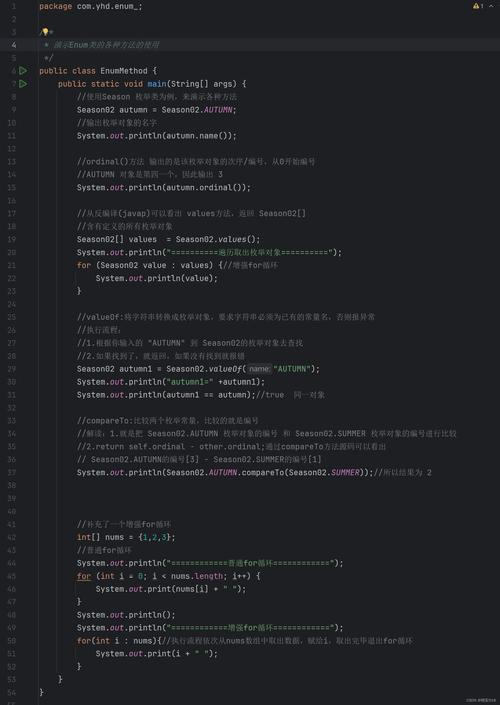
The if statement is a fundamental control flow structure in Java. It allows your program to execute a block of code only if a certain condition is true.
Syntax:
if (condition) {
    // Code to execute if the condition is true
}
How it works:
- The
conditioninside the parentheses is evaluated. - If the condition evaluates to
true, the code inside the curly braces is executed. - If the condition evaluates to
false, the code inside the curly braces is skipped, and the program continues with the line of code after theifblock.
Example:
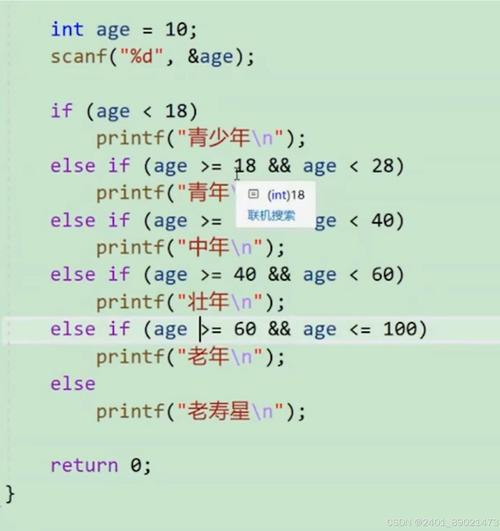
int age = 20;
if (age >= 18) {
    System.out.println("You are an adult.");
}
System.out.println("This line always runs.");
Output:
You are an adult.
This line always runs.
The continue Keyword
The continue keyword is used inside loops (like for, while, or do-while). It's a jump statement that tells the loop to immediately stop the current iteration and jump to the next iteration.
How it works:
When continue is executed:
- The rest of the code inside the loop's body for the current iteration is skipped.
- The loop's update expression (in a
forloop) or condition check (in awhileloop) is performed. - If the loop condition is still true, the next iteration begins.
Example without if:
for (int i = 1; i <= 5; i++) {
    System.out.println("Iteration: " + i);
    if (i == 3) {
        continue; // Skip the rest of the code when i is 3
    }
    System.out.println("This line was skipped for i=3.");
}
Output:
Iteration: 1
This line was skipped for i=3.
Iteration: 2
This line was skipped for i=3.
Iteration: 3
Iteration: 4
This line was skipped for i=3.
Iteration: 5
This line was skipped for i=3.
Notice how "This line was skipped for i=3." was not printed during the 3rd iteration.
if and continue Together
Combining if and continue is a very common and powerful pattern. The logic is:
"If a certain condition is met, stop processing the rest of this loop iteration and move on to the next item."
This is useful for filtering out items you don't want to process.
Common Use Case: Filtering a Loop
Let's say you want to process a list of numbers, but only the even ones.
Example: Print only even numbers from 1 to 10
System.out.println("Printing only even numbers:");
for (int i = 1; i <= 10; i++) {
    // 1. Check the condition
    if (i % 2 != 0) {
        // 2. If the number is odd...
        continue; // ...skip the rest of this loop iteration.
    }
    // 3. This code only runs if the 'if' condition was false (i.e., the number is even)
    System.out.println("Found an even number: " + i);
}
How it works step-by-step:
i = 1:1 % 2 != 0istrue.continueis executed. TheSystem.out.printlnline is skipped.i = 2:2 % 2 != 0isfalse. Theifblock is skipped. TheSystem.out.printlnline runs.i = 3:3 % 2 != 0istrue.continueis executed. TheSystem.out.printlnline is skipped.- ...and so on.
Output:
Printing only even numbers:
Found an even number: 2
Found an even number: 4
Found an even number: 6
Found an even number: 8
Found an even number: 10
Key Differences: continue vs. break
It's crucial not to confuse continue with break.
| Keyword | Action | Effect on Loop |
|---|---|---|
continue |
Jumps to the next iteration. | Skips the rest of the current iteration and continues the loop. |
break |
Exits the loop immediately. | Stops the loop entirely. The code after the loop will execute next. |
Example with break:
System.out.println("Loop with break:");
for (int i = 1; i <= 5; i++) {
    if (i == 3) {
        break; // Exit the loop completely when i is 3
    }
    System.out.println("Iteration: " + i);
}
Output:
Loop with break:
Iteration: 1
Iteration: 2
The loop stops completely at i = 3. It never reaches i = 4 or i = 5.
Summary
| Concept | Description | Analogy |
|---|---|---|
if |
A decision-maker. It runs a block of code only if a condition is true. | A fork in the road: "If the road is open, go this way." |
continue |
A loop controller. It tells a loop to stop the current cycle and start the next one. | Skipping a question on a test and moving to the next one. |
if + continue |
A filter. It checks a condition and, if true, skips the rest of the current loop cycle. | "If this apple is rotten, throw it away (continue) and check the next one." |